If you own a home in Jacksonville, Swansboro, Sneads Ferry or anywhere else in Onslow County, you already know the drill: the tropical forecast gets serious, the grocery shelves empty, and everybody wishes they had done the boring prep in May. This hurricane preparation checklist for Onslow County homeowners is built around the house itself, not the go-bag, so you can do the work well before a storm is on the map.
Quick answer: Prep your home in three phases. Before hurricane season (June 1 to November 30), fix the roof, clear gutters, service the generator and check the crawl space. When a storm is days out, secure or store everything outdoors and photograph the house. Afterward, document damage before you repair anything and hire only licensed, insured local pros.
Need a pro to look at your roof, generator or drainage before the season peaks? You can request help with storm and hurricane home prep from a vetted local pro using the form on this page.
Key takeaways
- The best prep happens in spring, not when a storm has a name.
- Roof, gutters, crawl space and generator are the four systems that most often decide how a storm goes for your house.
- Photos and a written home inventory take about an hour and make an insurance claim far smoother.
- Flood damage and wind damage are handled differently by insurers, so know your policies before June.
- Verify any contractor’s license and insurance yourself, especially after a storm when out-of-area crews arrive.
Why Onslow County Homes Need Their Own Hurricane Plan
Onslow County sits right on the coast, with the Atlantic on one side and the New River, White Oak River and Intracoastal Waterway cutting through the rest. That means wind, storm surge and heavy rain can all matter at once. Homes in Sneads Ferry, North Topsail Beach and Swansboro near the water face different risks than a house in Richlands or Hubert, but inland neighborhoods still deal with falling trees, power loss and flooded yards.
Military families who just PCS’d in often arrive mid-season with no idea what to expect. If that is you, spend an afternoon walking your property and asking one question: where does water go, and what could the wind pick up? For a sense of how the calendar plays out, see our guide to Jacksonville weather by month.
The cheapest hurricane prep is the work you finish in spring, long before anyone is watching the cone.
The Hurricane Preparation Checklist: Roof, Gutters and Exterior
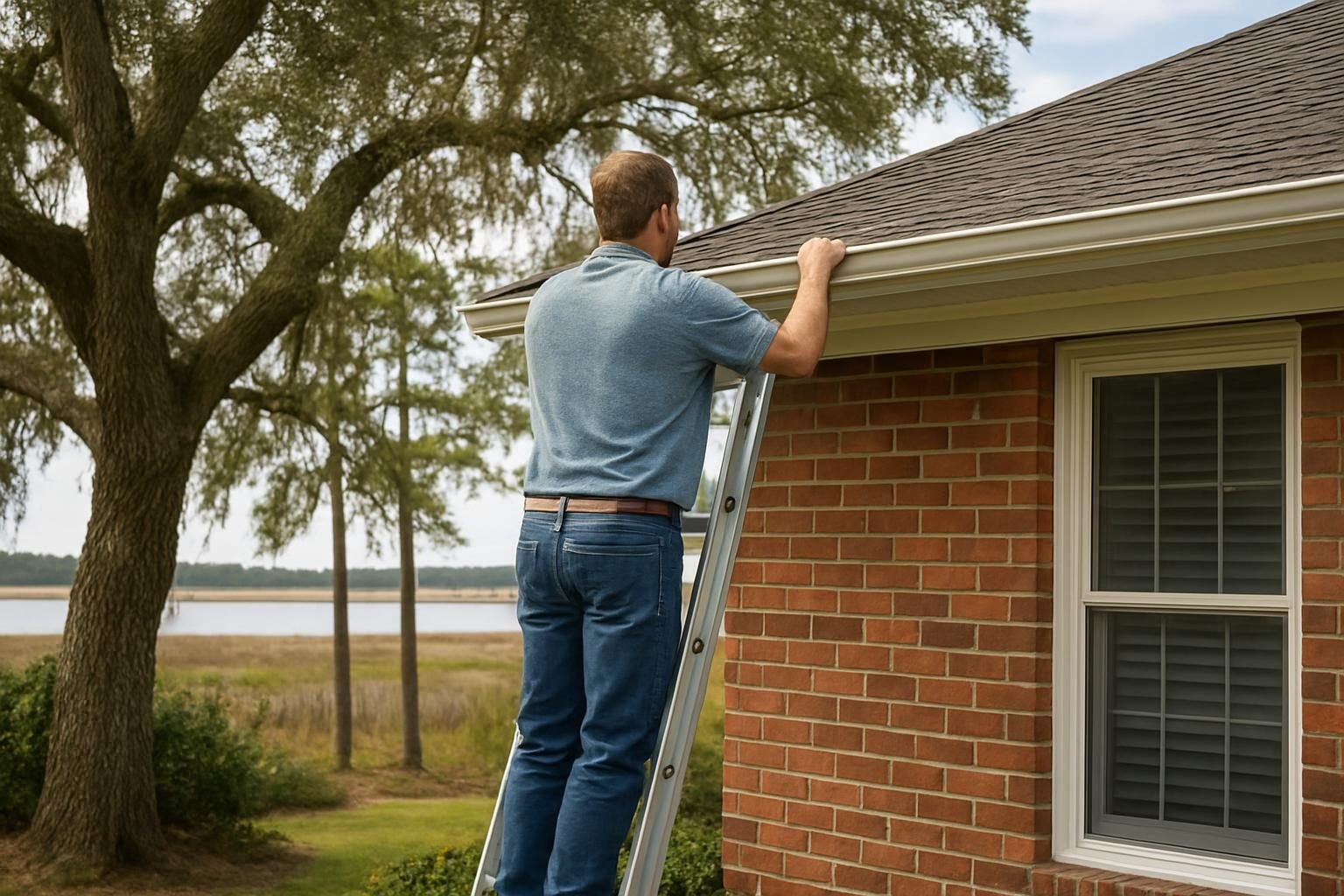
Start at the top. Wind and wind-driven rain find weak points, and most of them are things you can spot from the ground or a quick ladder inspection (or a pro visit).
Roof
- Look for missing, curled or lifted shingles, and for exposed or rusted flashing around chimneys, vents and valleys.
- Check that roof vents and ridge caps are secure.
- Trim limbs that overhang the roof; dead or leaning trees near the house deserve a professional assessment.
- Have a pro look at anything older than its expected lifespan, since salt air and humidity age roofing faster than many people expect.
For repairs and replacement near the White Oak River, see roofing contractors in Swansboro. If a storm has already done its work, our guide to emergency roof repair after a hurricane in Jacksonville explains temporary fixes and what to expect.
Gutters, downspouts and drainage
- Clear gutters and downspouts of leaves and pine needles.
- Make sure downspouts discharge several feet from the foundation.
- Walk the yard and note low spots where water pools; regrade or extend drains if needed.
- Clear storm drains and ditches near your property where you are allowed to.
Windows, doors and garage
- Inspect weatherstripping and caulk around windows and doors.
- Decide on your window protection plan in advance: shutters, impact-rated glass or pre-cut plywood. Waiting until a storm is announced means competing with everyone else.
- Garage doors are a common failure point; check that yours is in good working order and consider bracing if it is older.
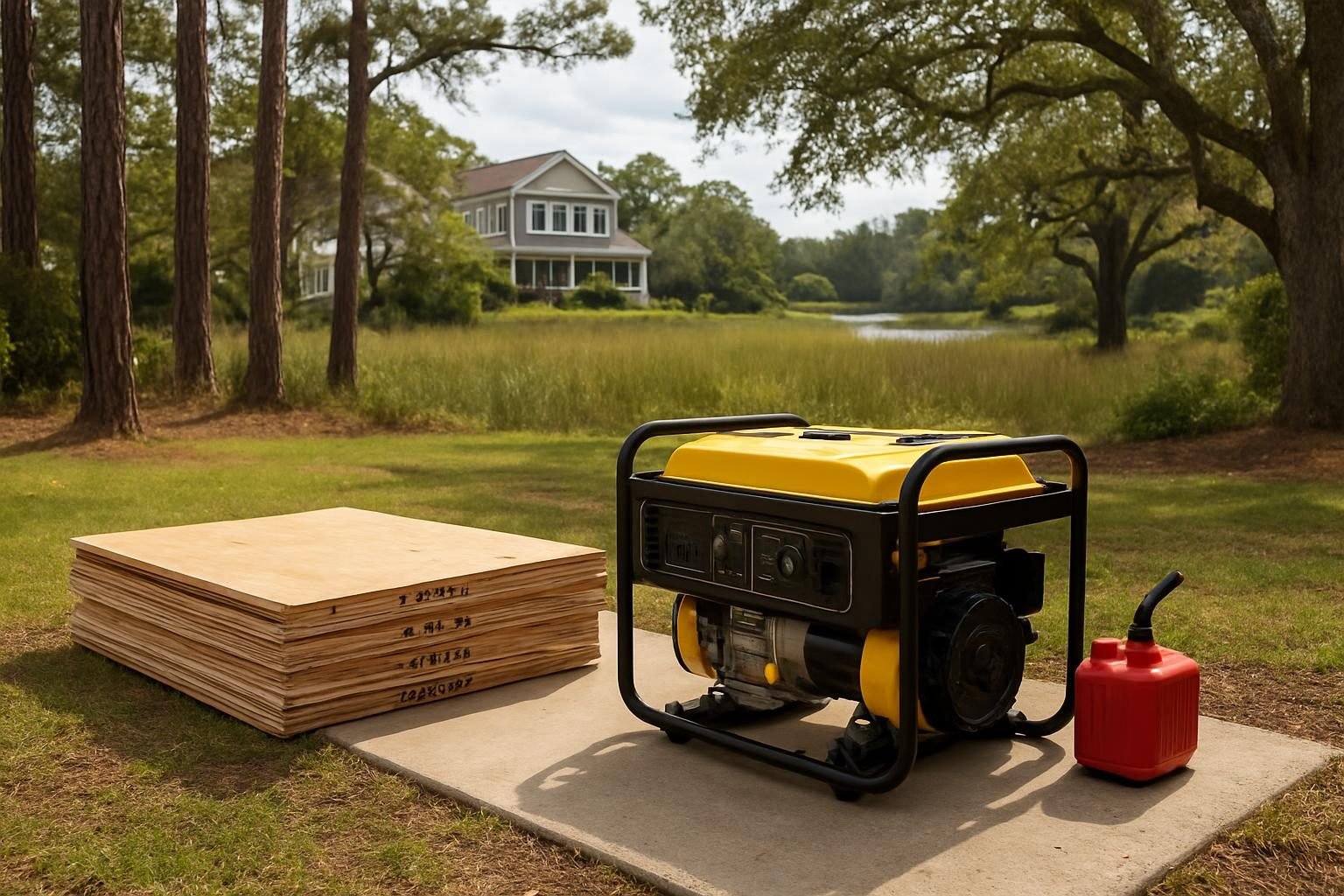
Local tip: Pre-cut and label your plywood panels, and store them with the hardware in a bag taped to the stack. Hanging them takes minutes instead of an afternoon of improvising in rising wind.
Generator Readiness and Power Planning
Outages in eastern North Carolina can last days after a major storm. A generator is one of the biggest comfort and safety upgrades, but only if it is installed correctly and ready to run.
Portable vs. whole-house
| Option | Best for | Things to know |
|---|---|---|
| Portable generator | Running a fridge, a few lights, phone chargers, a window unit | Must run outdoors, well away from windows and doors, and needs stored fuel |
| Whole-house standby generator | Powering most or all of a home automatically | Requires permits, proper sizing and a licensed installer; runs on natural gas or propane |
If you are weighing a permanent system, our guide to whole-house generator installation in Jacksonville covers sizing, permits and typical costs.
Generator safety checklist
- Never run a generator in a garage, basement, crawl space or anywhere near an open window. Carbon monoxide is the real danger.
- Test-run it before the season and change the oil per the manual.
- Store fuel safely in approved containers, in small quantities, away from living areas.
- Install battery-powered carbon monoxide alarms.
- Know your fridge and freezer plan: keep doors closed and use a thermometer to judge food safety.
Do not backfeed your home through a dryer outlet. Use a properly installed transfer switch, which a licensed electrician can add.
Crawl Space, Flooding and Moisture
A lot of Onslow County homes sit on crawl spaces, and they take a beating from humidity in a normal year and from water in a storm year. Walk through yours (carefully, with a flashlight and gloves) and look for standing water, damp insulation, sagging vapor barrier or evidence of past flooding.
- Make sure vents and access doors are in good shape.
- Check that grading slopes away from the foundation.
- Raise or protect equipment like HVAC units and water heaters where practical.
- Note the location of your main water shutoff and breaker panel and make sure everyone in the household can find them.
If moisture is chronic, crawl space encapsulation may be worth pricing out. Persistent damp conditions also invite wood-destroying insects, so pair this with our advice on preventing termites in coastal North Carolina homes.
If you notice cracks, doors that stick or uneven floors, have the foundation evaluated before storm season rather than after. See foundation repair costs in Jacksonville for what to expect.
Know where your water shutoff and breaker panel are before the wind picks up, not while you are searching with a flashlight.
Securing the Yard, Dock and Outdoor Items
In high wind, anything loose becomes a projectile. Do the big items early and the small ones when a storm is within about 72 hours.
When a storm is days out
- Bring in or tie down patio furniture, grills, trash cans, potted plants, bikes and kids’ toys.
- Anchor or store propane tanks according to the manufacturer’s guidance.
- Secure or remove hanging decorations, flags and wind chimes.
- Fill vehicle gas tanks and charge devices and power banks.
- Move vehicles away from large trees and, if you live in a low-lying area, to higher ground.
If you have a boat or dock
Follow your marina’s and insurer’s storm plans, and check local guidance on hauling or securing boats. For ramps and general waterway info, see our guide to boating in Onslow County.
Local tip: Shoot a quick video walk-around of your yard before you move things in. It doubles as a record of landscaping and fencing for insurance later.
Documenting Your Home for Insurance
This is the step people skip and regret. An hour of documentation can save weeks of arguing over what you owned and what condition it was in.
- Photograph and video every room, closet, the exterior on all sides, the roof from the ground, the crawl space and any outbuildings.
- Keep a written or spreadsheet inventory of valuables with approximate purchase dates and values.
- Store copies of your policies, declarations pages, ID, mortgage info and key contacts in the cloud and in a waterproof bag.
- Save receipts for major upgrades like a new roof, windows or generator.
Understand what you actually have. Standard homeowners policies often treat wind and flood very differently, and flood coverage is usually a separate policy. Read does homeowners insurance cover water damage in North Carolina and then call your agent to confirm your deductibles, including any separate hurricane or named-storm deductible. Ask about waiting periods for new flood coverage, since you cannot buy it the day a storm forms.
Seasonal Home Maintenance Calendar for Coastal NC
Spread the work through the year and hurricane season stops being a scramble.
| Time of year | Tasks |
|---|---|
| Early spring (March to April) | Roof and gutter inspection, termite inspection, crawl space check, tree trimming, review insurance |
| Late spring (May) | Test generator, stock supplies, decide on window protection, update documentation photos |
| Summer (June to August) | Service the AC, replace filters, watch the forecast, keep gutters clear, monitor humidity |
| Peak season (August to October) | Stay storm-ready: supplies stocked, plans reviewed, outdoor items easy to move |
| Fall (November) | Inspect for any storm wear, clear leaf debris, restock supplies, review what worked |
| Winter (December to February) | Schedule larger projects (roof, drainage, generator install) while contractors are less busy |
Your AC works hardest exactly when storm-related outages hit, so do not neglect it. Our guides on signs your AC is failing in humid summers and HVAC services in Sneads Ferry can help you catch problems early.
How to Hire a Licensed Local Pro
Before a storm, you can take your time. After one, scams and unlicensed operators show up fast. Either way, the rules are the same.
- Verify the license. Check the contractor’s license with the appropriate North Carolina licensing board for their trade. Do not rely on a business card or truck lettering.
- Ask for proof of insurance, including general liability and workers’ compensation, and confirm it is current.
- Get multiple written estimates with scope, materials and timelines spelled out.
- Be wary of large upfront payments and high-pressure door-to-door pitches.
- Get everything in writing, including warranties and change orders.
- Check local references and look for a track record in the community.
For the post-storm version of this process, read how to hire a contractor after hurricane damage in North Carolina.
After the Storm: Where to Go Next
Once it is safe, document damage with photos before you touch anything, make temporary repairs to prevent further loss (tarp a roof, shut off water) and keep receipts. Then call your insurer promptly. These guides pick up where this checklist leaves off:
- Storm damage repair in Jacksonville: what to do after a hurricane
- Water damage restoration in Jacksonville: steps, timeline and costs
- Water damage and storm repair in Hubert
- Emergency plumber in Jacksonville, plus typical plumber costs and plumbing services in Richlands
- Pest pressure often rises after floods: see termite control in Jacksonville, termite treatment costs and pest control in Holly Ridge
- Replacing a storm-damaged system? Check AC installation costs in Jacksonville
Military families should also follow official Camp Lejeune and MCAS New River channels for base-specific storm guidance, and check with your housing office if you live on base or in a managed community.
Ready to get your house in shape? Request a vetted local pro for storm and hurricane home prep through the form on this page.
Hurricane Preparation FAQ
When should I start preparing my home for hurricane season?
Start in early spring. Roof and gutter work, tree trimming, generator service and insurance reviews are easiest to schedule before June 1, when the season officially begins.
Does homeowners insurance cover flood damage?
Usually not. Standard policies typically exclude flood, which is covered by a separate flood policy. Wind damage may carry its own deductible. Confirm the details with your agent, and remember new flood policies often have a waiting period.
Is a portable generator or a whole-house generator better?
A portable unit is cheaper and can run essentials, but it needs fuel and careful outdoor placement. A whole-house standby system is more convenient and powerful but costs more and requires permits and a licensed installer.
What should I do about my crawl space before a storm?
Check for standing water, make sure drainage slopes away from the house, and know where your shutoffs are. If moisture is a recurring issue, consider having a professional evaluate drainage and encapsulation.
How do I avoid contractor scams after a hurricane?
Verify the license and insurance yourself, get written estimates, avoid large upfront payments and be skeptical of unsolicited door-to-door offers. Local, established companies are generally a safer bet than crews that appear only after a storm.
Get hurricane prep help from vetted Onslow County pros
Tell us what your home needs and we’ll connect you with a licensed, insured local pro who can follow up with a quote.