If you live in Jacksonville or anywhere in Onslow County, you already know a hurricane doesn’t always announce itself with a direct hit. A tropical storm that tracks just offshore can still peel shingles, drive rain under flashing, and drop a pine limb through your roof deck overnight. This guide covers emergency roof repair after a hurricane in Jacksonville, NC: what to do in the first hours, how to document everything, how to avoid the scammers who follow every storm, and what a realistic timeline to a permanent roof looks like.
Quick answer: After a hurricane, stay off the roof until the wind is gone and it’s dry, photograph all damage from the ground, and call your insurer. Have a licensed local roofer install a temporary tarp or emergency seal to stop water getting in. Keep every receipt, never sign over your insurance claim, and don’t pay a large deposit to anyone who knocked on your door. Permanent repair usually follows the insurance adjuster’s inspection and can take weeks to months after a big storm.
Key takeaways
- Stopping water intrusion fast matters more than a perfect repair; a tarp buys you time.
- Photos and video before any cleanup protect your insurance claim.
- Be wary of out-of-area crews who show up unsolicited right after a storm.
- Emergency work is temporary; the permanent repair comes after the adjuster visits.
If you’d rather not sort through crews on your own, you can request emergency roof repair help from a vetted local pro using the form on this page.
First Hours: Safety Before Repairs
Your first job is not fixing the roof. It’s making sure nobody gets hurt.
- Wait for the all-clear. Don’t go outside until the storm has fully passed, not just during the calm of the eye.
- Stay off the roof. Wet, damaged decking and loose shingles are dangerous, and a fall is far worse than a leak.
- Watch for downed lines. Treat every wire as live, especially around fallen trees. Report outages and hazards to your utility.
- Check inside. Look at ceilings for sagging, bubbling paint, or dripping. If a ceiling is bulging with water, a small hole to drain it into a bucket can prevent a collapse, but only if it’s safe to stand under it.
- Shut off power to wet areas if water is coming through light fixtures or outlets.
If water has already soaked insulation and drywall, read our guide to water damage restoration in Jacksonville, NC so you know what drying and mitigation should look like. In our humid climate, wet materials can grow mold quickly.
A tarp is not a repair. It’s a way to stop a bad day from becoming a ruined ceiling.
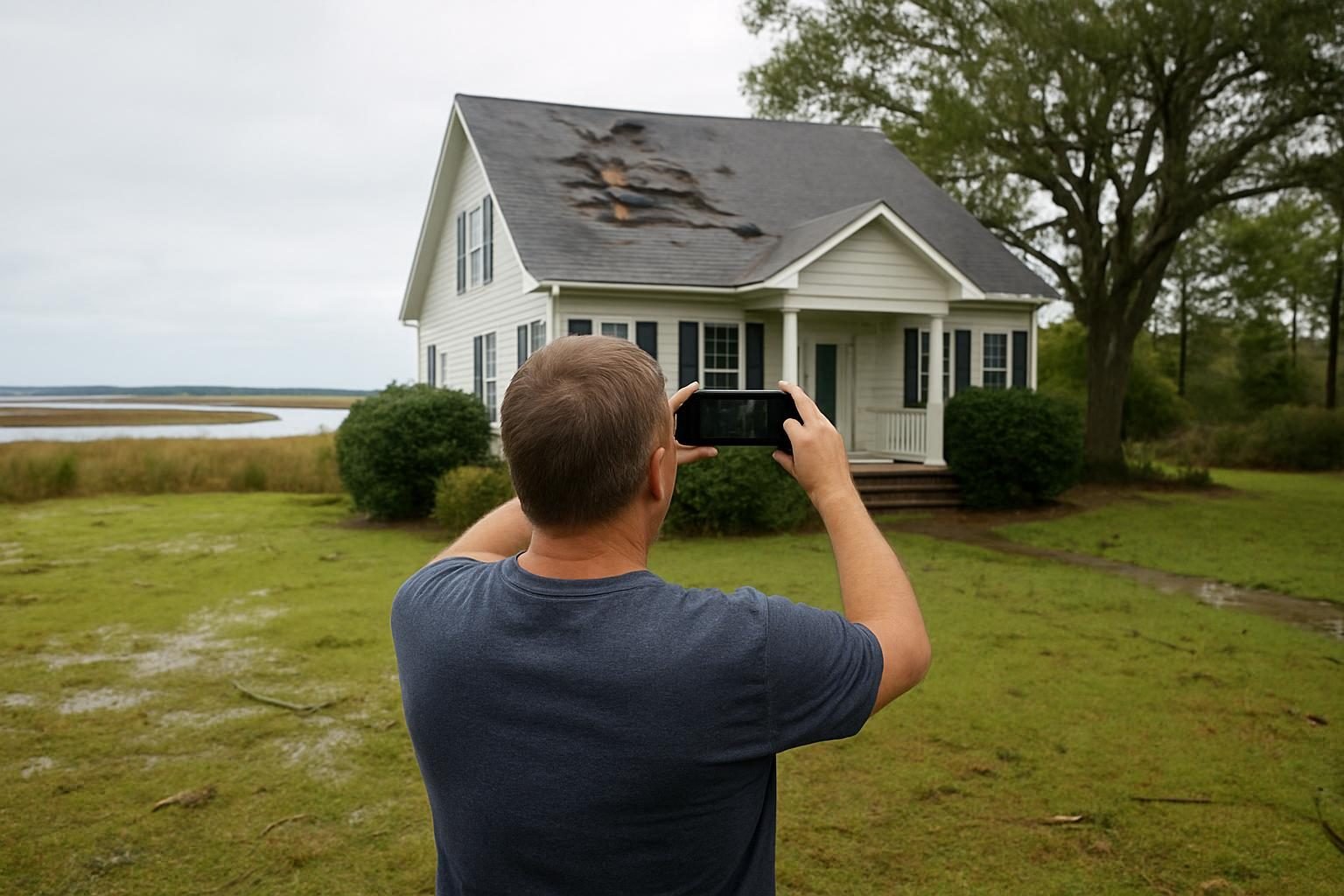
How to Document Roof Damage for Insurance
Good records are the difference between a smooth claim and a long argument. Do this before you move debris or make repairs, where it’s safe.
- Photograph from the ground. Capture every slope you can see, plus fallen trees, gutters, fascia, and soffit.
- Shoot the interior. Get ceilings, walls, attic access, and any wet insulation. Include wide shots and close-ups.
- Take a slow video walk-through narrating the date and what you see.
- Save damaged materials like loose shingles or flashing pieces if you can, and note where they came from.
- Keep a log of every call, name, and claim number.
- Keep every receipt for tarps, emergency repairs, and temporary lodging.
Report the claim promptly and ask your insurer what it requires for emergency measures. Most policies expect you to take reasonable steps to prevent further damage, and the cost of those steps is often reimbursable, but check your own policy and speak with your agent. Our broader storm damage repair guide for Jacksonville walks through the full claim sequence, and coverage questions are explained in whether homeowners insurance covers water damage in North Carolina.
Local tip: Wind and flood coverage are often handled differently on coastal policies, and many carry a separate named-storm or wind/hail deductible. Read yours before the season starts, not after landfall.
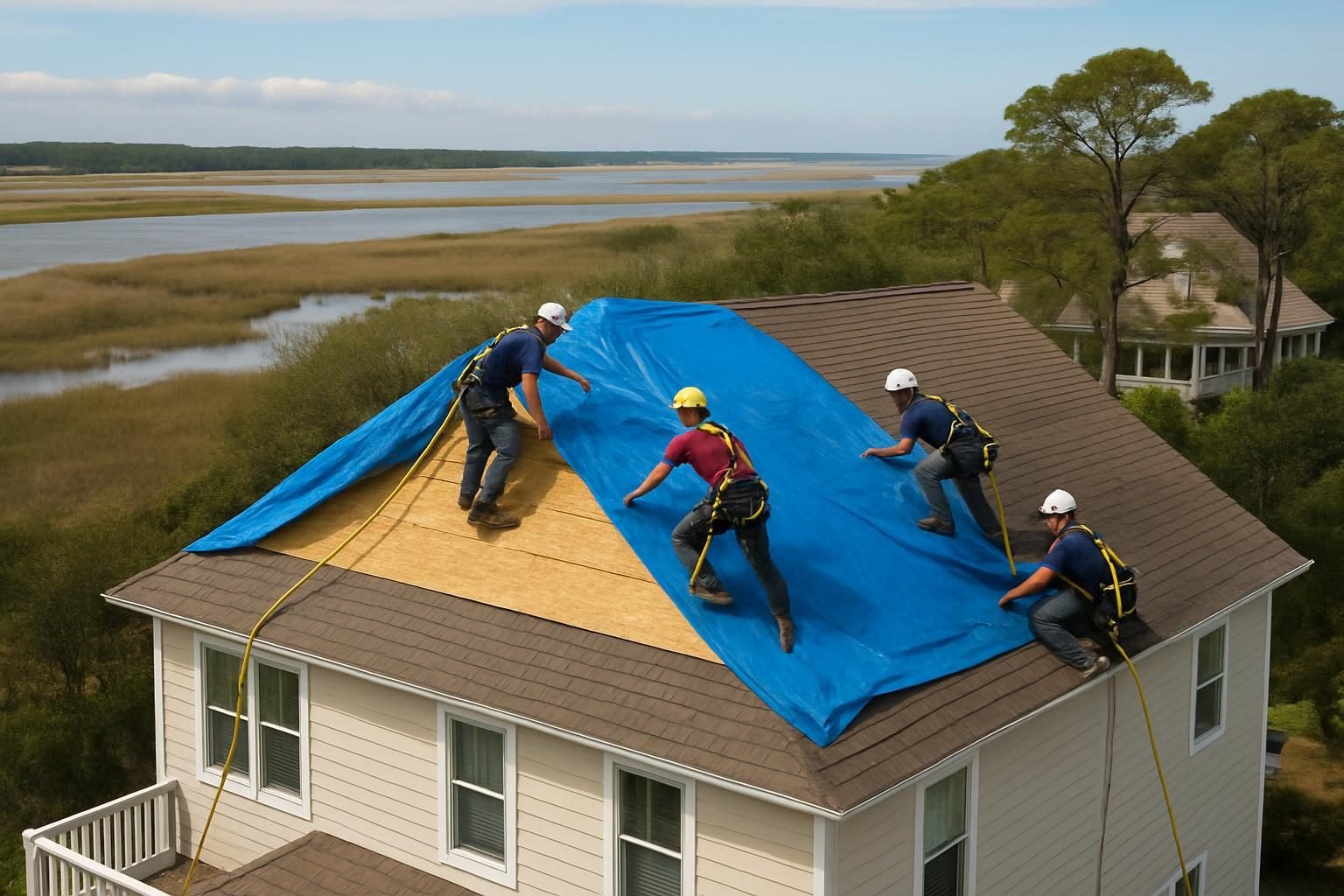
Tarping and Temporary Repairs
Emergency roof repair is about stopping water, not restoring a finished roof. A pro typically does one of the following.
Common emergency measures
| Measure | What it does | Best for |
|---|---|---|
| Roof tarp | Heavy sheeting secured over a damaged area to shed water | Missing shingles, exposed decking, small to medium areas |
| Plywood or board-up | Covers holes in decking before tarping | Impact damage from fallen limbs |
| Sealant or patching | Seals flashing, vents, or small punctures | Minor leaks around penetrations |
| Debris removal | Clears branches and loose material | Tree strikes, before tarping |
A well-installed tarp is fastened to solid framing and decking, not just nailed through the sheeting in a few places. A poorly secured tarp can blow off in the next squall and leave you worse off.
Should you tarp it yourself?
For most people, no. Working on a wet or storm-damaged roof is how injuries happen. If damage is only visible from the ground and you can safely stay off the roof, call a pro. If a limb has punched through, resist the urge to climb up and look.
Keep any tarping invoice and photos of the finished work. Insurers often want to see that you acted quickly and reasonably.
Emergency repairs stop the leak. The adjuster’s inspection and your claim decide what comes next.
Avoiding Storm-Chaser Scams
After every major storm, crews arrive from out of the area looking for quick work. Many are honest. Some are not, and homeowners rushed and stressed are easy targets.
Warning signs
- They knock on your door unsolicited and pressure you to sign today.
- They ask for a large cash deposit up front, or full payment before work.
- They want you to sign an assignment of benefits or hand over your insurance claim.
- They offer to “waive your deductible,” which can amount to insurance fraud.
- They have no local address, no verifiable license, or won’t provide proof of insurance.
- They can’t tell you who will be on your roof or how long they’ve worked in Onslow County.
What to do instead
- Verify the license and insurance before anyone starts. Ask for certificates and check them directly with the issuer.
- Get more than one quote when time allows, and compare scope in writing.
- Get a written contract that spells out the work, materials, payment schedule, and warranty.
- Prefer contractors with a real local presence who’ll still be around when a warranty question comes up in two years.
For a deeper checklist, see how to choose a roofing contractor in Jacksonville, NC, and for the post-storm angle specifically, our upcoming guide on how to hire a contractor after hurricane damage in North Carolina will cover it in detail. North Carolina also has rules around post-disaster contracting and deposits, so check current requirements with the state’s licensing board and Attorney General’s office.
Local tip: Military families who just PCS’d in may not know who’s reputable here yet. Ask neighbors on your street and your unit’s spouse groups which roofers have worked in the area for years, then verify credentials yourself.
The Permanent Repair Timeline
Once the roof is watertight, the slower part begins. Here’s a realistic sequence, though timing varies a lot with storm severity and how many neighbors are in line with you.
- Day 0 to 3: Safety check, photos, claim filed, emergency tarp or board-up.
- Days 3 to 14: Adjuster inspection and written estimate. A roofer can meet the adjuster on site and point out damage.
- Weeks 2 to 6: Claim decision, scope agreed, and contractor scheduled. Materials and crews can be scarce after a big event.
- Weeks 4 to 12 or longer: Permanent repair or full replacement, depending on damage and demand.
- After the work: Final inspection, warranty paperwork, and photos of the completed roof for your records.
These are general expectations, not promises. A widespread storm can stretch everything. Keep tarps maintained while you wait, because they can loosen over time and in later weather.
Repair or replace?
Localized damage may mean replacing sections of shingles and flashing. Widespread granule loss, many lifted shingles, or compromised decking may point to a full replacement. Our roof replacement cost guide for Jacksonville lays out typical price ranges so you can sanity-check estimates. Costs vary widely by roof size, pitch, and materials, so treat any figure as an estimate and ask for itemized quotes.
Salt air and constant humidity also shorten roof life along the coast, which is worth remembering if your roof was already aging before the storm. Older systems often fail first.
After the Roof: Other Things to Check
A roof breach rarely stays a roof problem. Once the water is stopped, look at what it touched.
- Attic and insulation: Wet insulation loses effectiveness and can hold moisture.
- Ceilings and walls: Staining or softness suggests deeper moisture.
- HVAC: Rooftop or attic units can be damaged by wind or water. See our HVAC repair guide for Jacksonville if your system acts up.
- Crawl space and foundation: Heavy rain can overwhelm drainage. See crawl space repair in Jacksonville if you notice standing water or musty smells.
- Power backup: If outages were long, consider whole-house generator installation before the next storm.
- Plumbing: Burst or damaged lines need fast attention; our emergency plumber guide explains when to call.
If you’re in Swansboro or the surrounding area, a local-focused option is coming in our guide to roofing contractors in Swansboro, NC. For planning around storm timing, our Jacksonville weather by month page shows when hurricane season peaks.
Ready to get the roof sealed? Request emergency roof repair from a vetted local pro using the form on this page.
Emergency Roof Repair FAQ
How fast should a roof be tarped after a hurricane?
As soon as it’s safe to work, ideally within a day or two, because every rain event can push more water into the structure. Don’t send anyone up in high wind or lightning.
Does homeowners insurance pay for emergency tarping?
Many policies cover reasonable emergency measures to prevent further damage, but coverage and deductibles vary, especially for named storms. Call your insurer, keep receipts, and confirm the details in writing.
Can I stay in my house with a damaged roof?
Often yes, if the structure is sound, the roof is tarped, and there are no electrical or collapse hazards. If ceilings are sagging or water is near wiring, stay elsewhere until a professional checks it.
How do I know if a roofer is legitimate after a storm?
Verify the license and proof of insurance directly, get a written contract, and avoid anyone demanding a big up-front deposit or an assignment of your claim. A real local address and track record in Onslow County are good signs.
How long until my roof is permanently fixed?
It depends on the claim process and local demand. After a major storm, expect weeks to a few months, with the temporary tarp protecting the home in the meantime.
Get free emergency roof repair quotes from Jacksonville pros
Tell us what happened and a vetted Onslow County roofer will contact you to arrange an inspection and a quote.