If you own a pier-and-beam or raised home anywhere in Onslow County, you have probably noticed the musty smell that creeps up through the floor in August. Crawl space encapsulation is the most common fix, and the crawl space encapsulation cost in Jacksonville, NC is one of the first things homeowners ask about once a contractor mentions it. This guide breaks down typical price ranges, what the work actually includes, and whether it makes sense for a coastal North Carolina house.
Quick answer: Most Jacksonville-area homeowners should expect crawl space encapsulation to run roughly $3,000 to $15,000 or more, depending on square footage, the condition of the space and how much moisture control is added. Smaller, dry crawl spaces land near the low end, while large or wet ones with drainage and a dehumidifier land near the top. These are typical ranges, not quotes, so get at least two or three written estimates.
Key takeaways
- Typical encapsulation costs in our area run about $3,000 to $15,000+, driven mostly by size, condition and add-ons.
- A proper job includes a heavy vapor barrier, sealed vents, and usually a dehumidifier or conditioned air.
- Our humid, storm-prone coast makes moisture control worth real consideration, but not every crawl space needs full encapsulation.
- Fix standing water, drainage and pest problems first, or encapsulation can trap trouble underneath.
Want pricing for your own home? You can request help with crawl space encapsulation from a vetted local pro using the form on this page.
What Is Crawl Space Encapsulation?
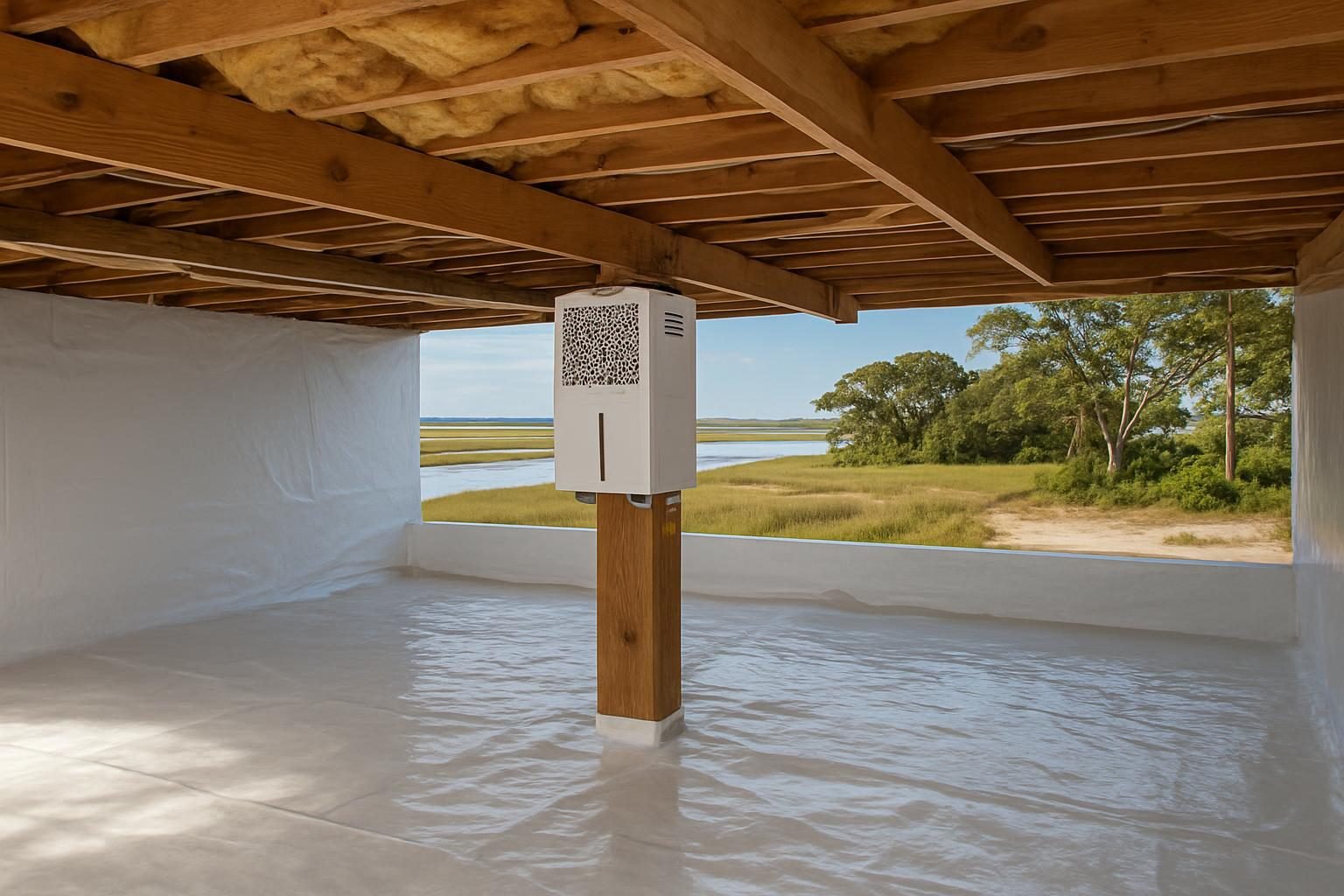
Encapsulation turns a vented, dirt-floor crawl space into a sealed, controlled space. The idea is to stop outdoor humid air and ground moisture from reaching the framing and insulation under your floors.
Older homes in Jacksonville, Richlands, Hubert and Maysville were often built with open foundation vents. That was standard thinking decades ago, but in a climate where summer air is thick and wet, those vents can pull moisture in rather than dry things out.
The basic parts of a full encapsulation
- Vapor barrier: A thick polyethylene liner (commonly 10 to 20 mil) laid over the ground and run up the walls and piers.
- Sealed seams and edges: Overlaps taped and the liner fastened to the foundation walls.
- Vent sealing: Foundation vents closed off and air-sealed.
- Moisture control: A crawl space dehumidifier, or sometimes a supply of conditioned air from the home’s HVAC.
- Optional extras: Wall insulation, sump pump, drainage, and removal of old wet insulation.
In a coastal climate, the vents meant to dry out a crawl space can end up pulling moisture in.

Crawl Space Encapsulation Cost in Jacksonville, NC
Prices vary by contractor, but the ranges below are a reasonable starting point for budgeting. Treat them as estimates and confirm with written quotes.
| Scope of work | Typical range (estimate) | What it usually covers |
|---|---|---|
| Basic vapor barrier only | $1,500 – $4,000 | Ground liner, minimal sealing, little or no dehumidification |
| Standard encapsulation, small to mid-size space | $3,000 – $8,000 | Thick liner on floor and walls, vent sealing, taped seams |
| Full encapsulation with dehumidifier | $5,000 – $12,000 | All of the above plus a dehumidifier and some insulation |
| Large or problem crawl space | $10,000 – $15,000+ | Drainage, sump pump, cleanup, repairs, insulation and equipment |
What drives the price up or down
- Square footage: More floor area means more liner, labor and sealing.
- Access: Low clearance or a cramped entry slows crews down and raises labor cost.
- Existing condition: Wet or moldy insulation, debris, and standing water all add prep work.
- Equipment: A quality dehumidifier is a meaningful part of the total, and ongoing electricity is a small recurring cost.
- Drainage needs: Sump pumps and French drains can add thousands.
A lot of pricing is quoted per square foot, but square-foot numbers alone can mislead. Ask what is actually included before comparing two bids.
What Should a Quote Include?
Two quotes at the same price can describe very different work. Ask each contractor to spell out the details in writing.
- Liner thickness and whether it covers the walls and piers or just the floor.
- How seams, penetrations and pier wraps are sealed.
- How the foundation vents will be closed off.
- Whether a dehumidifier is included, its model and capacity, and who services it.
- Treatment or removal of existing mold, wet insulation or debris.
- Warranty terms for both labor and materials, and what voids them.
- Whether a moisture or pest inspection is done first.
Local tip: Ask any contractor to show you the crawl space with the access open before you sign, and to point out exactly where moisture is coming from. A good estimator can explain whether it is ground vapor, a plumbing leak, a drainage issue or just humid air.
Is Encapsulation Worth It in Humid Coastal NC?
For many homes here, yes, but it depends on what is going on under your floors. Eastern North Carolina summers push humidity high for months, and crawl spaces tend to stay damp, especially near the New River, the White Oak River and other low-lying areas.
Our Jacksonville weather by month guide shows how long the sticky season really lasts, which is the main reason moisture control matters here.
Potential benefits
- Less musty odor: Crawl space air often rises into living areas.
- Protection for wood framing: Lower moisture helps limit rot and mold growth on joists and subfloor.
- More comfortable floors: Cold, damp floors in winter and clammy ones in summer often improve.
- Possible energy savings: A drier, sealed space can ease the load on your system, though results vary by house.
- Fewer conditions pests like: Damp wood attracts termites and other pests, though encapsulation is not a substitute for pest control.
Savings claims vary a lot, so be cautious of any contractor promising a specific percentage off your power bill. If cooling costs are a concern, our AC installation cost guide and HVAC repair guide cover the other side of that equation.
When it may not be worth it
- Your crawl space is already dry, with no odor, no visible mold and sound insulation.
- The real problem is a plumbing leak or roof leak that has not been fixed yet.
- You plan to sell soon and the work will not change your home’s condition much.
Encapsulation seals in whatever is already there, so fix leaks, drainage and pests before anything gets covered up.
Fix These Problems First
Sealing over an active problem makes it harder to spot later. Before any liner goes down, have these checked.
- Termites and wood-destroying insects: Get an inspection first. Our termite control guide and termite treatment cost breakdown explain what to expect, and you can read about preventing termites in coastal North Carolina homes too.
- Plumbing leaks: A slow drip from a supply or drain line keeps the space wet no matter what you install. See our plumber cost guide if you suspect one.
- Grading and gutters: Water that pools against the foundation will find its way underneath.
- Structural issues: Sagging floors or cracked piers are a separate problem. Our foundation repair cost guide covers that.
Storms, Flooding and Your Crawl Space
Hurricane season adds a wrinkle. Heavy rain and storm surge can put water under a home, and a sealed crawl space does not make you flood-proof. Encapsulation helps control everyday humidity, not a flooded foundation.
If water does get in, move quickly. Our water damage restoration guide walks through the steps and timeline, and the storm damage repair guide covers the broader cleanup. It is also worth knowing whether homeowners insurance covers water damage in North Carolina, since flood and gradual moisture are often treated differently.
Local tip: If you live in a flood-prone area, ask the contractor how a liner, pump and dehumidifier would be set up to handle a water event, and where equipment sits relative to likely water levels. Also check your own flood zone and coverage before you spend money.
Cheaper Alternatives to Full Encapsulation
You do not always need the full package. Depending on what is wrong, one of these may solve most of the problem.
| Option | Typical cost (estimate) | Best for |
|---|---|---|
| Ground vapor barrier only | $1,500 – $4,000 | Dirt floors with moderate moisture and decent ventilation |
| Standalone dehumidifier | Equipment plus install, often a few hundred to a couple thousand dollars | Already-sealed or mostly tight spaces |
| Improved drainage and gutters | Varies widely | Water entering from outside |
| Replace damaged insulation | Varies by size | Sagging or wet insulation, otherwise dry space |
| Do nothing, monitor | Low cost of a hygrometer | Dry, odor-free crawl spaces |
A cheap hygrometer left in the crawl space for a few weeks can tell you a lot. Humidity that stays consistently high through the summer is a strong sign you need more than a spot fix.
How to Hire a Crawl Space Contractor
- Get at least three written estimates with the scope spelled out.
- Confirm the company is properly licensed and insured for work in North Carolina, and verify it yourself.
- Ask for local references and photos of finished crawl spaces.
- Be wary of high-pressure sales, “today only” discounts, and quotes given without looking underneath.
- Get warranty terms in writing, including what maintenance is required.
After a storm, scammers tend to follow. Our upcoming guide on how to hire a contractor after hurricane damage in North Carolina goes deeper on vetting.
Ready to compare options? Request a crawl space encapsulation quote from a vetted local pro through the form on this page.
Crawl Space Encapsulation FAQ
How much does crawl space encapsulation cost in Jacksonville, NC?
Typical ranges run from about $3,000 to $15,000 or more, depending on size, condition and whether a dehumidifier and drainage are included. Basic vapor barrier work can cost less. These are estimates, so get written quotes for your home.
Does encapsulation stop mold?
It helps by reducing the moisture mold needs, but it will not remove existing mold by itself. Active mold should be addressed and the moisture source fixed as part of the job.
Do I need a dehumidifier in an encapsulated crawl space?
In our humid climate, most contractors recommend one or some form of conditioned air, since a sealed space can still hold moisture. Ask what the contractor recommends for your specific crawl space.
Will encapsulation lower my energy bills?
It can help in some homes by reducing humidity and heat loss through the floor, but savings vary and should not be guaranteed. Treat any specific percentage claim with skepticism.
How long does installation take?
Many standard jobs take a few days, while larger or problem spaces needing drainage, repairs or cleanup can take longer. Your contractor should give you a timeline in the estimate.
Get crawl space encapsulation quotes from Jacksonville pros
Tell us about your home and a vetted local crawl space pro will follow up with a free estimate.