If you own a home anywhere in Onslow County, from a ranch off Western Boulevard in Jacksonville to a stilt house in Sneads Ferry, you are living in prime termite country. Warm winters, sandy soil, high humidity and a lot of tree cover create ideal conditions for these insects. Learning how to prevent termites in coastal North Carolina is far cheaper than repairing what they leave behind.
Quick answer: To prevent termites in coastal North Carolina, keep moisture away from your foundation, eliminate any wood-to-soil contact, hold mulch and firewood back from the house, fix leaks fast, and get a professional termite inspection every year. Most prevention comes down to taking away the damp, hidden, wood-rich spots termites need, then having a trained eye check what you cannot see.
Key takeaways
- Moisture is the root problem: fix leaks, grade, gutters and crawl space humidity first.
- Wood should never touch soil, and mulch should stay a few inches below siding and away from the foundation.
- Swarms in spring are a warning sign, not the start of the problem; colonies are often years old by then.
- An annual inspection by a licensed pro is the single best habit for catching trouble early.
Want a professional set of eyes on your home? You can request a termite inspection from a vetted local pro using the form on this page.
Why Termites Thrive on the North Carolina Coast
Onslow County sits in a part of the state where termites are active for most of the year. Our mild winters mean colonies rarely go fully dormant, and our soil stays warm and damp for long stretches.
The species most homeowners deal with here is the eastern subterranean termite. These insects live in the ground, build mud tubes to reach wood above, and feed constantly. You may also run into drywood termites near the coast, and Formosan termites are a known concern in some southeastern coastal areas, so ask a licensed inspector what is active in your neighborhood.
Our housing stock matters too. Many Jacksonville homes were built on crawl spaces, and a lot of waterfront and island properties use pilings, decks and docks that put wood right next to wet ground. Add salt air, afternoon storms and hurricane season, and you have plenty of moisture to go around.
What termites actually need
- Moisture: damp soil, leaky pipes, clogged gutters and humid crawl spaces.
- Food: wood, mulch, cardboard, paper and anything containing cellulose.
- Access: any path from soil to your framing, including cracks, trim and untreated lumber.
Remove one or more of those, and your home becomes a much harder target.
Termites do not need a dirty house. They need a damp one with wood they can reach.

Moisture Control: Your First Line of Defense
If you only do one thing to prevent termites, control moisture. A dry foundation is the least inviting place a colony can pick.
Gutters, downspouts and grading
Make sure gutters are clear and downspouts discharge several feet away from the house. After a heavy coastal rain, walk the perimeter and look for pooling water near the foundation.
The soil should slope away from the home. In flat parts of Onslow County, even a small low spot can hold water against the slab or foundation wall for days.
Leaks and plumbing
A slow drip under a sink, a weeping hose bib or a failing water heater line can feed termites for months. Check the spots you rarely look at, including the crawl space, the garage and the area around the water heater.
If you find a leak you cannot fix yourself, our guide to what a plumber costs in Jacksonville can help you budget. For anything urgent, see when to call an emergency plumber in Jacksonville.
Humidity and the crawl space
Crawl spaces are where many local termite problems begin. Vents that let in humid summer air, bare dirt floors and torn vapor barriers keep the space damp and the wood soft.
Some homeowners choose to seal and condition the space. We break down the numbers in crawl space encapsulation cost in Jacksonville. Your air conditioning plays a role as well, since an overworked system can leave indoor humidity high; see signs your AC is failing in eastern North Carolina’s humid summers.
Local tip: After any big storm or nor’easter, take a flashlight into the crawl space and look for standing water, wet insulation and fresh mud on the piers. Catching it early beats finding it at your next inspection.
Break Wood-to-Soil Contact
Termites travel from the ground into wood. Anywhere lumber touches soil is basically a doorway.
Common problem spots
- Deck posts and stair stringers set directly in the ground.
- Wooden siding, trim or lattice that reaches the dirt.
- Fence boards and gates attached to the house.
- Door and window frames near grade level.
- Firewood, lumber scraps and stacked pallets against the foundation.
- Dock and piling connections where wood meets damp soil.
Keep siding at least several inches above finished grade where possible, and use concrete footings or metal post bases for decks. Pressure-treated lumber helps, but it is not a substitute for keeping wood dry and off the ground.
Watch for mud tubes
Subterranean termites build pencil-width tubes of soil along foundation walls, piers and pipes. Finding one means you should call a pro rather than scrape it off and forget it. Breaking the tube does not eliminate the colony.
A mud tube on your foundation is a message. Read it before you brush it away.
Mulch, Landscaping and Yard Habits
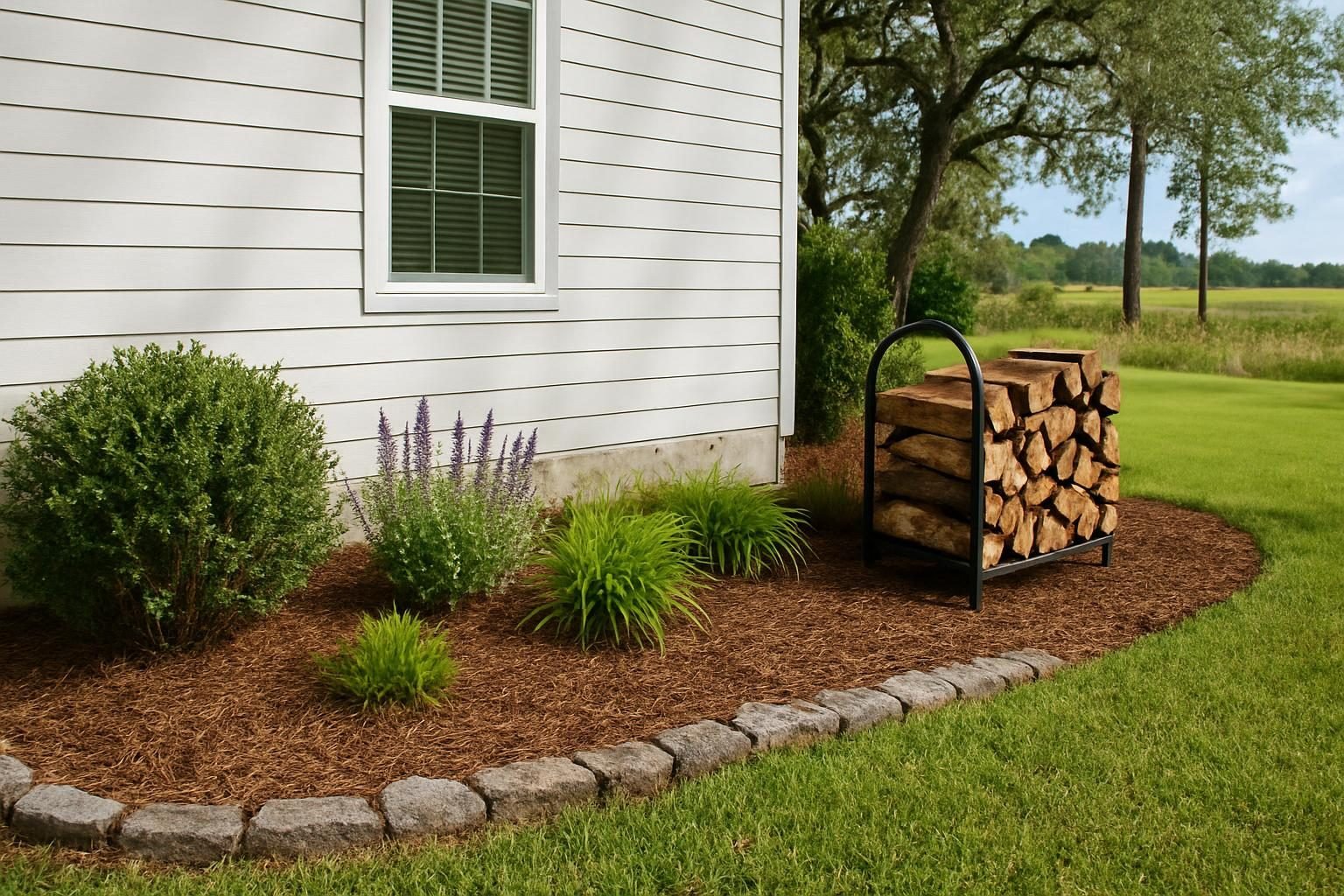
Mulch looks great and holds moisture, which is exactly why termites like it. You do not have to give it up, but you do have to manage it.
Smarter mulch practices
- Keep mulch a few inches below your siding and pull it back from the foundation.
- Use a thin layer rather than a deep, soggy one.
- Consider a gravel or stone strip right along the foundation.
- Rake mulch occasionally so it does not stay constantly wet.
Trees, stumps and firewood
Old stumps, buried scrap wood and fallen limbs make convenient colony sites close to the house. Remove them, or at least keep them well away from the structure.
Store firewood off the ground and away from the house, and bring in only what you will burn soon. Trim shrubs and vines so air can move along the walls and the foundation can dry out.
Irrigation
Sprinklers that spray the siding or soak the foundation add to the moisture problem. Adjust heads so water lands on the lawn, not the house.
Swarm Season in Onslow County
Termite swarmers are winged reproductives that leave a mature colony to start new ones. In eastern North Carolina, subterranean swarms commonly show up in spring, often after a warm, damp day, though timing varies year to year.
People often mistake them for flying ants. A few quick clues can help, but a pro should confirm.
| Feature | Termite swarmer | Flying ant |
|---|---|---|
| Waist | Thick, straight body | Pinched, narrow waist |
| Antennae | Straight | Bent or elbowed |
| Wings | Two pairs, equal length | Front pair longer than back |
A swarm inside the house, discarded wings on windowsills, or piles of wings near doors and lights are all reasons to schedule an inspection. A swarm outdoors means a colony is nearby, which is worth knowing even if it is not in your walls yet.
Local tip: If you see swarmers, catch a few in a zip bag or tape them to a card. It helps the inspector identify the species and decide on the right treatment.
Termite Inspections: What to Expect and How Often
No amount of DIY prevention replaces a trained inspector. Termites feed inside walls, behind trim and under flooring, where you will not see them until damage is advanced.
Most pros recommend an inspection at least once a year. If you are buying a home, an inspection is a smart step before closing, and many lenders in North Carolina expect a wood-destroying insect report. Military families moving in on a PCS timeline should build this into the schedule early, since inspections can take a few days to book.
What an inspector looks at
- The foundation, piers, sill plates and crawl space.
- Attic and framing where accessible.
- Door and window frames, porches, decks and trim.
- Soil and landscaping around the home.
- Signs of past treatment or prior damage.
Inspection, monitoring or treatment?
| Option | What it does | Best for |
|---|---|---|
| Inspection | Looks for active or past termites and conditions that invite them | Yearly checkups, home purchases |
| Monitoring or bait stations | Detects and targets colonies over time | Ongoing protection and early warning |
| Liquid or soil treatment | Creates a treated zone around the structure | Active infestations or high-risk homes |
For a deeper look at what each approach costs and involves, read our termite control guide for Jacksonville and the breakdown of termite treatment cost in Jacksonville. Prices vary by home size, construction and method, so treat any figures as typical ranges and get written quotes.
Living farther south in the county? Our page on pest and termite control in Holly Ridge covers options closer to Topsail.
Choosing a company
Make sure any company is licensed in North Carolina, ask what is included in a warranty or renewal, and get the findings in writing. Be wary of anyone who pressures you to sign the same day. Compare at least two written estimates.
After Storms, Floods and Repairs
Hurricane season adds a layer of risk. Wind-driven rain, roof damage and flooded crawl spaces leave wood wet for long periods, which can invite termites and rot.
If your home took on water, dry it out fast and have the structure checked afterward. Our guides to water damage restoration in Jacksonville and storm damage repair after a hurricane walk through the steps. When you need help with repairs, how to hire a contractor after hurricane damage can keep you from rushing into a bad deal.
It also helps to know what your policy says. Termite damage is often treated as a maintenance issue and excluded, so read whether homeowners insurance covers water damage in North Carolina and confirm the details with your own agent.
A Simple Termite Prevention Checklist
- Clean gutters and direct downspouts away from the foundation.
- Fix leaks and dripping fixtures promptly.
- Check the crawl space for moisture, standing water and mud tubes.
- Keep mulch pulled back and wood off the ground.
- Store firewood and lumber away from the house.
- Remove old stumps and buried wood near the structure.
- Watch for swarmers and discarded wings each spring.
- Schedule a professional inspection every year.
If you would rather have an expert check your home, request a termite inspection through the form on this page and a vetted local pro will follow up.
Termite Prevention FAQ
When is termite season in coastal North Carolina?
Subterranean termites are active year-round in our mild climate, but swarms are most often seen in spring. Timing shifts with weather, so treat any swarm as a reason to schedule an inspection.
How often should I get a termite inspection in Onslow County?
Most pros recommend once a year. Get one before buying a home, after major flooding or storm damage, and any time you spot mud tubes, swarmers or soft, hollow-sounding wood.
Does mulch cause termites?
Mulch does not cause termites, but it holds moisture and gives them cover and food near your foundation. Keep it thin, a few inches below siding and pulled back from the house.
Can I prevent termites myself?
You can lower the risk by controlling moisture, removing wood-to-soil contact and keeping debris away from the house. You still need a licensed professional to inspect hidden areas and treat any active colony.
Does homeowners insurance cover termite damage?
Standard policies often exclude termite damage as preventable maintenance. Check your policy language and ask your agent what, if anything, is covered.
Request a termite inspection from Onslow County pros
Tell us about your home and a vetted local termite pro will contact you to schedule an inspection and share next steps.