If you woke up to water on the floor, or you are staring at a stain spreading across a ceiling, the first question is usually the same: does homeowners insurance cover water damage in North Carolina? The honest answer is “sometimes,” and it depends far more on how the water got in than on how much damage it caused.
This guide walks through the rules most standard policies follow, why Onslow County’s mix of hurricanes, humidity and older plumbing makes the details matter, and how to document a loss so a claim has its best chance. It is general information, not insurance or legal advice. Your policy language and your adjuster have the final word.
Quick answer: Most standard North Carolina homeowners policies cover water damage that is sudden and accidental, such as a burst pipe, a failed water heater or a supply line that lets go. They generally do not cover flooding from rising water, and they often exclude slow leaks, long-term seepage, rot and mold from neglected maintenance. Wind-driven rain from a hurricane can be covered if wind first damages the roof or walls, but storm surge and rising water typically are not.
Key takeaways
- Sudden and accidental water damage is usually covered; gradual leaks and maintenance failures usually are not.
- Flood damage (rising water, storm surge) is excluded from standard policies and needs separate flood insurance.
- Hurricane wind damage is often handled under a separate wind/hail or named-storm deductible, which can be much higher.
- Photos, a written timeline and receipts for emergency mitigation can make or break a claim.
- Read your own policy and call your agent early; this article cannot tell you what your specific policy covers.
If you are dealing with active water right now, you can request help with water damage restoration from a vetted local pro using the form on this page while you sort out the insurance side.

The Core Rule: Sudden and Accidental vs Gradual
Nearly every dispute over water damage comes back to one distinction. Insurers separate water that arrives suddenly from water that has been arriving slowly.
What “sudden and accidental” usually means
This is damage that happens abruptly and unexpectedly. You did not see it coming and could not have reasonably prevented it in the moment.
- A supply line under a sink that bursts
- A water heater that ruptures or floods the closet it sits in
- A frozen pipe that splits during a rare cold snap
- A washing machine hose that fails mid-cycle
- Water from an appliance malfunction, such as a dishwasher or ice maker line
What “gradual” usually means
Gradual damage develops over weeks, months or years. Insurers tend to treat it as a maintenance issue rather than an insured event.
- A pinhole leak behind a wall that has been dripping for months
- A slow leak around a tub or shower pan that rots the subfloor
- Seepage from a poorly sealed window or flashing
- Condensation and humidity that feed mold over time
Here is the catch that surprises people: even when the cause is excluded, the sudden resulting damage may still be covered under some policies. Wording varies a lot, so ask your agent how your policy treats this.
Comparison: Common Water Scenarios and Typical Coverage
The table below shows how these situations often play out under a standard homeowners policy. Treat it as a general pattern, not a promise. Policies differ.
| Scenario | Often covered by standard homeowners? | Notes |
|---|---|---|
| Burst pipe inside a wall | Usually yes | Cost to repair the pipe itself may not be included; resulting damage often is |
| Water heater failure | Usually yes | The heater itself is typically not covered, just the damage it causes |
| Long-term slow leak | Usually no | Often excluded as wear, tear or neglect |
| Rising floodwater or storm surge | No | Requires separate flood insurance |
| Rain entering through hurricane-damaged roof | Often yes | Usually depends on wind first creating an opening |
| Sewer or drain backup | Often no | May need an optional endorsement |
| Mold after a covered loss | Sometimes, with limits | Many policies cap mold coverage |
Insurers care less about how much water there was and more about how it got into your house.
Flood vs Wind: The Distinction That Matters Most on the Coast
Living near the New River, the White Oak River, Topsail Island or the Intracoastal Waterway, this is the section to read twice. Hurricane damage often involves both wind and water, and your policies treat them very differently.
Flood is not covered by standard homeowners insurance
Standard homeowners policies exclude flood. In insurance terms, flood generally means water that rises onto normally dry land, whether from storm surge, overflowing rivers, or heavy rain that pools and enters your home at ground level. Coverage for that comes from a separate flood policy, often through the National Flood Insurance Program or a private flood insurer.
One practical note: flood policies commonly carry a waiting period before they take effect, so buying coverage after a storm is already forecast is usually too late. Ask your agent about timing well before hurricane season.
Wind and wind-driven rain are handled differently
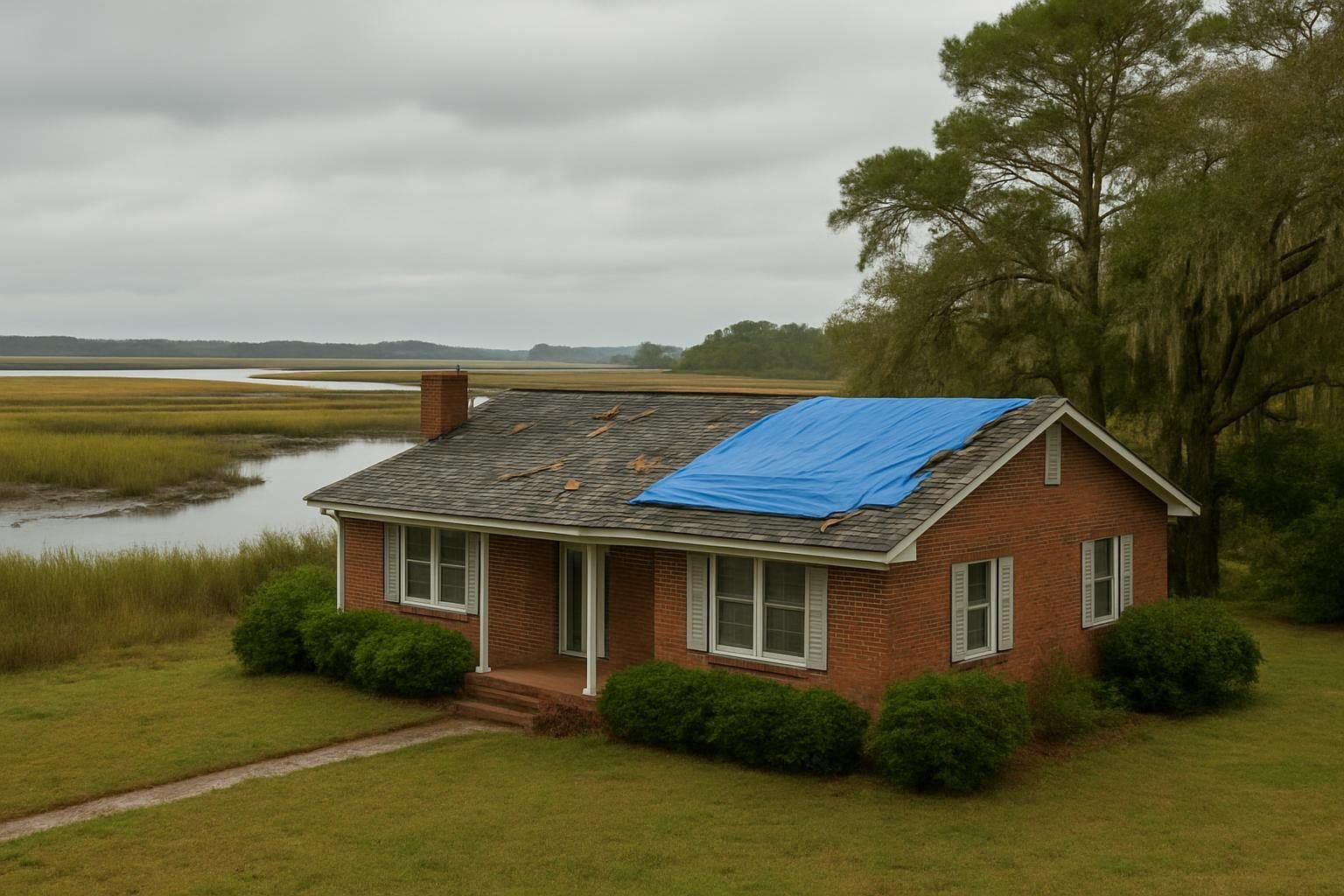
If hurricane winds tear shingles off or break a window, and rain then pours in through that opening, many policies cover the interior water damage as a wind loss. The key is that wind created the opening first. Rain that simply seeps through an intact but aging roof is a harder argument.
Many coastal North Carolina policies also carry a separate named-storm or hurricane deductible, often a percentage of your dwelling coverage rather than a flat dollar amount. On a larger home that percentage can add up quickly, so check yours before you need it.
Local tip: Pull out your declarations page this week and look for the wind/hail or named-storm deductible. Knowing whether it is a flat amount or a percentage of your coverage tells you what a hurricane claim would really cost you out of pocket.
For what to do in the days after a storm, our guide to storm damage repair in Jacksonville after a hurricane covers the practical steps, and our piece on how to hire a contractor after hurricane damage in North Carolina helps you avoid the post-storm scammers who show up when everyone is stressed.
Water Damage Situations Specific to Onslow County Homes
Our climate creates a few recurring problems that are worth understanding before you file anything.
Humidity, crawl spaces and moisture
Eastern North Carolina humidity quietly feeds moisture problems under and inside homes. Because insurers often view humidity-driven damage as a maintenance issue, it is frequently excluded. Many local homes sit on crawl spaces where moisture builds up unnoticed. If that sounds like your house, our breakdown of crawl space encapsulation costs in Jacksonville explains one prevention route.
AC condensate and overflow
A clogged AC drain line can overflow into a ceiling or closet. Whether that is covered often depends on whether it was a sudden failure or a long-running problem. Catching early warning signs helps both your house and your claim, which is why our list of signs your AC is failing in humid summers is worth a read.
Plumbing failures
Older homes in Jacksonville, Richlands and Hubert can have aging supply lines and fittings. A sudden failure is a classic covered event; a leak that went unrepaired is not. If you are weighing a repair, see what a plumber costs in Jacksonville, and for urgent situations, our guide to an emergency plumber in Jacksonville explains when to call.
Termites and moisture
Moisture damage and termites often travel together, and insurers generally exclude termite damage as a preventable maintenance issue. Prevention matters here; see our guide to preventing termites in coastal North Carolina homes.
The faster you stop the water and start documenting, the stronger your claim and the smaller your repair bill.
How to Document Water Damage for an Insurance Claim
Good documentation will not guarantee payment, but poor documentation makes everything harder. Do this in roughly this order.
- Make it safe. If water is near outlets or the ceiling is sagging, stay out and shut off power to the affected area if you can do so safely.
- Stop the source. Close the main water valve for a plumbing failure. Cover openings from storm damage with tarps if it is safe.
- Photograph and video everything before you move or throw away anything: the source, the damage, affected belongings, and wide shots showing the whole room.
- Write a timeline. Note when you discovered it, what you saw, and what you did and when.
- Call your insurer or agent promptly. Most policies require timely notice. Ask about your deductible and what your policy requires.
- Start mitigation. Policies generally expect you to take reasonable steps to prevent further damage. Keep every receipt.
- Keep damaged items if you can until the adjuster has seen them, or photograph them thoroughly.
- Get written estimates for repairs, ideally itemized.
Why mitigation speed matters
Water that sits can turn a covered loss into a bigger one, and mold can start within a couple of days in our humid climate. Insurers may push back on damage they consider the result of delay. A professional drying and cleanup process also generates the moisture readings and logs that support your claim. Our guide to water damage restoration in Jacksonville, including steps, timeline and costs walks through what that process looks like.
Local tip: Ask any restoration company to give you moisture readings, photos and a drying log in writing. Those records are exactly what an adjuster wants to see, and a reputable pro will already be producing them.
If you are in the northern part of the county, our page on water damage and storm repair in Hubert covers local options, and roof-related entry points are covered in our guides to emergency roof repair after a hurricane in Jacksonville.
Common Reasons Water Damage Claims Get Denied or Reduced
- Gradual or long-term leakage the insurer attributes to wear, neglect or poor maintenance
- Flood water filed under a policy with no flood coverage
- Late notice or delay in mitigation that allowed damage to worsen
- Sewer or drain backup without the optional endorsement
- Mold beyond your policy’s limit
- Missing documentation that leaves the cause or timing unclear
If you disagree with a decision, you generally have the right to ask for the reasoning in writing, request a re-inspection, and provide your own contractor estimates. For help with disputes, the North Carolina Department of Insurance is the official state resource, so check their current consumer guidance.
Preventing the Next Claim
Insurance should be your backstop, not your plan. A few habits reduce risk and strengthen your standing if you ever file.
- Replace aging rubber washing machine hoses and old supply lines.
- Know where your main water shutoff is and that it works.
- Service your AC and clear the condensate line before summer.
- Inspect your roof before hurricane season, especially after the last big storm. See roof replacement costs in Jacksonville if yours is near the end of its life.
- Photograph your home and valuables now, before anything happens.
- Review your coverage and flood options every year, not just at renewal.
Dealing with water in your home right now? Request a quote for water damage restoration from a vetted local pro using the form on this page.
FAQ: Homeowners Insurance and Water Damage in NC
Does homeowners insurance cover a burst pipe in North Carolina?
Usually, yes, when the pipe bursts suddenly and accidentally. The resulting damage to floors, walls and belongings is typically covered, though the cost to repair the pipe itself often is not. Your deductible and policy wording apply.
Does homeowners insurance cover flood damage from a hurricane?
No. Standard homeowners policies exclude flood, including storm surge and rising water. You need a separate flood policy, and those usually have a waiting period before coverage begins.
Is wind-driven rain from a hurricane covered?
Often, if wind first damages your roof, windows or walls and rain enters through that opening. Many coastal policies apply a separate named-storm deductible, so review yours.
Does insurance cover slow leaks and mold?
Slow leaks and long-term seepage are commonly excluded as maintenance issues. Mold may be covered if it results from a covered loss, but many policies cap mold coverage at a low limit.
How quickly should I report water damage?
As soon as you safely can. Most policies require prompt notice and expect you to take reasonable steps to prevent more damage. Call your insurer or agent early and keep all receipts.
This article is general information, not insurance or legal advice. Coverage depends on your specific policy, so confirm details with your agent or insurer.
Get water damage restoration help from Jacksonville pros
Tell us what happened and a vetted local restoration pro will follow up with next steps and a quote.