If you have lived through a July in Jacksonville, you know an air conditioner here does more than cool the house. It also pulls gallons of moisture out of the air every day. That is why the signs your AC is failing in a humid climate look a little different on the coast than they do in a dry state, and why catching them early matters so much in Onslow County.
Quick answer: The most common signs of a failing AC in humid eastern North Carolina are a house that feels clammy even when the temperature is right, weak airflow, warm air from the vents, ice on the indoor coil or refrigerant line, water around the indoor unit, musty smells, strange noises, and rising electric bills. If you notice two or more, shut the system off and get it looked at before a small problem becomes a compressor failure.
If your system is already struggling, you can request help from a vetted local HVAC pro using the form on this page.
Key takeaways
- In our humidity, a clammy house is often the first warning sign, before the temperature even rises.
- Ice on the coil or refrigerant line means turn the system off, not keep running it.
- Changing a dirty filter and clearing the condensate drain are the two safest DIY checks.
- Refrigerant problems and electrical faults always need a licensed technician.
- Systems 12 to 15 years old that need repeated repairs are often better replaced than patched.
Why Humidity Changes How an AC Fails
An air conditioner works in two jobs at once. It lowers the air temperature, and it removes humidity by condensing water on the cold indoor coil. In a place like Jacksonville, Swansboro or Sneads Ferry, that second job runs nearly nonstop from late spring through September.
All that moisture means more wear on drain lines, more chances for mold and algae to grow, and more strain when something goes wrong. A system that is slightly low on refrigerant or has a dirty coil can still blow cool air while doing a poor job on humidity. You end up with a house that is 76 degrees and feels like a swamp.
Salt air adds another layer if you live near the water. Homes around Topsail Island, Sneads Ferry and the White Oak River area can see faster corrosion on outdoor condenser coils and fan housings. That is worth keeping in mind when you read the signs below.
7 Signs Your AC Is Failing in Eastern North Carolina
1. The House Feels Sticky Even When the Thermostat Says It Is Cool
This is the classic humid-climate warning sign. If the thermostat reads 74 but the air feels heavy, windows sweat, or towels never quite dry, your system is not removing moisture the way it should.
Possible causes include a dirty evaporator coil, low refrigerant, a blower running at the wrong speed, or a system that is oversized and cycles off before it can dehumidify. Do not ignore it. Persistent indoor humidity above roughly 60 percent invites mold and can damage wood floors and furniture.
2. Weak Airflow From the Vents
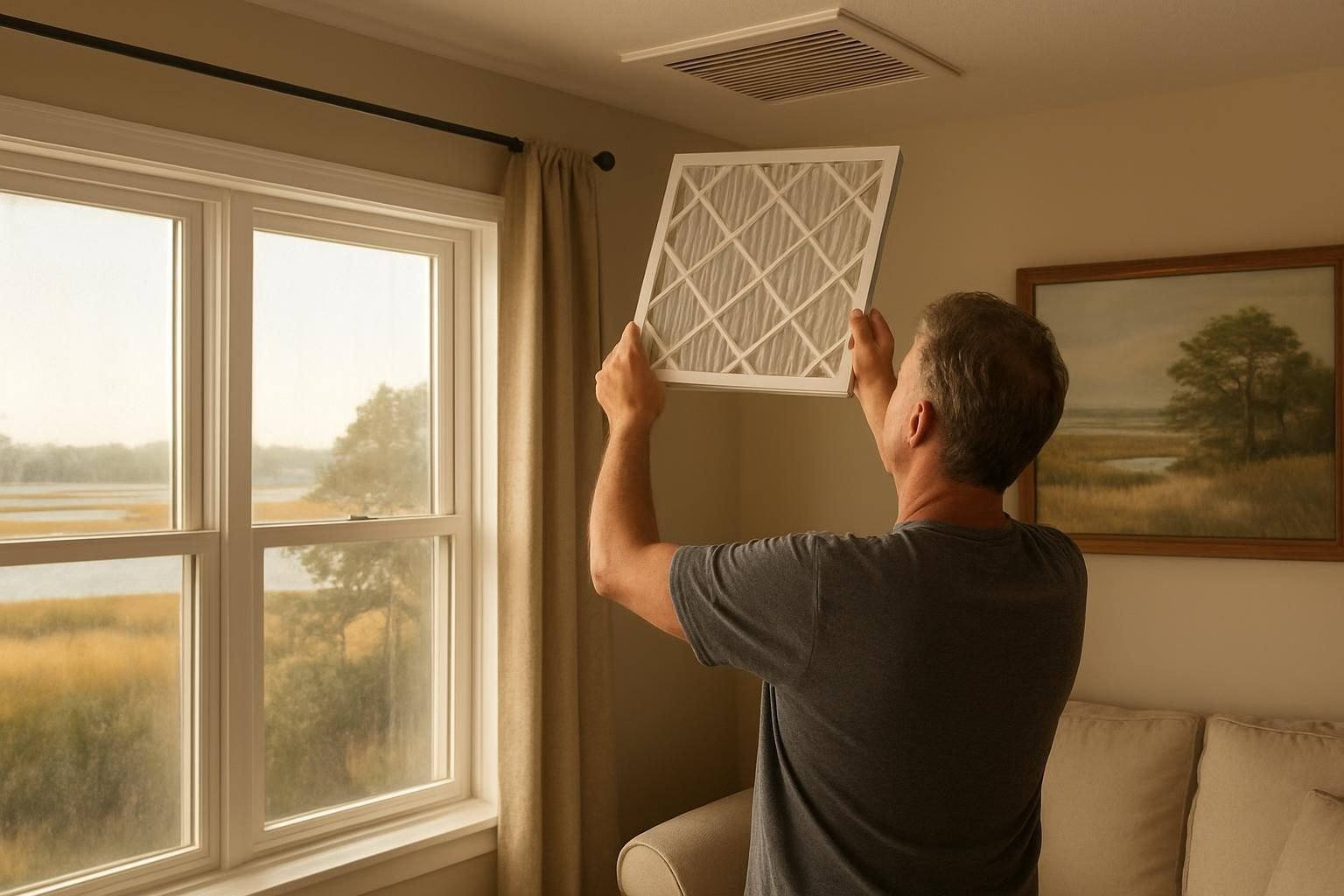
If some rooms barely get air, or the whole house seems to have lost pressure, start with the simple stuff. A clogged filter is the most common culprit, especially in homes with pets or a lot of pollen from our spring season.
If a fresh filter does not help, the cause could be a failing blower motor, a frozen coil, or leaking or crushed ductwork. Ducts in crawl spaces and attics take a beating from moisture, which is one reason some homeowners look into crawl space encapsulation to keep the whole system running in a drier environment.
3. Warm Air or Long Run Times
Air that feels lukewarm, or a system that runs for hours without reaching the set temperature, usually points to a refrigerant issue, a failing compressor, or a condenser coil caked with dirt and pollen. In our summers, a system that used to keep up on 92-degree days and now cannot is telling you something.
Refrigerant does not get used up like gas in a car. If it is low, there is a leak, and topping it off without fixing the leak is a short-term fix at best.
Local tip: Before calling for service on a warm-air complaint, check that your outdoor unit is not blocked by overgrown shrubs, pine straw or debris. Coastal storms and pollen season can bury a condenser faster than you would expect.
In a humid climate, an AC that cools the air but not the dampness is already failing.
4. Ice on the Coil, Refrigerant Line or Indoor Unit
Frost or ice on the copper line near your outdoor unit, or on the indoor coil, is a clear sign something is wrong. Common causes are restricted airflow, low refrigerant, or a failing blower.
Turn the system off at the thermostat and let it thaw completely. Running a frozen system can flood the area when the ice melts and can damage the compressor, which is the most expensive part of the unit.
5. Water Leaks and Moisture Around the Indoor Unit
Your AC produces a lot of condensate in our climate, and it has to go somewhere. A clogged condensate drain line, a cracked drain pan or a frozen coil can all lead to water pooling around the air handler or dripping through a ceiling.
Water from an AC leak can damage drywall, insulation and flooring quickly, especially in an attic or closet install. If it spreads, read up on water damage restoration steps and timelines, and see whether homeowners insurance covers water damage in North Carolina before you start repairs.
Musty Smells, Noises and Other Red Flags
6. Musty Odors or Visible Mold
A damp, locker-room smell when the system kicks on suggests mold or mildew growing on the evaporator coil, in the drain pan or inside the ductwork. Our climate makes this one of the most common AC complaints in eastern North Carolina.
Do not mask it with air fresheners. A technician can clean the coil, treat the drain pan and check whether the root cause is poor drainage, oversizing or leaky ducts. A burning smell or an electrical odor is different. Shut the system off and call a pro right away.
7. Loud, Strange Noises and Rising Electric Bills
Grinding, squealing, banging or rattling are not normal. Each points to a different problem, such as worn motor bearings, a loose part in the blower, or a compressor in trouble. Frequent short cycling, where the system turns on and off every few minutes, is also a warning.
A quieter clue is your power bill. If your usage climbs month after month with similar weather, efficiency is falling. That can come from dirty coils, leaks or an aging compressor working harder to do the same job.
Quick Reference: What Each Sign Usually Means
| Sign | Common causes | DIY first step | Call a pro? |
|---|---|---|---|
| Clammy house | Dirty coil, low refrigerant, oversized unit | Replace filter, check fan setting | Yes, if it persists |
| Weak airflow | Clogged filter, blower issue, duct leaks | Replace filter, check vents | Yes, if a new filter does not help |
| Warm air | Refrigerant leak, compressor, dirty condenser | Clear debris around outdoor unit | Yes |
| Ice on coil or line | Restricted airflow, low refrigerant | Turn system off to thaw | Yes |
| Water leaks | Clogged drain, cracked pan | Turn off system, clear visible drain clog | Yes, if it recurs |
| Musty smell | Mold on coil, drain pan or ducts | Replace filter | Yes |
| Noises, high bills | Motor, compressor, dirty coils | None beyond a filter check | Yes |
A frozen coil is a stop sign, not a suggestion. Turn the system off before a small fix becomes a compressor replacement.
Homeowner Checks You Can Safely Do
Before you call anyone, a few basic checks can rule out simple problems or give a technician useful information. Stick to things that do not involve opening panels or touching electrical components.
- Check the thermostat. Make sure it is set to cool, the temperature is below the room temperature, and the batteries are fresh.
- Replace the air filter. In our climate, check it monthly during summer. A dirty filter is the most common cause of poor airflow and frozen coils.
- Look at the breaker. A tripped breaker for the air handler or condenser can look like a dead system. Reset it once. If it trips again, stop and call a pro.
- Inspect the outdoor unit. Clear leaves, pine straw and debris, and trim plants back a couple of feet. Do not use a pressure washer on the coils.
- Check the condensate drain. If you can see the drain line and it is clogged, clearing it may solve a leak. If there is standing water in the pan, turn the system off.
- Listen and look. Note any ice, odd sounds or smells so you can describe them clearly.
Local tip: After a tropical storm or heavy rain, check your outdoor unit for flooding, debris and standing water before restarting it. If water reached the unit or the electrical connections, have it inspected before you power it up.
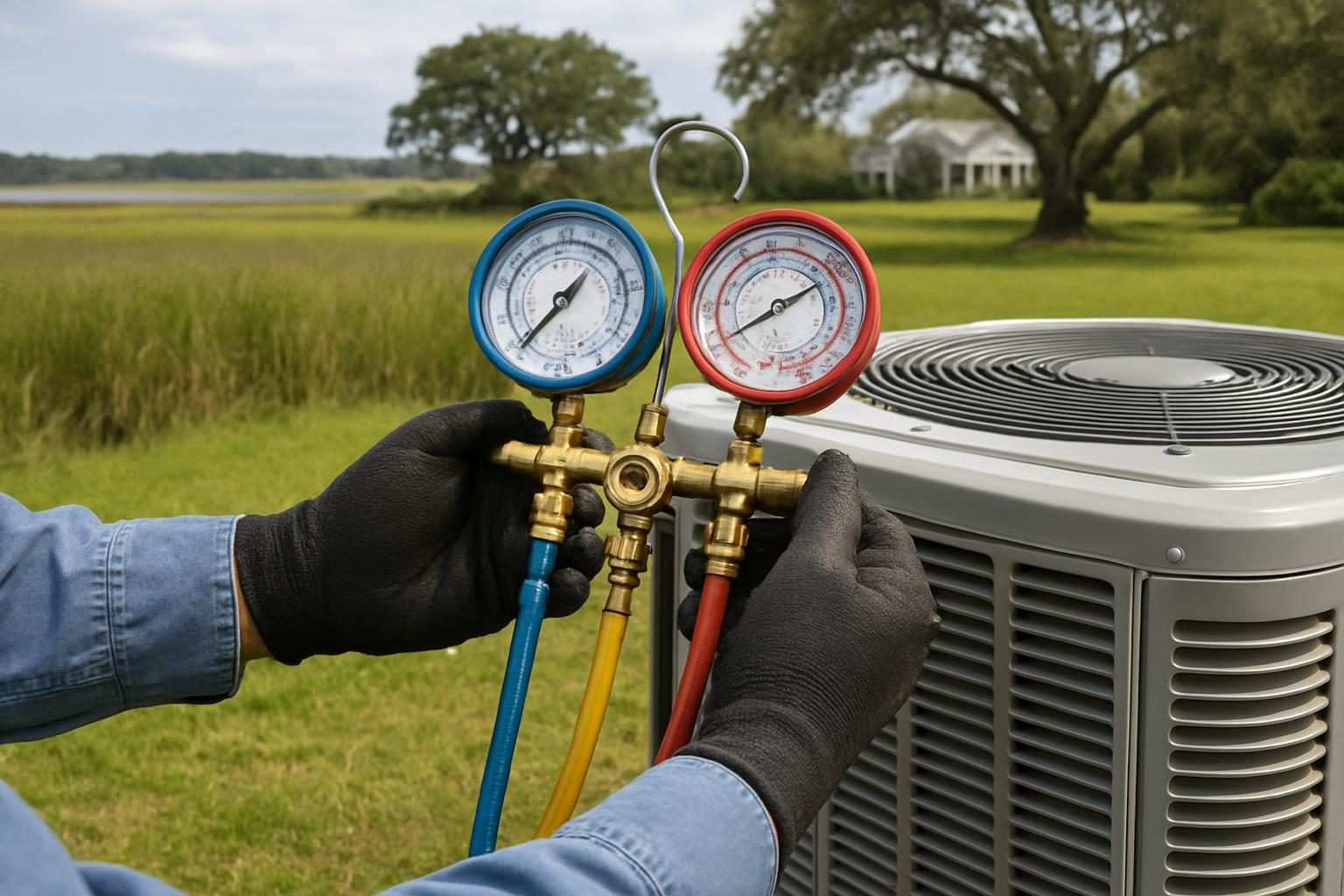
Anything involving refrigerant, capacitors, wiring or the compressor is not a DIY job. These need a licensed technician with the right tools and training.
When to Call a Pro, and When to Think About Replacement
Call a licensed HVAC technician if you see ice that returns after thawing, repeated breaker trips, warm air despite a clean filter, recurring leaks, mold smells, or loud mechanical noises. Early repairs are almost always cheaper than waiting for a full failure in the middle of August.
For a deeper look at what a service visit involves, see our guide to HVAC repair in Jacksonville, NC. If you live out toward the New River or Topsail side, our overview of HVAC services in Sneads Ferry covers repair, replacement and maintenance.
Repair or replace?
There is no single rule, but a few factors tip the balance. Systems in the 12 to 15 year range that need a major component, such as a compressor, often make more sense to replace. The same goes for units that have needed several repairs in a couple of seasons, or that use an older refrigerant that is getting harder and more expensive to service.
Ask any technician for a written diagnosis and options. Get more than one opinion on a big-ticket repair. If you are weighing a new system, the AC installation cost guide for Jacksonville lays out typical price ranges, and proper sizing matters a great deal for humidity control.
Hurricane season and your AC
If an outage is likely, think about how your system will handle it. Power surges when electricity returns can damage compressors, and flooding can ruin outdoor units. If you are shopping for backup power, our guide to whole-house generator installation covers costs, permits and sizing. After a storm, how to hire a contractor after hurricane damage will help you avoid out-of-town operators who show up after the weather clears.
Ready to get a system checked? Request a quote from a vetted local HVAC pro using the form on this page.
FAQ: AC Problems in a Humid Climate
Why is my AC running constantly but the house still feels humid?
Constant running with a clammy feel usually means the system is struggling to remove moisture. Causes include a dirty evaporator coil, low refrigerant, restricted airflow or an improperly sized unit. A technician can measure performance and recommend a fix.
Is it safe to keep running my AC if the coil is frozen?
No. Turn it off at the thermostat and let the ice melt fully. Running it frozen can damage the compressor and cause water damage when the ice thaws. Replace the filter, then call a pro if it freezes again.
How often should I service my AC in eastern North Carolina?
Most technicians recommend a professional tune-up once a year, ideally in spring before the heat and humidity hit. Homes near salt water or with heavy pollen and debris may benefit from checking the outdoor coils more often.
How long does an AC last in a coastal, humid climate?
Many systems last roughly 12 to 15 years, though that varies with maintenance, installation quality and exposure to salt air. Units that run nearly year-round can wear out faster than ones in milder climates.
Can a failing AC cause mold in my house?
Yes. A system that does not remove humidity properly, or that has a clogged drain and wet coil, can create conditions for mold growth. If you smell mustiness or see growth near vents or the air handler, have the system inspected promptly.
Get free AC repair quotes from Onslow County HVAC pros
Tell us what your system is doing and a vetted local HVAC pro will follow up to schedule an inspection and quote.