If you live in Onslow County long enough, you will deal with a storm. Maybe it is a fallen pine through the roof in Hubert, a flooded yard in Sneads Ferry, or wind-driven rain that found its way into a Richlands ceiling. Knowing how to hire a contractor after hurricane damage in NC is one of the most useful things a homeowner here can learn before the next named storm shows up.
The days after a hurricane are when good contractors are busiest and bad ones are most active. This guide walks through verifying licenses and insurance, getting estimates you can compare, structuring payments safely, and spotting storm chasers. It also links down to our detailed guides on each type of repair. If you want help lining up a vetted local pro for storm repair, request help with storm damage repair using the form on this page.
Quick answer
To hire a contractor after hurricane damage in North Carolina, verify the license with the NC Licensing Board for General Contractors for any job of $40,000 or more (or the relevant trade board), ask for proof of liability and workers’ comp insurance, get at least two or three written estimates, and never pay a large deposit up front. Do emergency tarping and drying first, document everything with photos, and walk away from anyone who pressures you to sign on the spot.
Key takeaways
- Verify licenses and insurance yourself, directly with the state board and the insurer, not from a card or a truck door.
- Get written, itemized estimates from two or three contractors before signing anything.
- Never pay the full amount up front; tie payments to finished work.
- Do temporary protection first (tarp, board-up, water extraction) and save the permanent repair decision for after you have compared bids.
- Door-knockers with out-of-state plates and a deal that expires today are the classic storm-chaser warning sign.
First 48 Hours: Protect the House Before You Hire Anyone
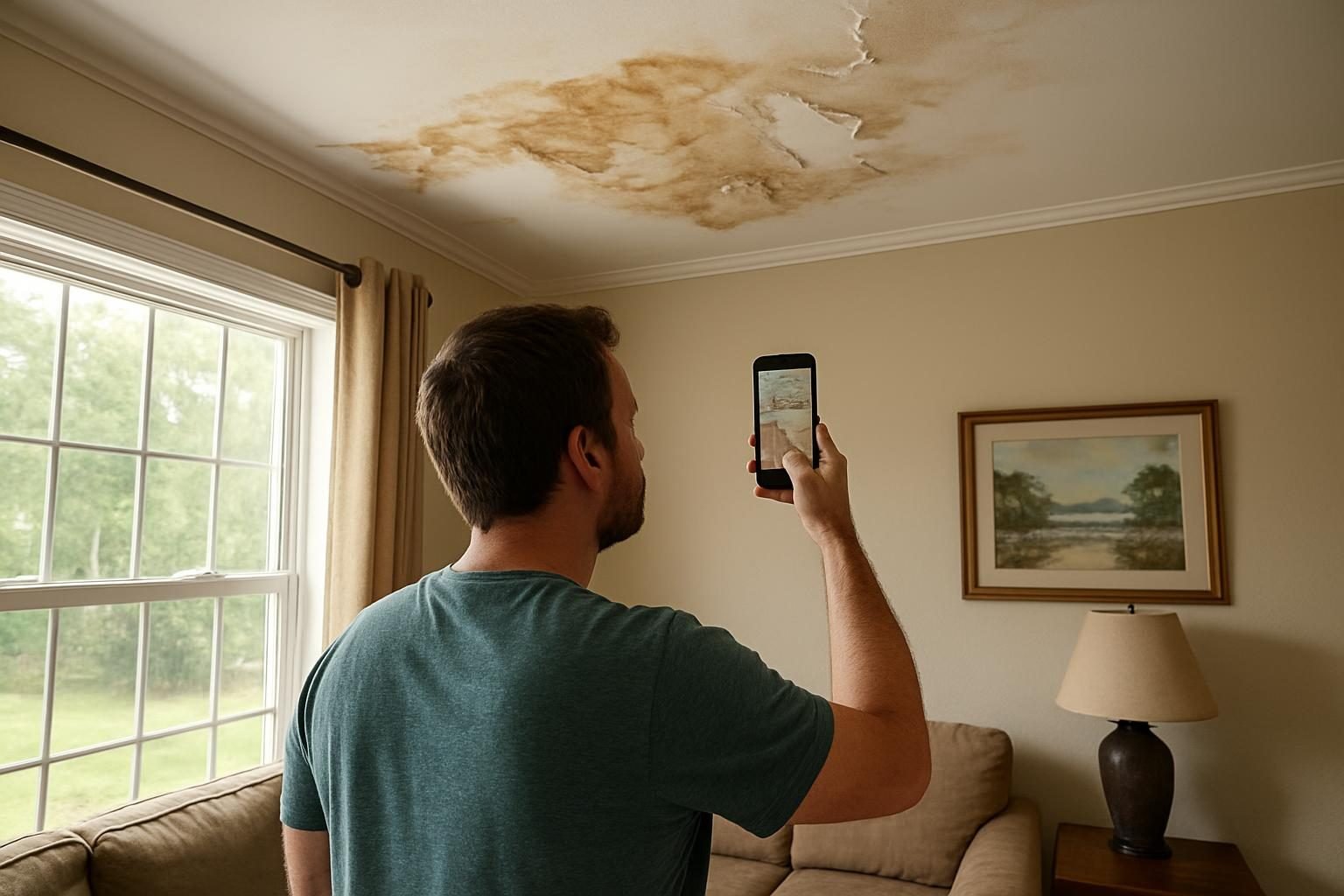
You do not need to choose a contractor in the first hour. You do need to stop further damage, because most insurance policies expect you to take reasonable steps to protect the property.
- Stay safe. Stay out of buildings with structural damage, downed lines, or standing water that could be electrified.
- Take photos and video of every damaged area before you move or throw anything away.
- Tarp the roof and board up openings to keep rain out.
- Start drying. Mold can begin growing quickly in our humid coastal climate.
- Call your insurance company to open a claim and ask what they require before repairs.
- Keep every receipt for temporary repairs, hotel stays, and supplies.
For the step-by-step on this phase, see our guide to storm damage repair in Jacksonville and what to do after a hurricane. If water got inside, read water damage restoration steps, timeline and costs as well.
Local tip: Take a short walk-through video narrating each room and the date before any cleanup. After a big storm, adjusters in the county can be stretched thin, and clear documentation speeds things along.
Emergency tarping and drying cannot wait. The permanent repair contract can, and should.
How to Verify a Contractor’s NC License
North Carolina regulates contractors, and the rules depend on the type and size of the job. This is where a few minutes of checking saves a lot of grief. Always confirm current thresholds and rules directly with the state boards, since they can change.
General contractors
The NC Licensing Board for General Contractors licenses contractors who take on projects at or above a state-set dollar threshold (historically $40,000 for a single project). Many storm repairs, like re-roofing a typical home or rebuilding a section of siding, may fall below it, but a full rebuild or major structural repair often will not. Ask the contractor for a license number and look it up on the board’s website. Check that the name on the license matches the name on the contract and the insurance certificate.
Trade licenses
Plumbing, electrical, and HVAC work are licensed through separate state boards, and they apply regardless of project size. If a storm took out your panel, water heater, or condenser, the person doing that work needs the right trade license. Our local guides cover what to look for with HVAC repair in Jacksonville and emergency plumbers.
Roofers
Roofing is the trade most hurricane victims need first and the one most often targeted by scammers. North Carolina does not have a separate statewide roofing license in the way it does for electricians, so a roofer’s credibility rests on general contractor licensing when the job is large, plus insurance, manufacturer certifications, local references, and a verifiable business history. Our guide on how to choose a roofing contractor in Jacksonville goes deeper, and emergency roof repair after a hurricane covers the tarp-now, replace-later approach.
Permits and inspections
Structural repairs, electrical, plumbing, and many roof jobs require permits through your local building department (the City of Jacksonville, Onslow County, or your town, such as Swansboro or Holly Ridge). A legitimate contractor pulls the permit in their own name. If someone asks you to pull it yourself “to save money,” be cautious, because that can shift liability to you.

Insurance: What to Ask For and How to Confirm It
A license tells you the contractor is legally allowed to do the work. Insurance tells you who pays if something goes wrong on your property. You want both, and you want to verify it yourself.
- General liability insurance covers damage the contractor causes to your home or neighbors’ property.
- Workers’ compensation covers injuries to the crew. Without it, an injured worker can potentially make a claim against you.
- Certificate of insurance (COI) should list your name as certificate holder, and the policy dates should be current.
Do not stop at the paper. Call the insurance agent or company listed on the certificate and confirm the policy is active. A faked or expired certificate is a common trick.
Separately, your own homeowners policy matters. Coverage for wind, flood, and water damage varies, and many policies treat them differently. Our upcoming guide on whether homeowners insurance covers water damage in North Carolina will break down what to expect. Until then, read your policy and ask your agent about deductibles, especially the named-storm or hurricane deductible, which is often a percentage of the home’s insured value rather than a flat dollar amount.
A license shows the contractor can legally do the job. Insurance shows who pays when something goes wrong. Verify both yourself.
Written Estimates: How to Compare Bids Fairly
Get at least two or three written estimates when you can. After a major storm, availability may force you to move faster than normal, but even two bids beat none.
A solid estimate should include:
- The contractor’s legal business name, license number, address, and contact details
- A detailed scope of work (materials, brands, quantities, and what is not included)
- Itemized pricing for labor and materials
- A start date and a realistic completion window
- The payment schedule
- Who handles permits, debris removal, and cleanup
- Warranty terms on labor and materials, in writing
Be wary of a bid that is dramatically lower than the others. That can mean the contractor missed something, plans to cut corners, or intends to hit you with change orders later. For roofing, compare against typical ranges in our roof replacement cost guide for Jacksonville, and for water-related structural issues see foundation repair costs in Jacksonville.
Insurance estimates vs. contractor estimates
Your adjuster’s number and your contractor’s number will not always match. That is normal. If a contractor says the insurance scope is too low, ask them to document the difference line by line rather than simply telling you the insurer is lowballing you.
Local tip: Ask any contractor for two or three recent jobs in Onslow County and, if possible, drive by. A contractor with local roots in Jacksonville, Swansboro, or Sneads Ferry is easy to find again if a problem shows up after the next big rain.
Payment Terms That Protect You
How you pay is as important as who you hire. Contractor fraud after disasters often comes down to money taken up front for work never done.
- Keep deposits small. North Carolina law limits how much a contractor can demand up front for certain home improvement contracts. Confirm current rules with the NC Attorney General’s office, and treat a large deposit request as a warning sign regardless.
- Tie payments to milestones, such as materials delivered, tear-off finished, and final inspection passed.
- Hold the final payment until the work is complete, permits are closed out, and you have walked the site.
- Pay by check or credit card, not cash, so there is a record.
- Get lien waivers. Ask for signed releases from the contractor and major suppliers so a subcontractor cannot place a lien on your home if they were not paid.
- Watch insurance checks. If your mortgage company is on the check, you may need to go through them to release funds. Do not sign over your insurance payment or a “direction to pay” to a contractor without reading exactly what you are agreeing to.
Put every change in writing. A verbal promise on a porch is not a contract.
Storm-Chaser Red Flags
After every major coastal storm, out-of-area crews and opportunists show up. Many are honest workers, but plenty are not. Here is what should make you stop and verify.
| Red flag | Why it matters | What to do |
|---|---|---|
| Door-to-door pitch with a deal that expires today | Pressure prevents you from comparing bids | Say no thanks and take their info to verify |
| Demands large cash deposit | Common setup for taking money and disappearing | Offer a small deposit tied to a written contract |
| No local address or only a P.O. box | Hard to find after the job | Verify a physical business address |
| Cannot show license or insurance | Leaves you exposed to liability | Look up the license yourself and call the insurer |
| Offers to waive your deductible | Can amount to insurance fraud and puts you at risk | Decline; this is not a legitimate offer |
| Asks you to sign a blank or vague contract | Scope can be changed after you sign | Insist on a detailed written scope |
| Wants you to pull permits yourself | May shift liability to you | Require the contractor to pull permits |
If you think you have been targeted, you can contact the NC Attorney General’s Consumer Protection Division, and your local sheriff’s office or police department for fraud concerns. Confirm current contact details on the official sites.
Matching the Contractor to the Repair
Hurricane damage rarely shows up as one clean problem. Here is how to think about which kind of pro you need and where to read more.
Roof and exterior
Wind lifts shingles, drives rain under flashing, and drops limbs on the roof. Start with a tarp, then compare bids for repair or replacement. See our guides on roofing contractors in Swansboro for storm repairs on the White Oak River side of the county.
Water intrusion and drying
If water got into walls, flooring, or insulation, speed matters. Local detail for the western part of the county is in our piece on water damage and storm repair in Hubert.
Crawl spaces and moisture
Many older homes in the county sit over crawl spaces that take on water and stay damp for weeks after a storm. Learn what lasting fixes cost in crawl space encapsulation in Jacksonville.
Plumbing, HVAC, and power
Flooded outdoor units, burst lines, and power surges can strike after storms. If you are planning ahead for outages, read about whole-house generator installation, costs and permits. For plumbing in the Richlands area, see plumbing services in Richlands.
Pests after the storm
Moisture and rotted wood invite termites and other pests. Our upcoming piece on how to prevent termites in coastal North Carolina homes will help, and in the meantime see termite control in Jacksonville.
Military Families and Newcomers: Extra Considerations
If you recently PCS’d to Camp Lejeune or MCAS New River, you may be dealing with your first coastal hurricane season. If you rent, your landlord or property manager is generally responsible for structural repairs, so check your lease and report damage in writing right away. If you live in base housing, contact your housing office and follow official Camp Lejeune and MCAS New River guidance rather than hiring your own contractor.
If you own off base, deployments and temporary duty can make it hard to oversee repairs. Consider giving a trusted person a written limited authorization, keep copies of all contracts, and ask contractors to send photos at each stage. Also look into military legal assistance offices on base, which can often review a contract before you sign.
Our Jacksonville weather by month guide shows when hurricane season peaks, so you can plan ahead for the next one.
Get Help With Storm Damage Repair
If you would rather not vet contractors on your own while dealing with a damaged home, you can request help from a vetted local storm repair pro using the form on this page.
FAQ: Hiring a Contractor After Hurricane Damage in NC
Do I need a licensed contractor for hurricane repairs in North Carolina?
It depends on the job. General contractor licensing applies above a state-set project value, and plumbing, electrical, and HVAC work require trade licenses regardless of size. Check the NC licensing boards for current rules, and always verify the license number yourself.
How much deposit should I pay a storm repair contractor?
Keep it small and tie it to a written contract. North Carolina has rules limiting certain up-front payments, so confirm current requirements with the Attorney General’s office. Pay the rest in stages as work is completed, and hold the final payment until you have inspected the finished job.
Should I wait for my insurance adjuster before hiring a contractor?
Do emergency protection right away, such as tarping and drying, and keep receipts and photos. For permanent repairs, call your insurer first, ask what they require, and avoid signing a full repair contract until you understand your coverage.
How can I tell if a contractor is a storm chaser?
Warning signs include door-to-door pressure, out-of-area plates with no local address, large cash deposit demands, no verifiable license or insurance, and offers to waive your deductible. Verify everything independently before signing.
Where can I report contractor fraud in North Carolina?
You can contact the NC Attorney General’s Consumer Protection Division and the relevant licensing board, and report suspected fraud to local law enforcement. Check official websites for current contact methods.
Get free storm damage repair help from Onslow County pros
Tell us what happened and a vetted local storm repair pro will follow up with next steps and a written estimate.