If you live in Sneads Ferry or anywhere along the Topsail area, water is part of the landscape. It is also the thing most likely to damage your house. This guide covers water damage restoration in Sneads Ferry, NC: what causes it here, what to do in the first 48 hours, how the process works and how to hire well.
Want help now? You can request water damage restoration help from a vetted local pro using the form on this page.
Quick answer: After water gets into your home, stop the source, make the house safe, document everything with photos and start drying within 24 to 48 hours. Mold can begin growing in that window in our humid climate. Call your insurer early, keep receipts, and hire a restoration company that uses moisture meters and commercial drying equipment rather than just fans.
Key takeaways
- The first 48 hours matter most. Drying fast is what keeps a water problem from becoming a mold problem.
- Storm surge, wind-driven rain, burst pipes and high water tables are the main causes near Sneads Ferry and Topsail.
- Flood water from surge is usually not covered by a standard homeowners policy. A separate flood policy is.
- Photograph and video everything before you move or throw out anything.
- Get your contractor’s license, insurance and drying documentation in writing.
Why Water Damage Is So Common in Sneads Ferry and the Topsail Area
Sneads Ferry sits along the New River and the Intracoastal Waterway, and much of the surrounding area is low and flat. The water table is high, the soil drains slowly and the whole region is exposed to tropical systems.
Here are the usual culprits.
- Storm surge and tidal flooding: Hurricanes and strong nor’easters push water up the river, the sound and the creeks. Low-lying lots can flood even when the rain itself is modest.
- Wind-driven rain: Water gets in around windows, doors, soffits and damaged roofing during a storm, then soaks into insulation and drywall where you can’t see it.
- Roof leaks: A few missing shingles after a storm can let in a surprising amount of water. See our guide to finding a roof leak and what repairs cost.
- Burst or leaking pipes: Hard freezes are rare here but do happen, and many coastal homes have uninsulated pipes in crawl spaces that are vulnerable when they do. Aging supply lines, water heaters and washing machine hoses cause plenty of leaks too.
- Crawl space moisture: Standing water, high humidity and vapor from the soil can damage floor framing and insulation slowly over time.
- HVAC condensation: A clogged AC drain line can quietly soak a ceiling or closet in summer.
In our humid climate, a wet house that isn’t dried within a day or two is already on its way to a mold problem.
What to Do in the First 48 Hours
What you do right away can change the final bill dramatically. Work through these steps in order, and only when it is safe.
Hour 0 to 2: Safety and stopping the source
- Check for hazards. If water is near outlets, appliances or the electrical panel, stay out and shut off power at the main breaker only if you can reach it without standing in water. Otherwise call your utility or an electrician.
- Stop the water. For a burst pipe, shut off the main water valve. For roof or window intrusion, cover the opening with a tarp if you can do it safely.
- Avoid flood water contact. Surge and river water can carry sewage, fuel and bacteria. Wear boots and gloves, and keep kids and pets out.
- Don’t run the HVAC if the system or ductwork got wet, since it can spread contamination.
Hour 2 to 12: Document and call
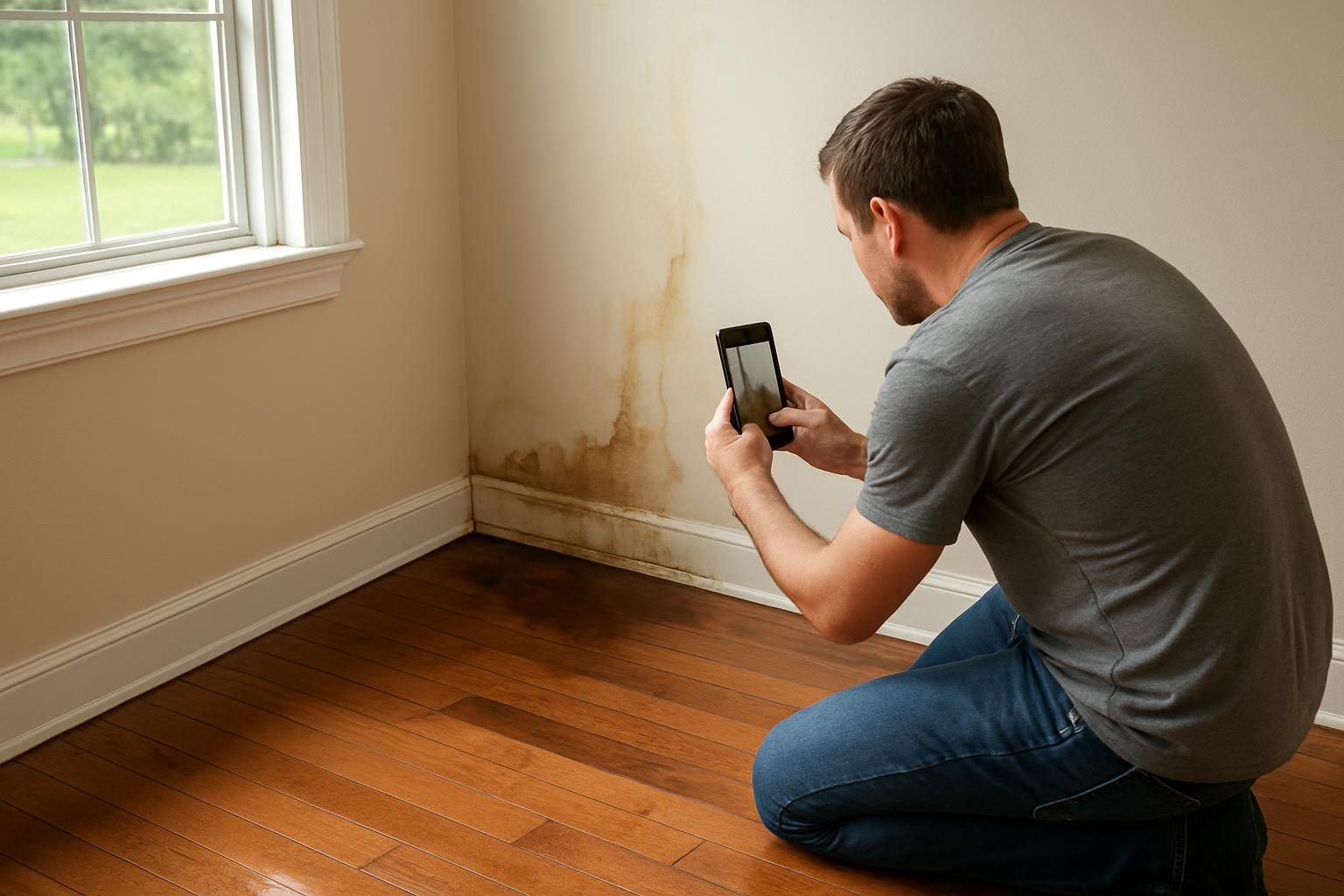
- Photograph and video everything before you move anything: standing water, wet walls, damaged belongings, the source of the leak, and any visible water lines on walls.
- Call your insurance company to open a claim. Ask what they require before you start mitigation.
- Call a restoration company and ask for emergency extraction and drying.
Hour 12 to 48: Start drying
- Remove standing water with a pump or wet vac if it is clean water and you can do so safely.
- Lift soaked rugs and move furniture off wet floors. Place foil or wood blocks under furniture legs.
- Open windows only if humidity outside is lower than inside. On a muggy coastal summer day, opening up can make it worse.
- Set aside wet items for the adjuster rather than tossing them, and photograph what you discard.
Local tip: After a named storm, restoration crews book up fast across Onslow and Pender counties. Save a short list of providers before hurricane season so you aren’t searching from scratch while the roads are flooded.
How Professional Water Damage Restoration Works
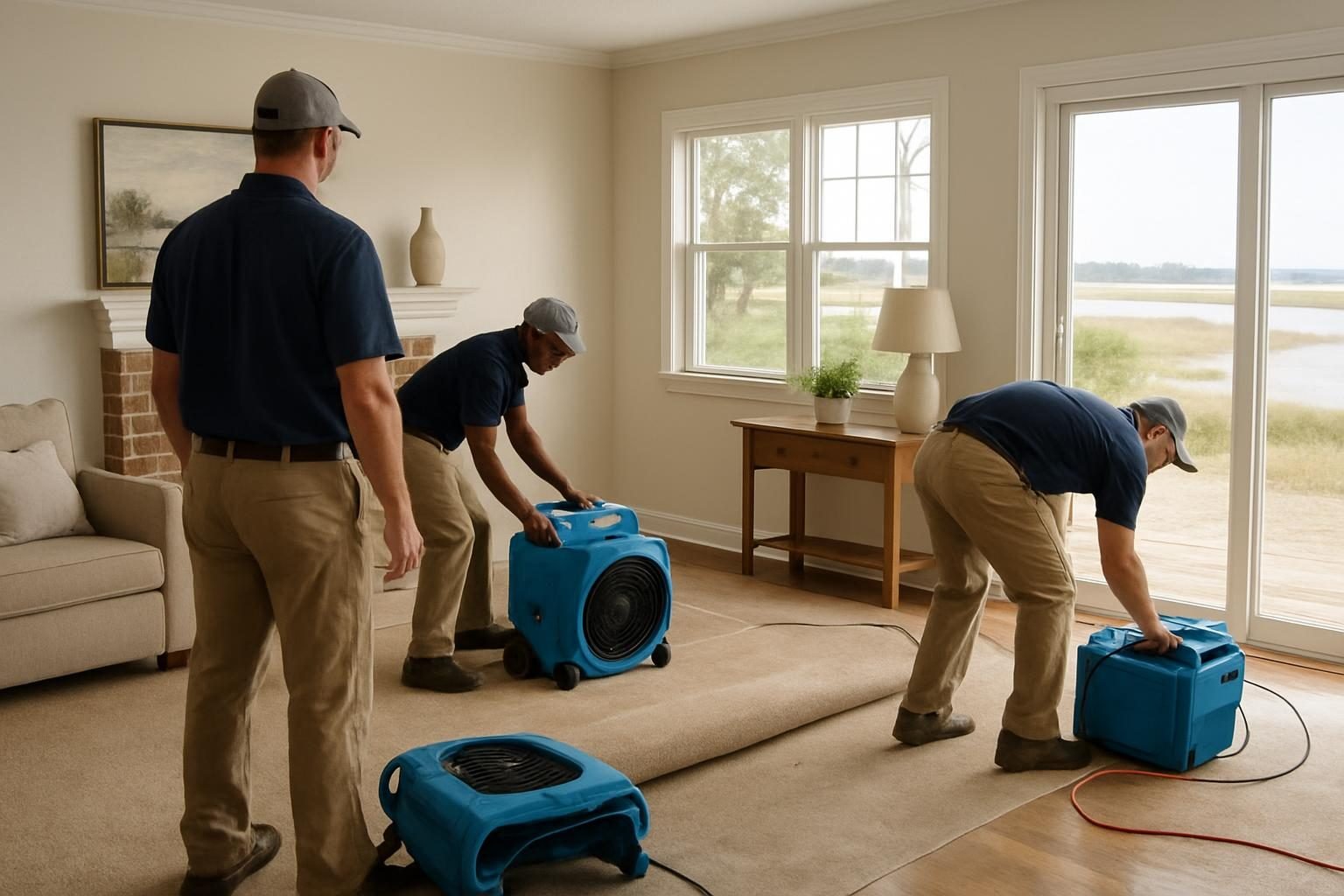
A good restoration job follows a clear sequence. Knowing it helps you tell a real pro from someone who just drops off a few box fans.
- Assessment and moisture mapping. The crew uses moisture meters and often thermal imaging to find water behind walls, under floors and above ceilings.
- Water extraction. Pumps and extractors remove standing water quickly.
- Demolition of unsalvageable materials. Soaked drywall, insulation and carpet padding often have to come out, especially after contaminated flood water.
- Structural drying. Air movers and commercial dehumidifiers run for several days, with daily moisture readings to confirm progress.
- Cleaning and sanitizing. Antimicrobial treatment is standard, particularly after surge or sewage exposure.
- Repairs and rebuild. Drywall, flooring, paint and trim are replaced once readings show the structure is dry.
Understanding water categories
| Category | Typical source | What it means |
|---|---|---|
| Category 1 (clean) | Broken supply line, overflowing sink with clean water | Easiest to dry and often salvageable if handled quickly |
| Category 2 (gray) | Washing machine or dishwasher overflow | Contains contaminants; porous materials often removed |
| Category 3 (black) | Storm surge, river or sewage water | Highly contaminated; affected porous materials usually must be removed |
Storm surge from the New River or the sound is typically Category 3. That changes both the cleanup method and what is realistically salvageable.
Need professionals to assess damage at your place? Request a vetted local restoration pro through the form on this page.
Water Damage, Mold and the Crawl Space
Mold is the second wave of most water damage. In our climate it can start within a couple of days if materials stay damp, which is why drying speed matters so much.
If you notice a musty smell, dark spots or warped baseboards after a leak, read our guide on mold remediation: signs, costs and hiring a pro.
Crawl spaces deserve special attention in older Sneads Ferry homes. Standing water, saturated insulation and constant humidity can rot floor framing and feed mold. If your crawl space floods or stays damp, look at crawl space encapsulation costs and whether it is worth it as part of the long-term fix.
Water also draws pests. Damp wood is attractive to termites, so wet framing should be dried and inspected. Our piece on preventing termites in coastal North Carolina homes explains why moisture control and pest prevention go together.
Surge water is not just wet. It is contaminated, and that changes what can be saved.
Insurance Notes for Sneads Ferry and Topsail Homeowners
Insurance is where many coastal homeowners get surprised, so read your policy before you need it.
- Sudden and accidental water damage from a burst pipe or a storm-damaged roof is often covered under a standard homeowners policy, though terms vary.
- Flood and storm surge are generally excluded from standard homeowners coverage. They usually require a separate flood policy, often through the National Flood Insurance Program or a private carrier.
- Wind and hurricane deductibles in coastal North Carolina are often a percentage of your home’s insured value rather than a flat amount. Check yours.
- Gradual leaks and neglected maintenance are commonly excluded, which is why fixing small problems matters.
- Reasonable emergency mitigation (tarping, extraction, drying) is typically expected of you, and insurers often reimburse it when the loss is covered. Keep all receipts.
For a plain-English breakdown, see whether homeowners insurance covers water damage in North Carolina. Flood policies often have a waiting period before they take effect, so don’t wait until a storm is in the Atlantic to ask about one.
Local tip: Take dated photos and video of every room, plus the exterior and crawl space, before hurricane season each year. A home inventory made in calm weather makes a claim much easier.
How to Hire a Water Damage Restoration Company
After any big storm, out-of-town crews and unlicensed operators show up quickly. Take a few minutes to vet before you sign anything.
- Ask about licensing and insurance. For larger repair and rebuild work, North Carolina requires a licensed general contractor above certain project values. Verify through the state licensing board.
- Ask for written scopes and estimates that separate mitigation (drying) from reconstruction.
- Ask how they document drying. Daily moisture logs and a final dry-standard reading are signs of a serious operation.
- Be wary of pressure. Large upfront payments, door-knockers and refusal to put things in writing are red flags.
- Don’t sign over your insurance claim or benefits without understanding exactly what you are agreeing to.
Our guide on how to hire a contractor after hurricane damage in North Carolina goes deeper on contracts, permits and scams.
When you also need a plumber or roofer
Restoration companies dry and rebuild, but they don’t always fix the cause. If a supply line failed, you will want a plumber. Here is our guide to plumbers in Sneads Ferry and how to hire one. If water came through the roof, a roofer comes first. Neighbors across the river in Swansboro can start with roofing contractors in Swansboro for storm damage and repairs.
If you are further inland, our page on water damage and storm repair in Hubert covers that side of the county.
Preventing the Next Water Emergency
You can’t stop a hurricane, but you can lower the odds of a big loss.
- Clear gutters and downspouts, and direct water away from the foundation.
- Inspect the roof each spring and after any major storm.
- Replace rubber washing machine hoses with braided stainless lines and check water heater connections.
- Know where your main water shutoff is and make sure everyone in the house does too.
- Keep AC condensate drain lines clear. If your system struggles in summer, our guide to AC not cooling in Jacksonville covers common causes.
- Trim or remove dangerous trees before storm season. See tree removal costs, storm risk and hiring.
- Consider window protection such as hurricane shutters and window protection, and a whole-house generator so your sump pump and dehumidifier keep running when the power goes out.
Our hurricane preparation checklist for Onslow County homeowners pulls all of this together, and it’s worth reading before June 1 each year.
If you are dealing with water in your home right now, don’t wait. Request help from a vetted local water damage pro and get drying started.
Water Damage Restoration FAQ
How fast does mold grow after water damage?
Mold can begin growing within roughly 24 to 48 hours on damp materials, and our warm, humid climate speeds that up. That is why professionals aim to start drying right away.
Does homeowners insurance cover storm surge flooding?
Generally no. Standard homeowners policies typically exclude flood and storm surge, which is covered by a separate flood insurance policy. Wind damage and sudden pipe bursts are often covered, but check your own policy.
Can I dry my house out myself?
For a small, clean-water spill caught immediately, fans and a dehumidifier may be enough. For anything larger, hidden moisture inside walls or floors, or contaminated flood water, professional equipment and moisture readings are the safer route.
How long does water damage restoration take?
Drying commonly takes several days, and rebuilding afterward can take days to weeks depending on the damage and material availability. After a major storm, scheduling delays can extend that.
What should I not throw away before the adjuster sees it?
Photograph and keep damaged items, or at least samples, until your insurer says otherwise. Discard anything that is a health hazard, but document it first and save receipts for emergency costs.
Get water damage help from Sneads Ferry area pros
Tell us what happened and a vetted local restoration pro will reach out to discuss next steps and a free estimate.