If you’re reading this with a bucket under a ceiling stain, take a breath. Roof leak repair in Jacksonville, NC is a very common job, and most leaks can be found and fixed without replacing the whole roof. Between salt air, humidity, summer thunderstorms and hurricane season, Onslow County roofs work harder than most, and small problems tend to show up as water inside the house long before they look serious from the driveway.
This guide covers where coastal roofs actually leak, what you can safely do tonight, typical cost ranges, how insurance usually treats a leak, and how to choose a roofer without getting burned.
Need someone out to look at it? You can request roof leak repair help from a vetted local pro using the form on this page.
Quick answer
Most roof leaks in Jacksonville come from failed flashing, worn pipe boots, lifted or missing shingles and clogged valleys, not from the middle of an intact shingle field. A simple repair typically runs a few hundred dollars, while larger repairs involving decking or multiple areas can climb into the low thousands. Protect the inside of the house first, document the damage with photos, and get a written estimate from a licensed, insured roofer before agreeing to anything.
Key takeaways
- Check flashing, vent boots, valleys and chimney edges first. That’s where most coastal leaks start.
- A tarp and a bucket are fine for tonight; nobody should be climbing a wet roof.
- Small repairs are usually a few hundred dollars; decking damage and storm repairs cost more (typical ranges only).
- Insurance often covers sudden storm damage but not neglected wear, so photograph everything and read your policy.
- Get a written estimate and proof of license and insurance before work starts.
Why coastal roofs leak differently
Eastern North Carolina is tough on roofing materials. Heat and humidity cook shingles in summer, afternoon storms drive rain sideways, and salt air speeds up corrosion on metal flashing, nails and fasteners the closer you get to the water. Homes near the New River, in Swansboro, Sneads Ferry and out toward North Topsail Beach tend to see this the most.
Wind is the other factor. A tropical storm doesn’t have to be a direct hit to lift shingle edges or loosen flashing, and those small openings often don’t leak until the next heavy rain weeks later. If your house went through a recent storm and you’re now seeing a stain, that’s the likely story.
The most common leak sources
Water rarely shows up directly under where it enters. It runs along rafters and decking before it drips, so the stain on your ceiling can be several feet from the actual hole. Here is where roofers usually find the problem.
Flashing
Flashing is the thin metal that seals the joints where the roof meets a chimney, wall, skylight or dormer. It’s the number one leak source on most homes. Sealant dries out, metal corrodes in salt air, and it pulls loose.
Pipe boots and vents
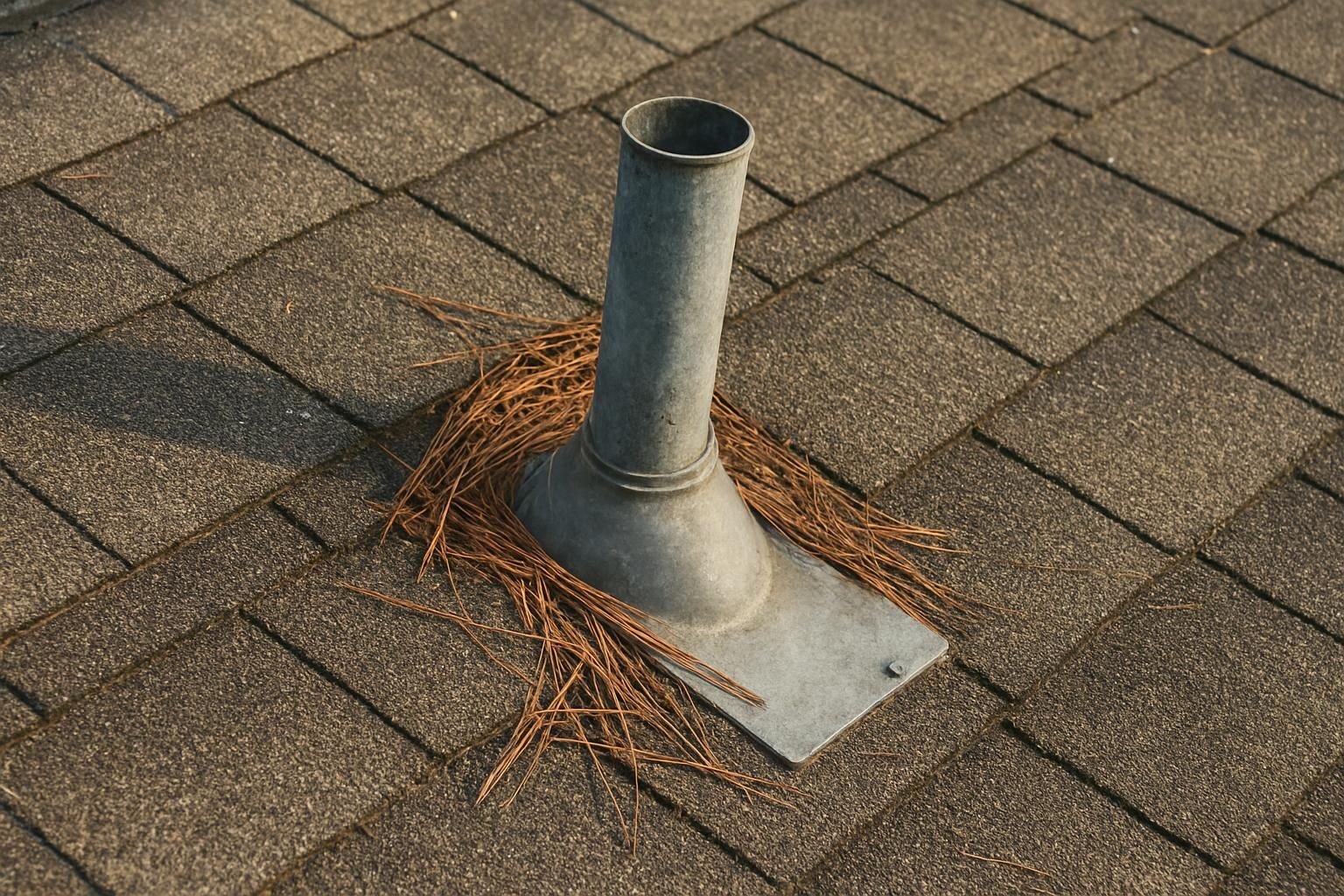
The rubber collar around plumbing vent pipes cracks in the sun after several years. It’s a cheap part and a very common culprit, especially on roofs around ten to fifteen years old.
Lifted, cracked or missing shingles
Wind lifts the tabs, the sealant strip fails, and rain gets underneath. Granules in your gutters are a sign the shingles are aging out.
Valleys and clogged gutters
Valleys carry the most water on the roof. Pine needles and leaf debris back water up under the shingles, which is a real issue near Croatan National Forest and any lot with mature pines or oaks.
Nail pops and exposed fasteners
Nails working up through shingles, or rusted exposed fasteners on metal roofs, create tiny entry points that are easy to miss.
Aging underlayment and decking
When the layer beneath the shingles has failed, leaks show up in multiple spots at once. That’s usually a sign you’re approaching replacement rather than repair.
How to find the leak yourself
You can narrow things down safely from the ground and the attic. Don’t go on the roof when it’s wet, steep or high.
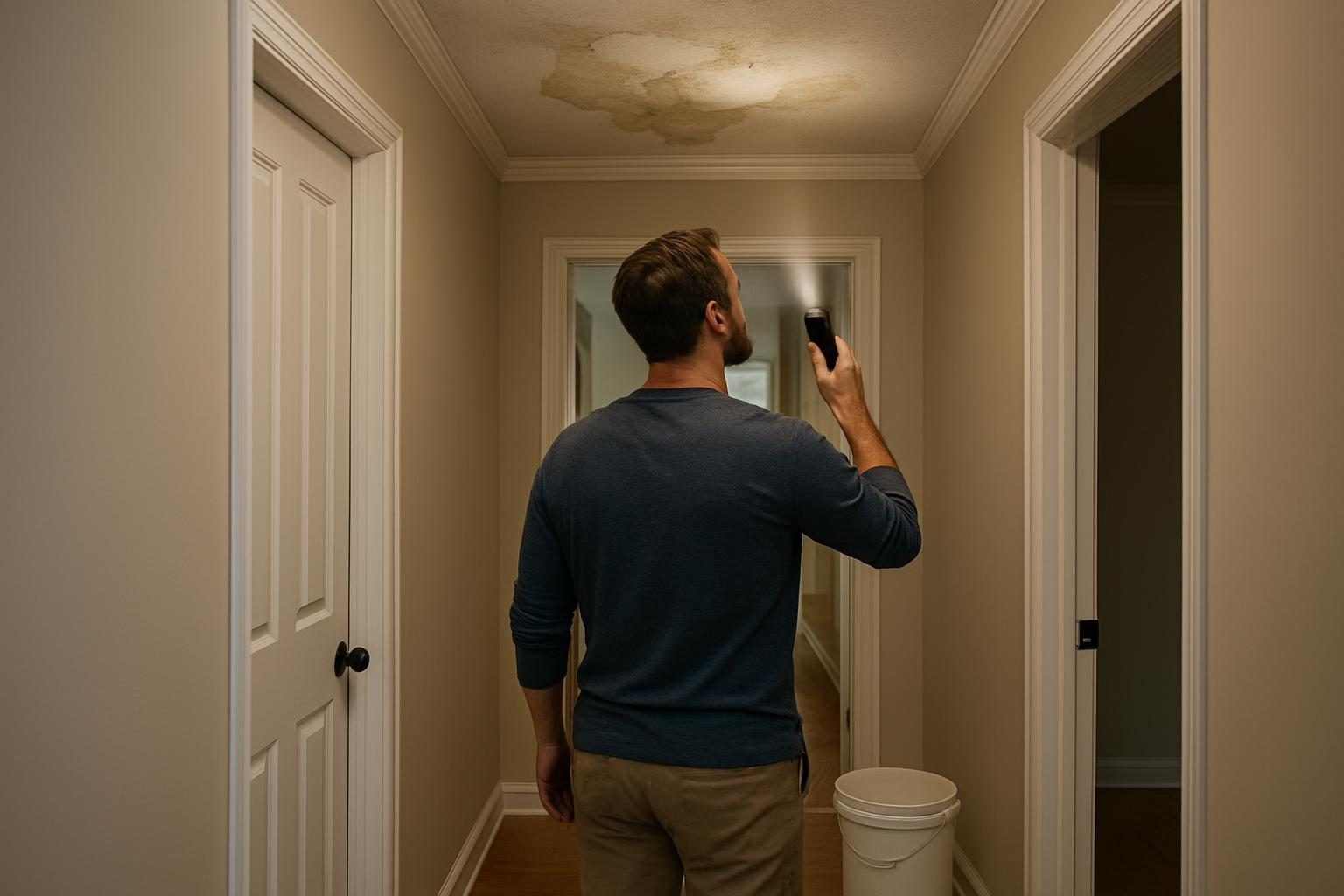
- Look in the attic first with a flashlight during or just after rain. Look for dark stains, damp insulation or daylight coming through.
- Trace upward. Follow the water trail up the rafters to the highest wet spot. That’s closer to the entry point.
- Check from the yard with binoculars for missing shingles, shiny exposed patches, damaged flashing or debris in valleys.
- Look at penetrations. Anything that pokes through the roof, such as vents, chimneys and skylights, is a suspect.
- Photograph everything with dates, both inside and out.
A garden hose test can help a pro isolate a leak by wetting one section at a time, but it’s best done with a helper and not on a slippery roof.
The stain on your ceiling is rarely under the hole. Water travels, so follow it uphill.
Temporary fixes while you wait for a roofer
The goal is to limit damage, not to fix the roof. Keep it safe and simple.
- Contain the water: bucket under the drip, towels around it, and move furniture and electronics away.
- Relieve a bulging ceiling: if the drywall is sagging with water, poking a small hole lets it drain into a bucket rather than collapsing. Wear eye protection.
- Tarp the roof only if it’s safe: a properly secured tarp over the damaged area helps, but roofs are dangerous, especially wet. If you can’t do it safely, don’t. Many roofers offer emergency tarping.
- Clear gutters and drains from the ground if overflowing water is part of the problem.
- Run a fan or dehumidifier in the affected room to start drying things out.
Local tip: After a storm, roofers across the county get slammed. Call early, ask for emergency tarping if you have active water coming in, and take dated photos before anything is moved or covered.
Don’t ignore damp drywall or insulation. In our humidity, mold can start within a couple of days. See our guide to mold remediation in Jacksonville for signs and costs.
Roof leak repair cost in Jacksonville, NC
Prices vary with roof pitch, height, material, access and how much hidden damage there is. The figures below are typical ranges and rough estimates, not quotes. Your actual price depends on the roofer and the job.
| Repair type | Typical range (estimate) | Notes |
|---|---|---|
| Pipe boot or small vent repair | Roughly $150 to $400 | Quick job; cheap part |
| Replacing a few shingles | Roughly $200 to $600 | Depends on access and matching |
| Flashing repair or replacement | Roughly $300 to $1,000 | Chimney and wall flashing cost more |
| Valley repair | Roughly $400 to $1,200 | Often involves more shingle removal |
| Decking repair (per section) | Roughly $500 to $2,000+ | Rotted wood must be replaced |
| Emergency tarping | Roughly $250 to $800 | Temporary; size dependent |
| Full replacement | Several thousand to well into five figures | Depends on size and material |
Expect higher prices for steep roofs, two stories, metal or tile, or storm season when demand spikes. Always compare more than one written estimate, and ask what’s included, such as materials, disposal and any decking allowance.
Repair or replace?
Repair makes sense when the leak is isolated and the rest of the roof is sound. Replacement is worth discussing when the roof is near the end of its life, leaks keep returning in new places, or a large area is damaged. A good roofer will tell you honestly which one you need. If someone pushes full replacement for a single pipe boot, get a second opinion.
A cheap flashing fix beats a ruined ceiling. Small leaks get expensive when they sit.
Does insurance cover a roof leak?
It depends on the cause. Homeowners policies generally respond to sudden, accidental damage, such as wind tearing off shingles or a tree limb puncturing the roof, but typically don’t cover wear and tear, age or neglected maintenance. Wind and hail can also come with separate deductibles in coastal areas, so read yours.
Practical steps if you think you have a claim:
- Take dated photos and video of the roof and interior damage.
- Make temporary repairs to prevent further damage and keep the receipts.
- Call your insurer promptly and ask about deductibles and deadlines.
- Get a written roofing estimate to support the claim.
For the interior side of the problem, our guide on whether homeowners insurance covers water damage in North Carolina explains what usually is and isn’t covered. If the damage came from a hurricane or named storm, how to hire a contractor after hurricane damage is worth reading before you sign anything.
How to choose a roofer in Jacksonville
After storms, out-of-town crews knock on doors, and not all of them stick around. Take your time, even when you’re stressed about water.
- Verify the license. In North Carolina, roofing work over a certain size generally requires a licensed contractor. You can check licenses through the NC Licensing Board for General Contractors.
- Ask for proof of insurance, both liability and workers’ compensation, and confirm it’s current.
- Get written estimates that spell out scope, materials, timeline and warranty.
- Check local history. Ask how long they’ve worked in Onslow County and for nearby references you can see in person.
- Be wary of big upfront payments and pressure to sign the same day.
- Ask about warranties on both materials and workmanship, and get them in writing.
If you’re closer to Swansboro, see our roundup of roofing contractors in Swansboro for what to expect from repairs, replacement and storm damage in that area.
Military families and renters
If you’re a Camp Lejeune or MCAS New River family who just PCS’d in, find out who’s responsible before you call anyone. Renters should report leaks to the landlord or property manager in writing right away, and base housing residents should go through the housing office’s maintenance process. If you’re buying, a roof inspection is worth the money; our guide to buying a home in Jacksonville covers the process.
Prevent the next leak
A little upkeep goes a long way in this climate.
- Have the roof inspected once a year and after any major storm.
- Keep gutters and valleys clear of pine needles and leaves.
- Trim limbs hanging over the roof. See tree removal in Jacksonville for costs and storm risk.
- Replace aging pipe boots and sealant before they fail.
- Walk through our hurricane preparation checklist for Onslow County homeowners before each season starts.
Think about wind protection too. Hurricane shutters and window protection won’t stop a roof leak, but they keep wind-driven rain out through other openings during a storm.
Moisture problems often travel. If the leak has been going a while, check for water damage in walls and insulation, and if you’re elsewhere in the county, our guide to water damage and storm repair in Hubert may help. Down toward the beach, water damage restoration in Sneads Ferry and the Topsail area covers the cleanup side.
If you’d rather have a pro look at it than guess, request a roof leak repair quote from a vetted local roofer through the form on this page.
Roof leak repair FAQ
How much does it cost to fix a roof leak in Jacksonville, NC?
Simple repairs like a pipe boot or a few shingles often run a few hundred dollars, while flashing, valley or decking repairs cost more. These are typical ranges only; the real price depends on roof access, materials and damage. Get at least two written estimates.
Can I fix a roof leak myself?
You can manage the inside: buckets, towels and drying the area. Roof work is dangerous, especially on wet or steep roofs, and a bad DIY patch can void warranties or hide the real problem. For the roof itself, most homeowners are better off hiring a pro.
Will homeowners insurance pay for my roof leak?
Often if the leak came from sudden storm damage, such as wind or a fallen limb, but typically not if it came from age, wear or lack of maintenance. Check your policy for wind and hurricane deductibles and call your insurer promptly with photos.
How do I find where my roof is leaking?
Start in the attic during or after rain, look for stains and damp wood, and trace the water uphill. Then check flashing, vent boots, valleys and chimneys from the ground. A roofer can confirm the exact spot, sometimes with a water test.
How fast should a roof leak be repaired?
As soon as safely possible. Active leaks can soak insulation and drywall and start mold growth in a couple of days in our humidity. Arrange temporary protection right away and schedule a permanent repair quickly.
Get free roof leak repair quotes from Jacksonville pros
Tell us about the leak and a vetted local roofer will reach out to schedule an inspection and give you a written estimate.