If you live in Swansboro, you already know the town sits where the White Oak River meets the Intracoastal Waterway. It is beautiful, and it is also about as friendly to bugs as any place in North Carolina. Pest control in Swansboro, NC is less about an occasional spider and more about managing year-round pressure from termites, mosquitoes, roaches and ants.
This guide covers what actually shows up around Swansboro homes, how treatment plans work, what they typically cost, and what to ask before you sign anything. If you would rather skip the research, you can request help from a vetted local pest control pro using the form on this page.
Quick answer: Swansboro homes face heavy subterranean termite pressure, floodwater and marsh mosquitoes, German and American roaches, ants and rodents, all fed by humidity and standing water. Most homeowners do best with a quarterly general pest plan plus a termite bond or annual inspection, and a separate mosquito program during warm months. Expect typical ranges of roughly $100 to $200 per visit for a one-time service, $40 to $100 per month for ongoing plans, and a few thousand dollars for a full termite treatment, depending on the home. Always get a written estimate and confirm licensing.
Key takeaways
- Termites are the costly pest here; inspect yearly and know whether your home has a bond.
- Mosquito pressure peaks in warm, wet months and spikes after storms and heavy rain.
- Crawl spaces and moisture control matter as much as the spray itself.
- Ask about licensing, product names, service frequency and what the warranty actually covers.
- Costs below are typical ranges, so get at least two written quotes.
Why Swansboro Has Serious Pest Pressure
Swansboro combines the three things pests want: warmth, moisture and food. Coastal humidity keeps wood and soil damp, tidal marshes breed mosquitoes, and mild winters mean many insects never fully die back.
Homes close to the White Oak River and the creeks feeding it deal with higher moisture around foundations. Older homes near downtown, newer subdivisions on cleared wooded lots and waterfront properties each have their own risks.
Hurricane season adds another layer. Storm surge, flooded yards and fallen trees create standing water and wet wood, which pests find quickly. Our hurricane preparation checklist for Onslow County homeowners is worth reading alongside this guide, since cleanup after a storm is also when pest problems begin.
On the coast, moisture is the real pest. Control the water around your house and the bugs lose most of their reasons to move in.
Termites: The Pest That Costs the Most
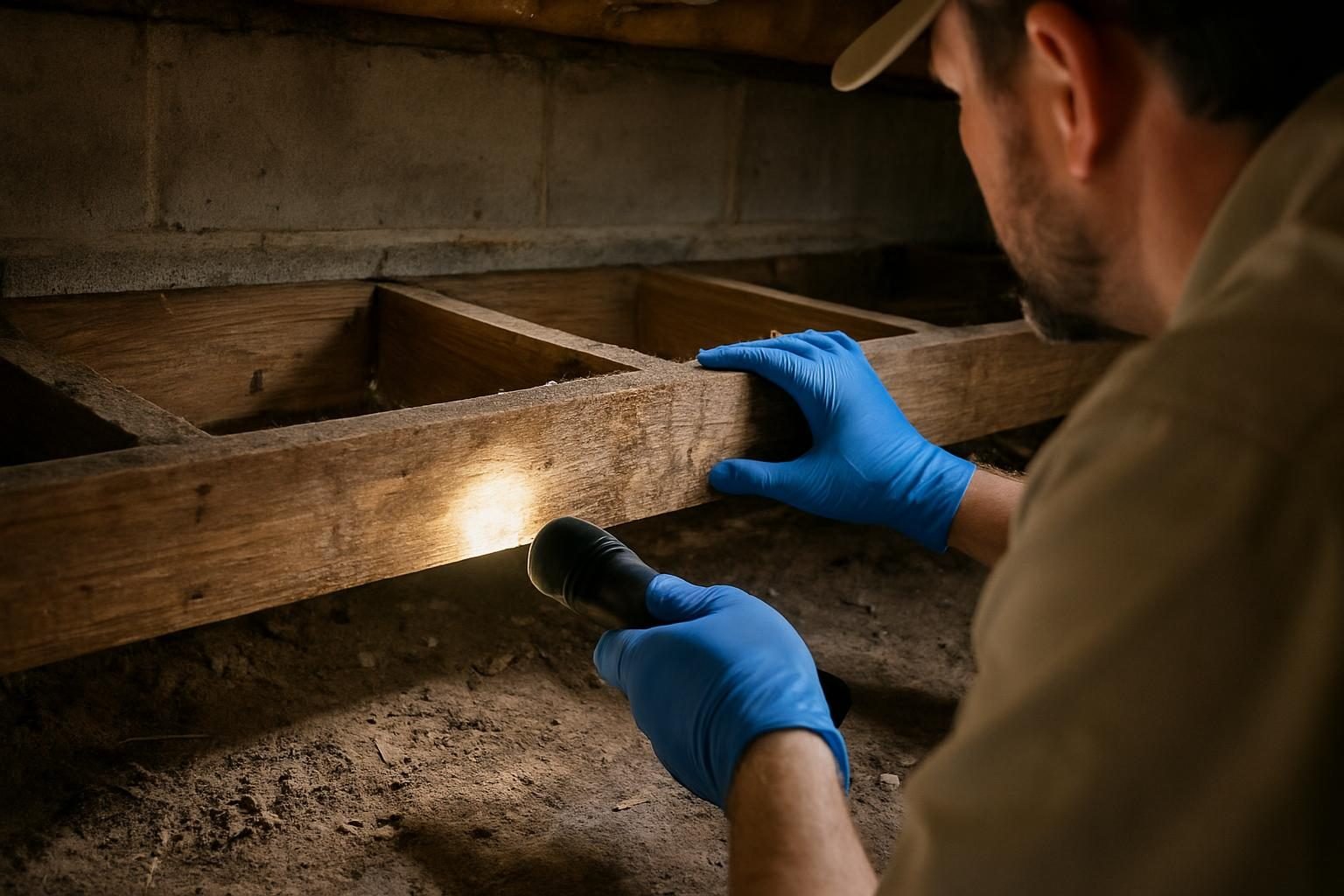
Subterranean termites are the main structural threat in coastal North Carolina. Colonies live in the soil and travel through mud tubes to reach the wood in your home. They work quietly, often for years, before anyone notices damage.
Drywood termites are less common inland but can show up in coastal areas, and swarmers in spring are often the first visible sign. Winged insects near windows or piles of tiny wings on a sill deserve a prompt inspection.
Signs to watch for
- Mud tubes on foundation walls, piers or inside the crawl space
- Wood that sounds hollow when tapped or feels soft near the floor
- Swarming winged insects indoors in spring
- Discarded wings near doors and windows
- Bubbling or sagging paint and drywall near baseboards
Treatment options
Most Swansboro termite work falls into two approaches. A liquid soil treatment creates a treated zone around the foundation, while bait stations placed around the property intercept foraging termites and slowly reduce the colony.
Many companies sell a termite bond, which is an annual agreement covering inspections and sometimes retreatment or repair. Read the fine print, because some bonds cover only retreatment and not structural damage.
For a deeper look at the numbers, see our termite treatment cost guide for Jacksonville, which applies closely to Swansboro. For prevention steps you can take yourself, read how to prevent termites in coastal North Carolina homes.
Local tip: Keep mulch and firewood at least a few inches below siding and away from the foundation, and keep soil from touching wood trim. Termites love an easy, hidden path from damp soil into your home.
Mosquitoes on the Waterfront
If you have spent an evening on a Swansboro dock in summer, you know the drill. Salt marsh mosquitoes breed in tidal pools, while other species breed in any container that holds water for a few days.
Pressure climbs after heavy rain and storms, and it can stay high well into fall. Homes near marsh edges, creeks and wooded lots usually see the worst of it.
What helps
- Source reduction: Dump water from buckets, planters, boat covers, gutters and toys every few days.
- Barrier sprays: A professional treats vegetation where mosquitoes rest, typically on a repeating schedule through the warm season.
- Larvicide: Treating standing water you cannot drain can interrupt breeding.
- Yard airflow and lighting: Fans on a porch or deck and fewer overgrown spots reduce biting.
Be realistic. No treatment makes a waterfront yard mosquito free, but a good program can make evenings much more comfortable. Ask any provider how they protect pollinators and nearby water, since you are right beside sensitive coastal habitat.

Roaches, Ants, Rodents and Other Common Pests
Beyond termites and mosquitoes, expect a steady lineup of household pests. Humidity and food are the main drivers.
- Roaches: American and smokybrown roaches come in from outdoors, while German roaches live indoors near kitchens and bathrooms.
- Ants: Carpenter ants favor damp wood, fire ants build mounds in sunny yards, and sugar ants appear after any spill.
- Rodents: Mice and rats look for warmth and shelter, especially after cold snaps or storms.
- Spiders and silverfish: Both are common in garages, closets and crawl spaces.
- Fleas and ticks: Wooded and sandy lots with pets or wildlife often see both.
Fire ants and wasps around docks, mailboxes and outdoor furniture are a frequent summer complaint. Professional exterior treatments usually handle these as part of a regular plan.
A quarterly plan is cheaper than emergency calls, because most pest problems are far easier to stop early than to reverse.
Moisture, Crawl Spaces and Pest Prevention
Many coastal homes sit on crawl spaces, and that damp, dark area is a favorite for termites, roaches, rodents and mold. A pest plan works much better when moisture is under control.
Fixing gutters, grading soil away from the house, sealing gaps around pipes and keeping vents clear all help. If your crawl space stays wet, read our guide to crawl space encapsulation costs in Jacksonville to see whether it makes sense for your home.
Moisture problems also lead to mold. If you spot musty smells or visible growth, our mold remediation guide explains signs, costs and hiring a pro. Roof and plumbing leaks are common hidden water sources, so keep up with roofing repairs in Swansboro too.
Pest Control Plans and Typical Costs
Pricing varies with home size, lot, pest type and company. The ranges below are rough estimates to help you budget, not quotes.
| Service | What it usually includes | Typical range (estimate) |
|---|---|---|
| One-time general pest treatment | Interior and exterior treatment for common pests | About $100 to $250 |
| Quarterly pest plan | Scheduled visits, exterior barrier, callbacks between visits | About $40 to $100 per month, billed various ways |
| Mosquito program | Barrier sprays on a repeating schedule in warm months | About $60 to $120 per visit, or a seasonal package |
| Termite inspection | Visual inspection and a written report | Free to roughly $100, varies by company |
| Termite treatment | Liquid soil treatment or bait system install | Often a few hundred to several thousand dollars |
| Annual termite bond or renewal | Yearly inspection and coverage terms | About $100 to $400 per year |
Larger homes, waterfront lots with heavy vegetation and active termite infestations generally land at the higher end. Prices can also shift if a company needs to access a tight crawl space.
What to Ask Before You Hire
A little vetting prevents most bad experiences. Use this list when you call.
- Are you licensed by the North Carolina Structural Pest Control Division, and are your technicians certified? Confirm through the state rather than taking a verbal answer.
- Do you carry liability insurance?
- What products and methods will you use, and are they safe for kids, pets and fish ponds?
- What exactly does the warranty or bond cover: retreatment only, or repairs too?
- How often will you visit, and are callbacks between visits included?
- Will you give me a written estimate and a copy of the contract before work begins?
- How do you handle moisture and crawl space issues you find?
- Is there a cancellation policy or auto-renew clause I should know about?
Be wary of high pressure sales, door-to-door offers after storms and any company that refuses to put terms in writing. After a hurricane, our guide on how to hire a contractor after hurricane damage applies to pest and repair work alike.
Local tip: If you are buying or just moved in, ask for any existing termite bond paperwork and a recent inspection report. Military families on a PCS timeline often have limited time to vet providers, so request that report before closing.
DIY Versus Hiring a Pro
Some jobs are fine to handle yourself, such as emptying standing water, sealing gaps, trimming vegetation and setting out basic ant baits. Store-bought products can help with minor, short-term problems.
Termites, recurring roaches, rodents in walls and waterfront mosquito control are usually better left to professionals. They have access to better products, can reach hidden areas and know what to look for.
Related issues often travel together, from damp crawl spaces to storm damage. If you are dealing with flooding, see our guides on water damage and storm repair in Hubert and whether homeowners insurance covers water damage in North Carolina. Neighbors down the road can also read about pest and termite control in Holly Ridge, and the water damage restoration guide for Sneads Ferry and the Topsail area is coming soon.
Ready to compare options? You can request a free quote from a vetted local pest control pro using the form on this page.
Swansboro Pest Control FAQ
How often should I have pest control service in Swansboro?
Most homes do well with quarterly general pest service, with extra attention in spring and summer. Add an annual termite inspection, and a mosquito program from roughly spring through fall if you spend time outdoors.
How much does termite treatment cost in Swansboro?
Costs vary widely with home size, foundation type and treatment method. As a rough estimate, treatments often run from a few hundred dollars for small spot work to several thousand for full structure treatments, so get at least two written quotes.
Can anything get rid of mosquitoes on a waterfront property?
Not completely, but you can reduce them a lot. Remove standing water, trim dense vegetation and consider professional barrier sprays through the warm season.
Is a termite bond worth it?
It can be, especially in a high-pressure coastal area, but coverage varies. Read what the bond actually covers, whether it includes repair of damage, and what the renewal terms are.
What should I do if I see termite swarmers in my house?
Do not spray and move on. Save a few of the insects or wings, take photos and schedule a professional inspection promptly to confirm the species and the extent of activity.
Get free pest control quotes from Swansboro pros
Tell us what you are seeing and a vetted local pest control pro will follow up with options and a written estimate.