If you have standing water in your Jacksonville home right now, stop reading long enough to make it safe: shut off the water source if you can, and stay out of wet rooms if electricity could be involved. Then come back. Water damage restoration in Jacksonville, NC is a race against our humidity, and the first day matters more than any other.
Eastern North Carolina is one of the worst places in the state to let a wet house sit. Warm, moist air, a high water table and hurricane-season rain mean that what starts as a puddle can turn into a mold problem fast. This guide walks through what professional restoration involves, how fast to move, what it typically costs and how to handle insurance.
Need a hand now? Request help from a vetted local water damage pro using the form on this page.
Quick answer: Water damage restoration is a sequence: stop the source, extract standing water, dry the structure with air movers and dehumidifiers, clean and sanitize, then repair. In Jacksonville’s humid climate, mold can begin within 24 to 48 hours, so call a restoration company the same day, document everything for insurance and do not wait for an adjuster before starting emergency drying.
Key takeaways
- Act within 24 to 48 hours; coastal humidity speeds up mold growth.
- Professional drying uses meters, air movers and dehumidifiers, not just fans and open windows.
- Photograph and video damage before cleanup, and keep receipts for emergency work.
- Costs vary widely by water type, square footage and materials; get written estimates.
- Standard homeowners policies often cover sudden leaks but usually exclude flooding, which needs separate flood insurance.
What counts as water damage in an Onslow County home
Water damage is any intrusion of unwanted water that harms your home’s structure or contents. Around here it shows up in a handful of familiar ways.
- Plumbing failures: burst or leaking supply lines, failed water heaters, washing machine hoses, clogged drains and sewage backups.
- Roof and window leaks: wind-driven rain during tropical systems, missing shingles, failed flashing.
- HVAC condensation: clogged condensate lines and overflowing drain pans, common in our long cooling season.
- Storm surge and flooding: especially near the New River, Intracoastal Waterway and low-lying areas of Sneads Ferry, Swansboro and North Topsail Beach.
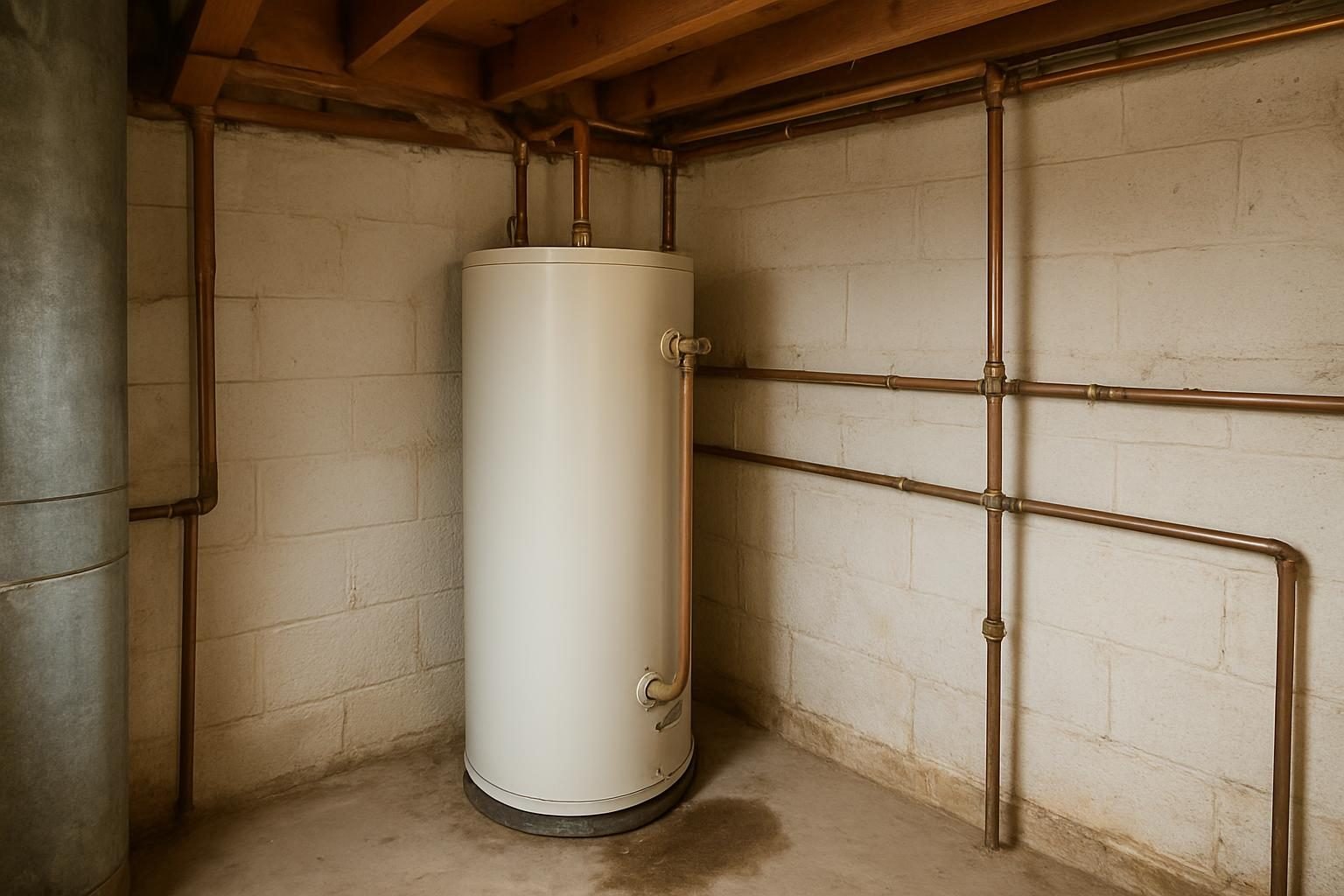
- Crawl space moisture: slow, chronic dampness that rots subfloors and feeds mold.
The source matters because it determines how contaminated the water is, and that changes the entire restoration plan.
The three water categories
Restoration professionals classify water by contamination level, a standard approach in the industry.
| Category | Source examples | What it means |
|---|---|---|
| Category 1 (clean) | Broken supply line, overflowing sink from clean water | Lowest risk, but can degrade to Category 2 within a day or two |
| Category 2 (gray) | Washing machine or dishwasher overflow, HVAC condensate | Contains contaminants; porous materials often need removal |
| Category 3 (black) | Sewage, river or storm surge floodwater | Highly contaminated; affected porous materials are typically removed and discarded |
Floodwater from a hurricane is treated as Category 3 even if it looks clear. Do not try to DIY it.
In Jacksonville’s humidity, a wet house doesn’t dry on its own. It grows mold on its own.
The water damage restoration process, step by step
Reputable companies follow a similar order of operations. Knowing it helps you spot a contractor who is cutting corners.
1. Emergency contact and safety
Shut off the water at the main valve if a pipe is the source. If water is near outlets, appliances or the electrical panel, turn off power at the breaker only if you can reach it without standing in water. Otherwise, call a licensed electrician or your utility.
2. Inspection and moisture mapping
A technician uses moisture meters and often thermal imaging to find water behind walls, under flooring and in insulation. Visible wetness is rarely the whole picture. Ask to see the readings.
3. Water extraction
Pumps and truck-mounted or portable extractors remove standing water. Faster extraction means less water soaking into drywall, subfloor and framing, which shortens drying time and lowers cost.
4. Removal of unsalvageable materials
Wet carpet padding, soaked insulation and saturated drywall are often removed so the structure can dry. Crews commonly cut drywall a couple of feet above the waterline in contaminated-water cases. This feels drastic, but it prevents hidden mold.
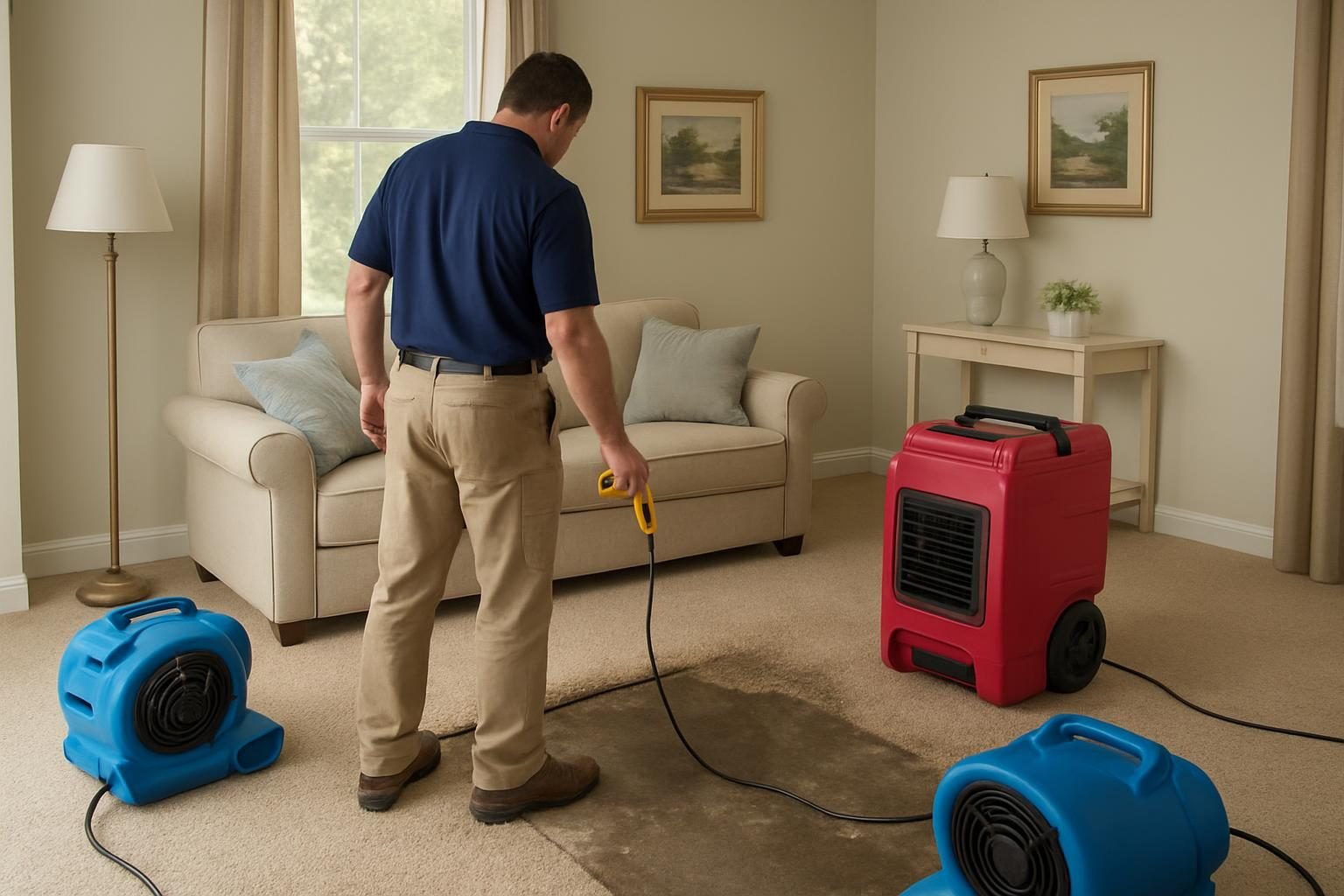
5. Structural drying and dehumidification
Air movers push air across wet surfaces while commercial dehumidifiers pull moisture out of the air. Crews return to check readings daily and adjust equipment. Drying is finished when materials return to normal moisture levels, not when they feel dry.
6. Cleaning, sanitizing and odor control
Antimicrobial treatments, HEPA vacuuming and air scrubbing address bacteria and spores. Contents like furniture and clothing may be cleaned on-site or taken off-site.
7. Repair and reconstruction
Once everything is verified dry, drywall, flooring, paint and trim are replaced. Some restoration companies handle rebuilding; others hand off to a general contractor.
Local tip: Ask any restoration company for the drying log: daily moisture readings and equipment placed. It protects you in an insurance dispute and proves the structure was actually dried before walls were closed up.
How fast to act: the timeline that matters
Time is the single biggest cost driver in water damage. Here is how the clock generally runs.
- First hour: Stop the source, make the area safe, and start taking photos and video.
- Within 24 hours: Call a restoration company. Move furniture and valuables out of wet areas. Begin extraction.
- 24 to 48 hours: Mold growth can begin on damp surfaces, especially in warm, humid conditions. Wood and drywall start to swell and degrade.
- Days 3 to 5: Active drying typically runs about this long for many moderate jobs, though severe cases take longer.
- After 72 hours: Risk of widespread mold, warped flooring and structural damage rises sharply.
These are general industry rules of thumb, not guarantees. A small, quickly caught leak may dry in a few days; a hurricane-flooded home can take weeks to fully restore.
Why our climate makes this harder
Outdoor air in Onslow County is often already near saturation in summer, so opening windows can add moisture rather than remove it. That is why professional dehumidification and closed-building drying are standard here. Salt air and coastal humidity also keep materials damp longer than in drier parts of the state.
If your damage came from a hurricane or tropical storm, also read our guide to storm damage repair in Jacksonville, and know that restoration crews get booked up fast after a major storm.
Drying is finished when the meter says so, not when the room feels dry.
Mold prevention after water damage
Mold needs moisture, a food source (drywall paper, wood, dust) and time. Remove any of those and it can’t take hold. Restoration is, in large part, mold prevention.
- Dry materials quickly and verify with a moisture meter.
- Remove porous materials that stayed wet past the safe window, especially after Category 2 or 3 water.
- Run dehumidifiers and keep indoor humidity in a healthy range, commonly cited as below about 50 to 60 percent.
- Fix the source, whether it is a leaking roof, a failing supply line or a clogged AC condensate line.
- Check hidden spaces: attics, crawl spaces, closets on exterior walls and behind appliances.
If you see or smell mold, a separate mold remediation scope may be needed. Reputable companies will tell you honestly when mold testing or remediation is warranted rather than upselling by default.
Crawl spaces and HVAC: the hidden culprits
Many older Jacksonville homes sit on crawl spaces where damp air and poor drainage cause chronic moisture. If you keep finding musty smells or soft floors, read about crawl space repair and crawl space encapsulation costs.
Condensate backups are another frequent source. If your system is overflowing or short-cycling, our guide to HVAC repair in Jacksonville explains what to expect and how to hire a local pro.
What water damage restoration costs in Jacksonville
Prices vary too much for any single number to be honest. The ranges below are rough, typical industry-style estimates for planning only; your actual quote depends on the factors listed after the table.
| Scenario | Typical scope | Rough cost range (estimate) |
|---|---|---|
| Minor, caught early (single room, clean water) | Extraction, a few days of drying, minimal removal | Roughly high hundreds to a few thousand dollars |
| Moderate (multiple rooms, some material removal) | Extraction, drywall and flooring removal, extended drying | Roughly a few thousand to well into the five figures |
| Severe (storm flooding, sewage, whole-home) | Category 3 protocol, extensive demolition, contents handling | Can reach tens of thousands, plus reconstruction |
What drives the price
- Water category and how long it sat
- Square footage and number of rooms affected
- Type of materials (hardwood, carpet, drywall, tile)
- Equipment days and technician hours
- Demolition, disposal and reconstruction needs
- After-hours or storm-surge emergency demand
Get at least two written estimates when time allows, and make sure each separates mitigation (drying) from reconstruction. Beware of anyone demanding full payment up front or pressuring you to sign on the spot. After a big storm, see our planned guide on how to hire a contractor after hurricane damage in North Carolina.
Burst pipe or sewage backup? You may need a plumber before or alongside restoration. Check emergency plumber options in Jacksonville and typical plumber costs.
Insurance basics for water damage in North Carolina
Insurance is where many homeowners get surprised. The general principles below are a starting point, not legal or policy advice; always read your own policy and talk to your agent.
- Sudden and accidental: Standard homeowners policies commonly cover sudden events like a burst pipe or an appliance failure.
- Gradual leaks and maintenance issues: Long-term seepage, rot and neglect are typically excluded.
- Flooding: Rising water from storm surge or overflowing rivers is generally not covered by a standard homeowners policy. It usually requires separate flood insurance, such as through the National Flood Insurance Program or a private carrier.
- Wind-driven rain: Coverage depends on your policy and on whether the wind first created an opening in the roof or walls. Coastal policies often have separate wind and hurricane deductibles.
For a deeper look, see our planned guide on whether homeowners insurance covers water damage in North Carolina.
How to protect your claim
- Photograph and video all damage before cleanup, including serial numbers on damaged items.
- Notify your insurer promptly and ask about the claim process and deductible.
- Take reasonable steps to prevent further damage (emergency drying, tarping) and keep receipts.
- Do not throw away damaged materials until the adjuster has seen them or you have documented them thoroughly.
- Keep a written log of every call, name, date and promise made.
Local tip: If you are a renter, notify your landlord or property manager in writing right away and check your renters policy for personal property coverage. Military families living in on-base housing should report through the housing office; see our on-base vs off-base housing guide for how the two situations differ.
Choosing a water damage restoration company in Jacksonville
Do your homework even in a hurry. A few questions separate professionals from storm chasers.
- Are they licensed and insured, and can they show proof?
- Do they hold industry certifications, such as IICRC credentials?
- Do they offer 24/7 emergency response and give a realistic arrival window?
- Will they provide a written scope and itemized estimate?
- Do they document moisture readings and communicate directly with your insurer?
- Do they have local references you can verify?
If your damage started at the roof, you may also need a roofer. See how to choose a roofing contractor in Jacksonville and our roof replacement cost guide. Outside the city limits, local help is also covered in our planned pages on water damage repair in Hubert and plumbing in Richlands.
New to the area and getting your bearings? Our first-month PCS guide and cost of living breakdown cover the practical side of settling in, including what homeownership here really costs.
Ready to get started? Request a quote from a vetted local restoration pro using the form on this page.
Water damage restoration FAQ
How long does water damage restoration take?
Drying a typical moderate job often takes about three to five days, with cleaning and repairs afterward. Severe or flood-related damage can take weeks, especially if reconstruction is involved.
Can I dry out water damage myself?
For a very small, clean-water spill caught immediately, fans and a dehumidifier may be enough. For anything larger, wet drywall or insulation, or any gray or black water, professional equipment and moisture testing are strongly recommended, especially in our humidity.
How fast does mold grow after water damage?
Mold can begin growing within roughly 24 to 48 hours on damp materials in warm, humid conditions like ours. Fast extraction and drying are the best prevention.
Does homeowners insurance cover water damage?
Often yes for sudden, accidental events like a burst pipe, but usually not for flooding or long-term leaks. Flood damage typically requires a separate flood policy. Check your policy and call your agent.
Should I wait for the insurance adjuster before starting work?
No. Policies generally expect you to take reasonable steps to prevent further damage. Document everything first, keep receipts and start emergency drying while you wait.
Get free water damage quotes from Jacksonville pros
Tell us what happened and we’ll connect you with a vetted local restoration pro who will follow up to schedule an assessment.