Kayaking the salt marshes of Onslow County is one of the easiest ways to see this coast at its quietest. You slide through tidal creeks lined with cordgrass, past egrets and ospreys, with Jacksonville’s traffic and the beach crowds feeling a long way off.
You don’t need to be athletic or own gear. You do need to respect the tide, the wind and the mud. This guide covers all three, plus where to start and what to pack.
Quick answer: For beginners, the best places to paddle salt marshes in Onslow County are the protected creeks and sounds around Swansboro and the White Oak River, Sneads Ferry and Stump Sound, and the Topsail Island backside. Go in spring or fall, paddle in the morning, launch within a couple of hours of high tide, and wear a life jacket. Rent a kayak or book a guided trip for your first outing, and check current tide and wind forecasts before you leave.
Key takeaways
- Tide timing matters more than distance. Marsh creeks can drain to mud flats at low tide.
- Morning paddles beat afternoon ones: less wind, less heat, better wildlife.
- Spring and fall are the most comfortable seasons. Summer means heat, humidity and biting insects.
- A first trip with a rental or guide removes most of the guesswork.
Why the Salt Marshes Are Good for Beginners
Marsh creeks are sheltered. Cordgrass and the barrier islands knock down most of the wind and chop that make open-water paddling stressful.
The water is shallow and the scenery changes at every bend. If you tire, you are rarely far from a bank, a dock or your launch point.
It also suits mixed groups. Families, couples and first-timers can paddle at their own pace, and a calm stretch works for a kid in a tandem kayak just as well as for an adult. If you’re planning around children, our family guide to things to do with kids in Jacksonville has more ideas for the rest of the day.
What you’ll actually see
- Marsh plants: smooth cordgrass along the water, with black needlerush on slightly higher ground.
- Birds: herons, egrets, ospreys, pelicans and shorebirds, especially at the edges of the tide.
- Small life: fiddler crabs on the mud, oyster beds along the banks and fish darting in the shallows.
- Larger wildlife: dolphins turn up in wider sounds and channels, though sightings are never guaranteed.
In the marsh, the tide decides your route. Plan around it and the paddle is easy.
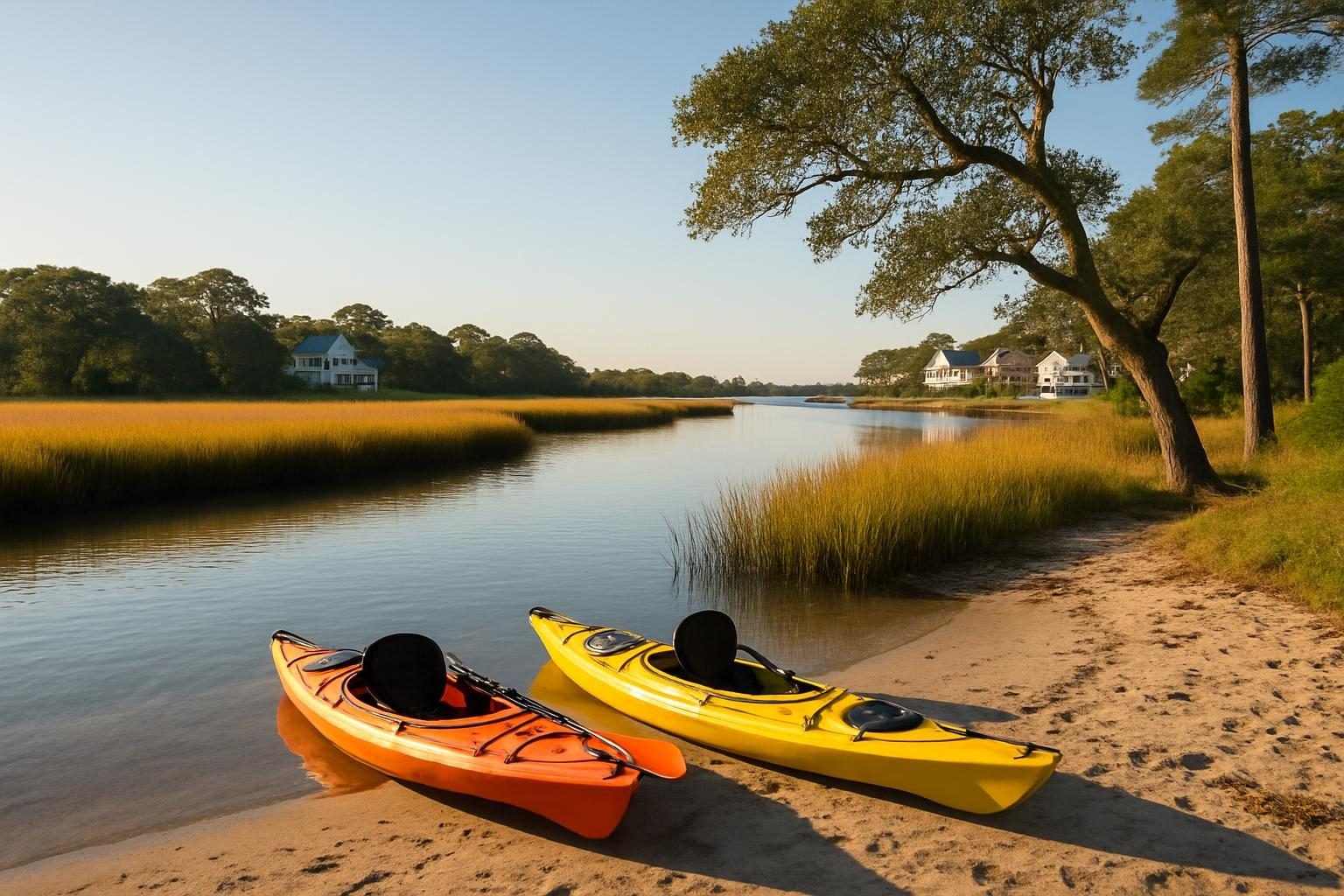
Where to Start Kayaking the Salt Marshes in Onslow County
Onslow County has about 20 miles of coastline, but the best marsh paddling clusters in a few areas. Conditions and access change, so confirm launch details locally before you go.
| Area | What it’s like | Good for |
|---|---|---|
| Swansboro and the White Oak River | Historic waterfront town with marsh and creeks nearby, and ICW access toward Bogue Sound | First-timers wanting food and a walkable town after |
| Hammocks Beach State Park and Bear Island | Protected coastal setting with marsh, dunes and undeveloped shoreline, reached from the mainland side | Wildlife and a wilder feel |
| Sneads Ferry and Stump Sound | Working fishing community with sounds and creeks around it | Seafood culture and scenic marsh edges |
| Topsail Island backside | Sound-side marsh along the Intracoastal Waterway behind the barrier island | Combining a paddle with a beach day |
| New River near Jacksonville | Wider tidal river with marsh edges as it moves toward the coast | Experienced paddlers who watch wind and boat traffic |
Swansboro and the White Oak River
Swansboro is a comfortable first choice. The town is compact, the water is close, and you can eat afterward without driving anywhere. The White Oak River also runs along the edge of the Croatan National Forest, so the upper stretches feel pleasantly remote.
Hammocks Beach and Bear Island
The park is a highlight for anyone who wants an undeveloped shoreline. Ask the park about current paddling routes, rules and conditions, since they depend on tides and weather. Our Hammocks Beach State Park and Bear Island visitor guide covers the park in more depth.
Sneads Ferry, Stump Sound and Topsail
The Sneads Ferry area gives you a feel for the working coast, with shrimp boats and docks mixed in with marsh. Stump Sound opens wider than a creek, so wind can build quickly.
Over on Topsail Island, the sound side is calmer than the ocean side. See our North Topsail Beach guide for access and parking, and the Onslow County beach guide if you want to pair a paddle with sand.
Local tip: Look at the tide chart before you pick a launch. A creek that’s a pleasant paddle at high tide can be a mud flat two hours later, and you’ll be dragging your kayak.
Tides, Wind and Timing
Tide is the main skill for marsh paddling. On a rising or high tide you can wander into small creeks. On a falling tide the water drains out and you can get stranded.
- Check tide predictions for the closest station, such as through NOAA. Remember that timing inside a creek can lag the ocean tables.
- Launch about one to two hours before high tide, paddle out, and turn back before the water drops far.
- Check the wind forecast. Sustained breezes make open sounds tiring, and wind against the tide builds chop.
- Plan to be off the water by early afternoon in summer, when sea breezes and pop-up thunderstorms are common.
If you’re new, stay in narrow creeks where the grass shelters you, and cross open water only in calm conditions.
Hurricane season and storms
Hurricane season runs June through November. Skip any paddle when there’s a storm warning, lightning or rough weather coming. After a big storm, expect debris and changed conditions at ramps and in creeks.
Your first marsh paddle should be short, calm and timed to the tide, not ambitious.
What to Bring
Packing light is fine, but a few things are not optional.
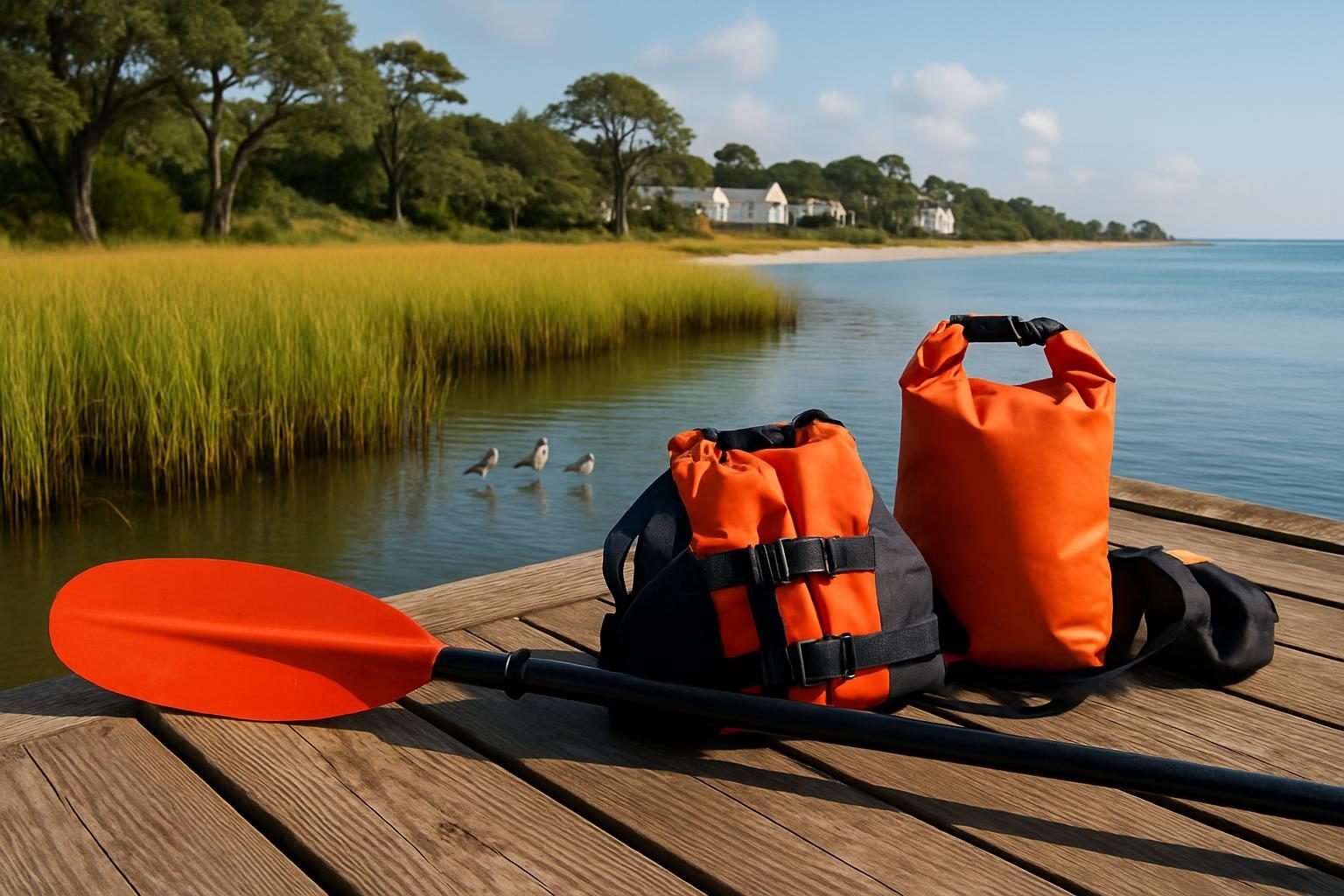
- A properly fitted life jacket for each person. State rules require one aboard for everyone, and children have additional requirements, so check with the NC Wildlife Resources Commission.
- Water, more than you think you need. Humidity drains you fast.
- Sun protection: hat, sunglasses, sunscreen. The water reflects light.
- Bug protection: repellent, and long light-colored sleeves in warm months.
- Shoes that can get muddy, such as water shoes. Oyster shells are sharp.
- A dry bag for your phone, keys and snacks, plus a whistle.
- A tide chart or phone with a downloaded map, since signal can be spotty in the marsh.
Local tip: Tell someone your launch spot and expected return time. Cell service fades in the marsh, and a simple text before you go is the best safety plan.
Safety and Marsh Etiquette
Most problems on marsh trips come from tide, heat and wind, not from the water itself. A few habits prevent nearly all of them.
Safety basics
- Wear your life jacket on the water, not stowed under a bungee.
- Stay out of busy boat channels and the Intracoastal Waterway when you can. Wakes from larger boats can rock a small kayak.
- Watch for sudden changes: a darkening sky, a stronger breeze or rushing water at a creek mouth.
- Don’t walk on oyster beds or soft mud. You can cut your feet or sink in.
Protecting the marsh
Salt marshes are nurseries for fish, shrimp and crabs, and the grass is fragile. Keep your kayak in the channels and avoid dragging it across grass.
Give nesting birds plenty of room, and take everything you bring back out with you.
Military water and base boundaries
Parts of the New River and nearby waters are within or beside Camp Lejeune and MCAS New River, and some areas are restricted. Don’t paddle into posted zones. Base ID holders should check official Camp Lejeune and MCAS New River recreation resources for current rules. Our Camp Lejeune PCS guide explains how to find that information.
Rent, Join a Guide or Bring Your Own
For a first trip, a rental or guided tour is the smartest option. Local outfitters around Swansboro, Sneads Ferry and the Topsail area can help you with gear and conditions. Check who is operating currently, since businesses change.
| Option | Typical cost (estimate) | Best for |
|---|---|---|
| Guided tour | Often roughly $50 to $100+ per person | First-timers, wildlife and local knowledge |
| Kayak rental | Often roughly $30 to $70+ for a few hours | Confident beginners who want freedom |
| Your own kayak | Varies widely | Regular paddlers who also need a ramp and transport |
These are typical ranges only. Prices vary by season, trip length and outfitter, so confirm directly.
If you own a kayak, look at public access points. Our guide to boating in Onslow County, including ramps and waterway safety will help you choose a launch. For more shoreline and green space, see the best parks in Jacksonville and Onslow County.
A Simple First-Paddle Plan
- Pick a calm morning in spring or fall with light wind and no storms.
- Choose a sheltered creek near Swansboro or Sneads Ferry, or book a guided trip.
- Launch one to two hours before high tide.
- Paddle for an hour or two, stopping to watch birds and crabs.
- Turn back before the tide starts to drop.
- Finish with a seafood lunch. Our local restaurant guide is a good place to start.
If you enjoy it, you’ll find more to do on foot and on the water. See hiking and walking trails near Jacksonville and fishing in Onslow County, or browse our guide to things to do in Jacksonville and Onslow County.
Best Seasons for Marsh Paddling
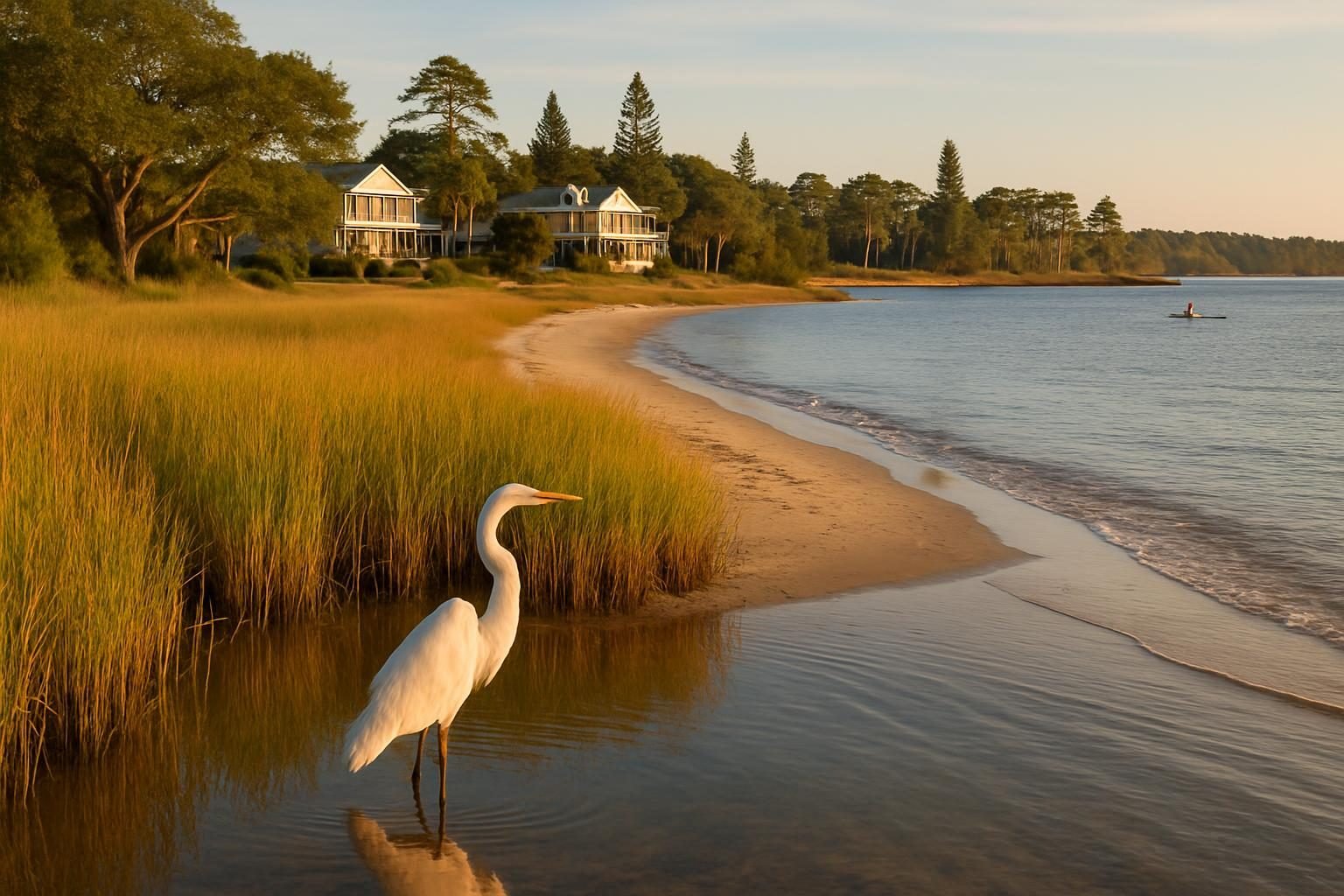
Spring brings mild weather, active birds and fewer bugs than summer. Fall is often the best: cooler air, clearer days and gentler humidity, though storm season lingers into early fall.
Summer is hot and sticky, with biting insects and afternoon storms. Go at dawn or skip it. Winter can be beautifully quiet, but cold water raises the stakes if you capsize, so dress for the water temperature, not the air.
FAQ: Kayaking the Salt Marshes in Onslow County
Do I need experience to kayak the salt marshes?
No. Sheltered marsh creeks are good for beginners, as long as you pick calm weather, watch the tide and wear a life jacket. A guided trip or rental is a helpful way to start.
What is the best time of year to go?
Spring and fall are usually the most comfortable. In summer, paddle early to avoid heat, afternoon storms and biting insects.
How do tides affect marsh kayaking?
At low tide many marsh creeks drain and leave mud flats, which can strand you. Launch one to two hours before high tide and head back before the water drops.
Can I paddle on Camp Lejeune waters?
Some waters are restricted, and access rules for ID holders can change. Check official Camp Lejeune and MCAS New River recreation resources, and stay out of posted areas.
How much does a guided or rental kayak trip cost?
As a rough estimate, rentals often run about $30 to $70 or more for a few hours, and guided tours about $50 to $100 or more per person. Confirm current prices with the outfitter.