If you are weighing a move to the North Carolina coast, or just trying to make a military paycheck stretch, the cost of living in Jacksonville, NC is one of the first things worth understanding. Jacksonville has long been one of the more affordable coastal-adjacent towns in the state, but the picture is not as simple as “cheap.” Housing, insurance, utilities and where you choose to live in Onslow County all move the number.
This guide walks through the major categories with typical ranges, and flags the costs that surprise newcomers, especially flood and wind insurance. It also links down to our deeper guides on neighborhoods, moving and military life.
Quick Answer: Is Jacksonville, NC Affordable?
Quick answer: Jacksonville is generally more affordable than the U.S. average and close to or slightly below the North Carolina average for overall living costs, with housing as the main reason. Rents and home prices here have risen in recent years, and insurance and utilities can be higher than newcomers expect. Treat every figure in this guide as a rough estimate and verify current numbers before you budget.
Key takeaways
- Housing is the biggest lever: Jacksonville is typically cheaper than the beach towns and many larger NC metros.
- Flood and wind (named storm) coverage can add meaningfully to homeowner costs, depending on the property’s location.
- Summer electric bills run high because of heat and humidity, so budget seasonally.
- Military families often have housing allowances and tax advantages that change the math, so compare carefully.
- Choosing Jacksonville proper versus Sneads Ferry, Swansboro or North Topsail Beach shifts housing and insurance costs noticeably.
How Jacksonville Compares to North Carolina and the U.S.
Cost of living is usually measured as a basket: housing, groceries, utilities, transportation, healthcare and miscellaneous spending. Jacksonville tends to land below the national average overall, driven mostly by lower housing costs, and roughly in line with or a bit under the statewide average.
Groceries, healthcare and transportation here track close to national norms. The big swing factor is shelter, and that is also where the biggest local variation lives.
| Category | Jacksonville vs. NC average | Jacksonville vs. U.S. average |
|---|---|---|
| Overall | About the same or slightly lower | Lower |
| Housing | Often lower | Lower |
| Utilities | Similar, with high summer swings | Similar to slightly higher |
| Groceries | Similar | Similar |
| Transportation | Similar | Similar |
These are general relative comparisons, not exact index scores. Published cost-of-living indexes vary by source and year.
Housing Costs in Jacksonville
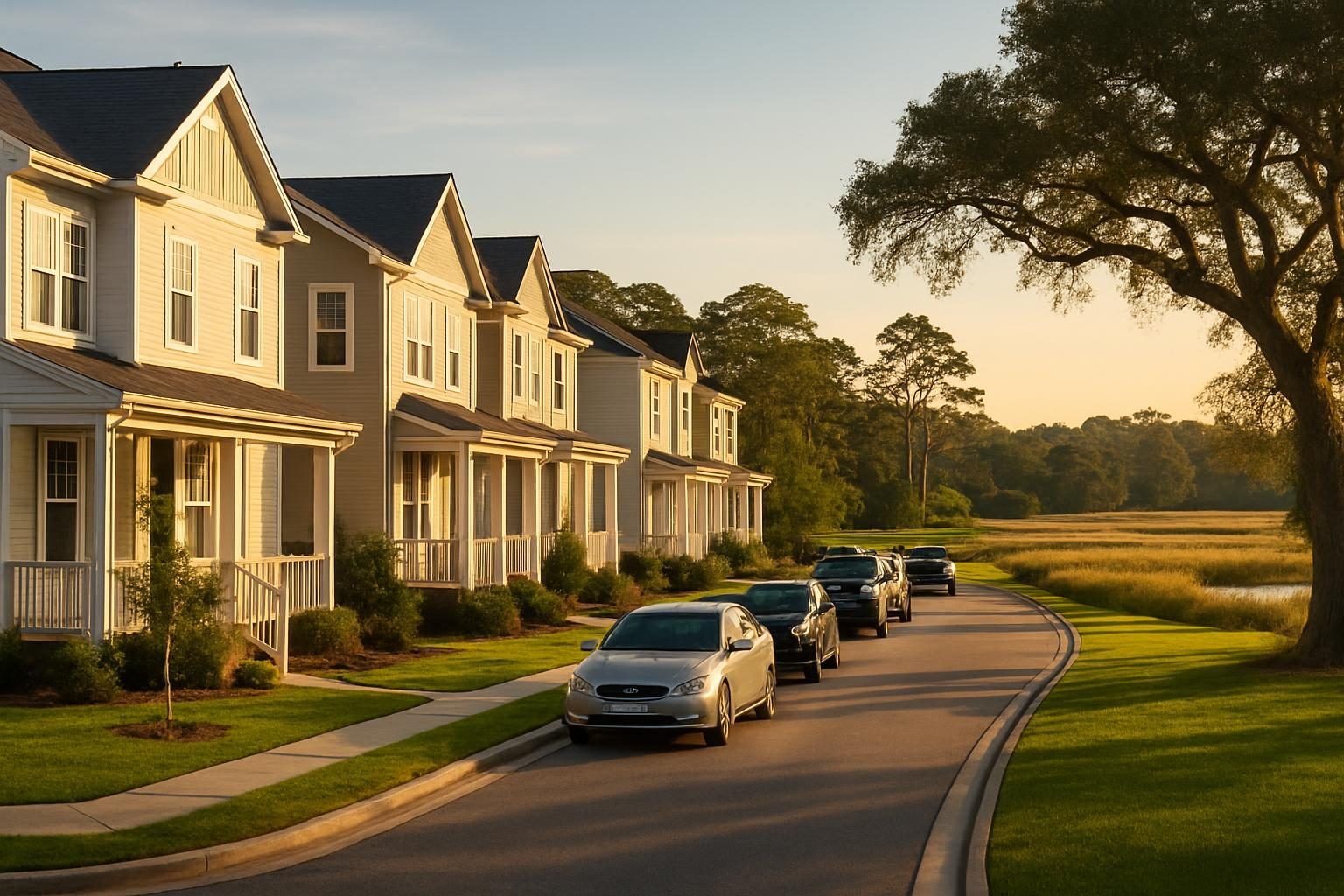
Housing is where most of your budget goes, and it is where Jacksonville earns its affordable reputation. The market is shaped heavily by the military presence at Camp Lejeune and MCAS New River, which keeps rental demand steady and can tighten inventory during peak PCS season.
Renting
Typical rental ranges, as rough estimates that shift with season, condition and location:
- One-bedroom apartment: roughly $900 to $1,300 per month
- Two-bedroom apartment or townhome: roughly $1,100 to $1,600 per month
- Three-bedroom single-family home: roughly $1,500 to $2,200 per month
Newer complexes and homes closer to the main gate or in popular school zones sit toward the higher end. Older units and properties farther out, toward Piney Green or into rural parts of the county, tend to run lower. Pet fees, deposits and application costs are extra, so ask for the full move-in total.
Local tip: Rental inventory tightens in late spring and summer when PCS orders peak. If your timeline is flexible, searching in the off-season can give you more choice and a bit more negotiating room.
Buying
Home prices in Jacksonville have climbed over the past several years, like much of coastal North Carolina. As a very rough estimate, many typical single-family homes in the city have fallen somewhere between the low $200,000s and the mid $300,000s, with newer construction and waterfront or river-adjacent properties going higher. Check current listings and talk to a local agent for real numbers.
Property taxes in Onslow County are generally moderate compared with many parts of the country. Your actual bill depends on assessed value and whether you are inside city limits, so confirm with the county tax office rather than relying on a rule of thumb.
Choosing Where to Live Changes the Budget
Onslow County is not one price point. Where you land can swing your housing cost, commute and insurance bill. Our neighborhood comparison for Jacksonville and Onslow County towns goes deeper, but here is the budget-level view:
- Jacksonville: the broadest range of rentals and homes, the most shopping and services, and generally the most budget-friendly entry point.
- Swansboro: a charming waterfront town on the White Oak River with a premium for walkability and water access. See living in Swansboro for the full picture.
- Sneads Ferry: waterfront and marsh-adjacent living near the back gate toward Camp Lejeune. Our guide to living in Sneads Ferry covers the lifestyle.
- Richlands and Maysville: smaller-town pricing and more space, with longer drives to shopping. See living in Richlands.
- Hubert and Holly Ridge: a mix of newer subdivisions and rural lots with quick access to the beaches. Read about living in Hubert and Holly Ridge.
- North Topsail Beach: beach-island pricing, with the highest insurance exposure. Our North Topsail Beach guide explains access and day-to-day realities.
The closer you get to the water, the more your insurance bill matters as much as your mortgage or rent.
Flood and Wind Insurance: The Cost Newcomers Miss
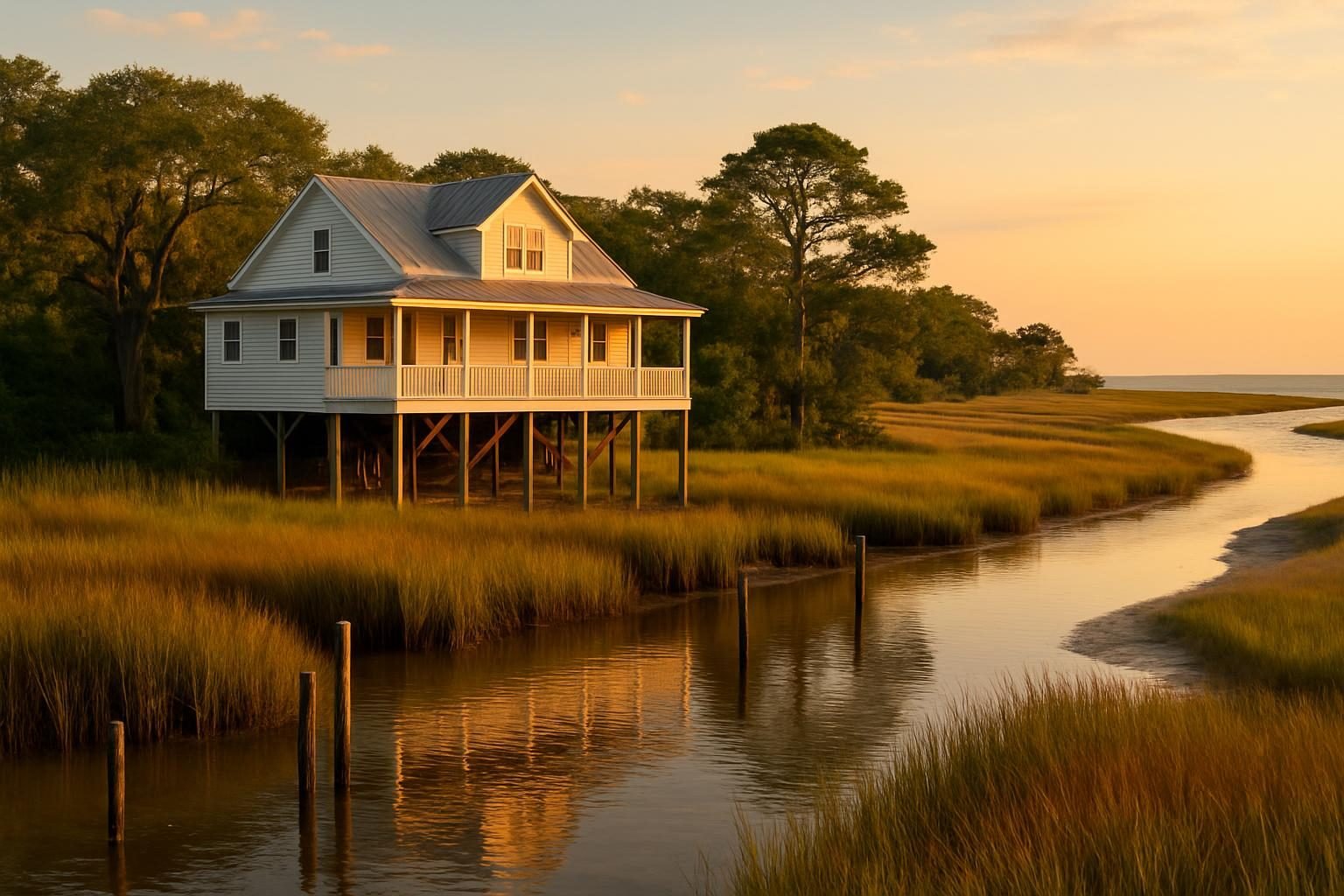
On the North Carolina coast, homeowner’s insurance is not a footnote. Standard policies typically do not cover flood damage, and many coastal policies treat wind or named-storm damage separately, sometimes with a higher percentage-based deductible.
What that means in practice:
- Flood insurance is a separate policy, often through the National Flood Insurance Program or a private carrier. Cost depends on your flood zone, elevation and the home’s construction.
- Wind or hurricane coverage may be bundled, excluded or priced separately. Ask specifically about named-storm deductibles.
- Lenders may require flood coverage if the property sits in a designated high-risk zone.
- Renters need coverage too. Renter’s insurance is usually inexpensive, but it generally does not cover flood, so ask about that add-on.
A home inland in Jacksonville may carry far lower flood and wind costs than a similar one in Sneads Ferry, Swansboro or on Topsail Island. Always get insurance quotes before you make an offer, not after.
Local tip: Look up a property’s flood zone and ask for an elevation certificate if one exists before you fall in love with a house. It can change the true monthly cost more than a few thousand dollars on the purchase price.
Utilities and Monthly Bills
Utilities here are shaped by climate. Long, humid summers mean the air conditioner works hard, and our Jacksonville weather by month guide shows how long the hot season stretches.
Typical monthly estimates for a modest home or apartment:
- Electricity: roughly $100 to $250, with summer peaks above that in larger or older homes
- Water, sewer and trash: roughly $50 to $120, depending on provider and usage
- Internet: roughly $50 to $90, depending on provider and speed
- Natural gas or propane: varies by whether your home uses it for heat or cooking
Ask landlords or sellers for past utility bills if they are willing to share them. Many rentals in Jacksonville include some utilities, so compare total cost, not just the rent line.
Groceries, Dining and Everyday Spending
Grocery costs in Jacksonville run close to national norms. National chains, commissary options for eligible military families and local markets give you ways to manage the bill. A single adult might plan roughly $300 to $450 a month on groceries, and a family of four considerably more, as a rough estimate.
Eating out is where the coast offers real value if you know where to look. Local seafood, barbecue and casual spots keep many meals reasonable, and our local restaurant guide and fresh seafood guide are good starting points.
Entertainment can be low-cost too. Between marshes, beaches and riverfront spaces, a lot of weekend fun is free or cheap. Browse free things to do in Jacksonville for ideas that will not touch your budget.
Transportation
Jacksonville is a car-dependent town. Most households need at least one vehicle, and many military families run two. Budget for gas, insurance, registration and maintenance. Salt air can be hard on vehicles, especially if you live near the water, so factor in occasional rust-prevention and washing.
Taxes and Military Considerations
North Carolina has a flat state income tax rate, and sales tax applies on most purchases. Because rates and rules change, check the North Carolina Department of Revenue for current figures.
For service members, a few general points are worth knowing, though your own situation is what matters:
- Military pay and allowances: basic allowance for housing (BAH) is generally not taxed as income and can make renting or buying more manageable. Rates vary by rank and dependents, so check the official BAH calculator.
- State residency: service members often keep their legal state of residence under federal protections, which can affect which state taxes apply. Confirm with a tax professional or your installation legal assistance office.
- Vehicle and property taxes: these can work differently for service members and spouses. Verify with the county and state before assuming.
Our Camp Lejeune PCS guide covers the move itself, and your first month in Jacksonville helps with settling-in costs. For base housing and official allowance details, use Camp Lejeune and MCAS New River resources directly.
BAH can make Jacksonville feel very affordable, but only if you plan for insurance and utilities on top of rent or a mortgage.
Sample Monthly Budgets
These are illustrative estimates only, to show how the pieces add up. Your numbers will differ.
| Expense | Single renter (est.) | Family of four, renting (est.) |
|---|---|---|
| Rent | $1,000 to $1,300 | $1,500 to $2,200 |
| Utilities and internet | $180 to $300 | $250 to $450 |
| Groceries | $300 to $450 | $900 to $1,300 |
| Transportation | $300 to $600 | $600 to $1,200 |
| Renter’s insurance | $10 to $25 | $15 to $35 |
Healthcare, childcare, debt and savings are separate, and childcare in particular can be a major line item for families. If you are planning a bigger relocation, our moving to Onslow County guide pulls the full checklist together.
Ways to Keep Costs Down
- Compare total monthly cost, including insurance and utilities, not just rent or mortgage.
- Get flood and wind quotes before committing to a coastal property.
- Consider living a bit inland, or in Richlands or Hubert, for lower housing and insurance costs.
- Use free outdoor options like the beaches and marshes for entertainment.
- Budget seasonally so summer electric bills do not catch you off guard.
Cost of Living in Jacksonville, NC: FAQ
Is Jacksonville, NC cheaper than the rest of North Carolina?
Overall it is about the same as or slightly lower than the state average, mainly because housing is often less expensive than in larger metros and beach towns. Insurance and summer utilities can narrow the gap, so compare the full monthly picture.
How much do I need to earn to live comfortably in Jacksonville?
It depends on household size, housing choice and debts. A common rule of thumb is keeping housing near 30 percent of income, but use the sample ranges above and your own quotes. Military households should factor in BAH and other allowances.
Do I need flood insurance in Jacksonville?
Standard homeowner’s policies usually do not cover flood. Whether you need it depends on your property’s flood zone and your lender. Even outside high-risk zones, many owners choose to carry it, so get quotes and check the flood zone.
Is it cheaper to live in Jacksonville or at the beach?
Jacksonville is usually cheaper than Topsail Island and other beach communities, both in housing and in flood and wind insurance. The tradeoff is the drive to the sand, which our beach guide helps you plan.
Are utilities expensive in Jacksonville?
Utilities are moderate overall, but electricity can climb sharply in summer because of heat and humidity. Ask for past bills when you can, and budget more for the hottest months.