If you need HVAC repair in Jacksonville, NC, you already know the timing is never convenient. Systems here tend to quit on the hottest, stickiest afternoon in July, right when every other unit in town is also working flat out.
This guide covers what usually breaks in our humid, salty coastal climate, how to decide between repairing and replacing, and exactly what to ask before a technician touches your system.
Need help now? Request help from a vetted local HVAC pro using the form on this page.
Quick answer
Most HVAC repairs in Jacksonville come down to a handful of causes: refrigerant leaks, failed capacitors and contactors, clogged condensate drains, frozen evaporator coils and corroded outdoor units. Many are fixable in a single visit. If your system is past roughly 12 to 15 years old, uses older R-22 refrigerant, or needs a major component, it is worth pricing a replacement before you pay for a big repair. Always get a written estimate, confirm the contractor’s NC license, and ask about warranty on parts and labor.
Key takeaways
- Humidity, salt air and long cooling seasons wear out Onslow County systems faster than many people expect.
- Clogged drain lines and frozen coils are common, and some basic checks are safe to do yourself before calling.
- Repair costs are typically small next to replacement, but a big repair on an old system is often money poorly spent.
- Verify licensing, get written estimates and ask about warranty before work begins.
- Spring tune-ups beat summer emergencies, especially if you are new to the area after a PCS.
Why HVAC Systems Struggle in Onslow County
Eastern North Carolina asks a lot of an air conditioner. Cooling season starts early, runs late, and the air is loaded with moisture the whole time.
Your system is not just cooling the house. It is also pulling gallons of water out of the air, which means the condensate drain, evaporator coil and ductwork are constantly wet.
Humidity and condensation
All that moisture has to go somewhere. Drain lines grow algae and sludge, pans overflow, and damp ducts can grow mold. A system that is oversized for the house can also short-cycle, cooling quickly without removing enough humidity and leaving the home clammy.
Salt air
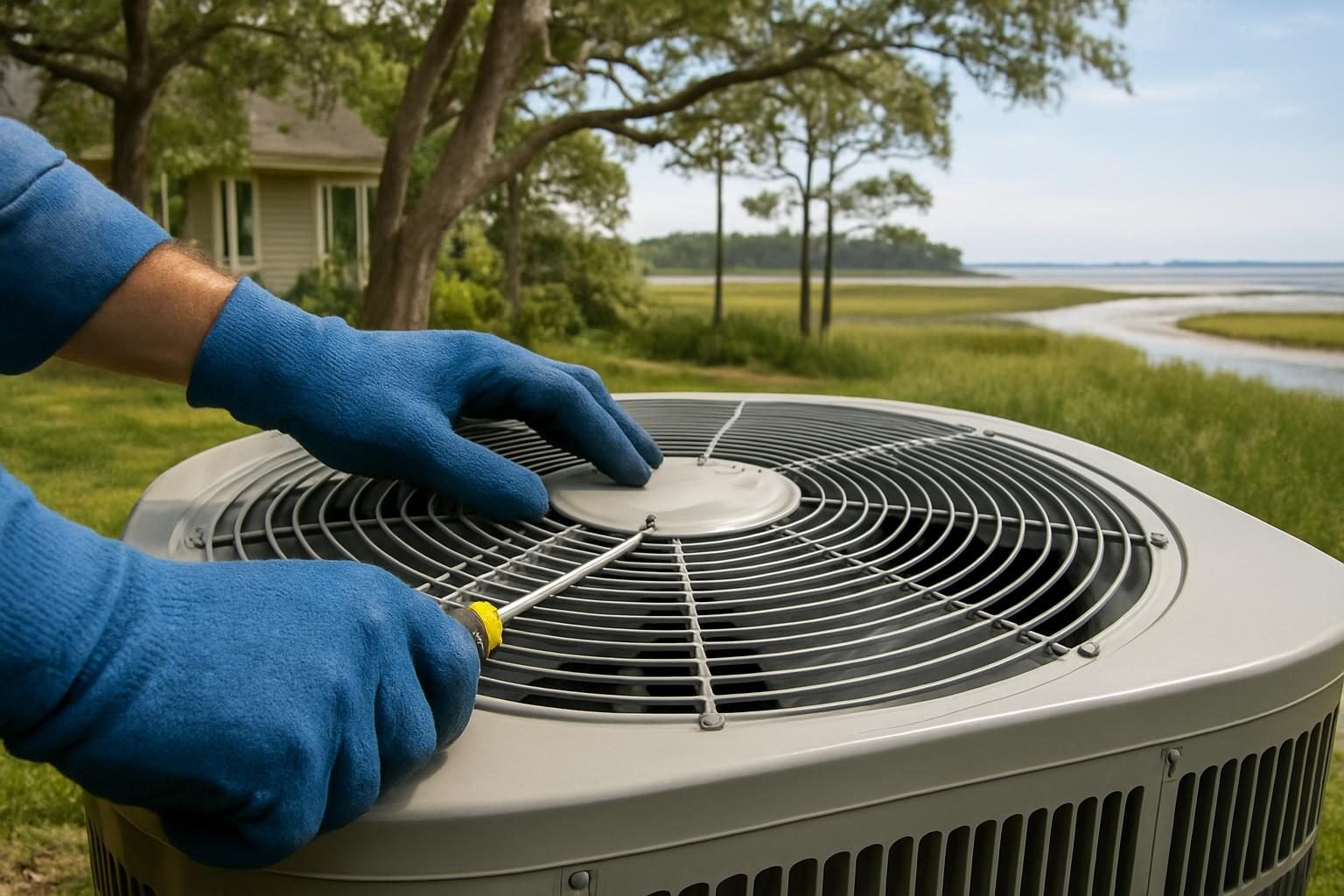
If you live near the water, in Sneads Ferry, Swansboro, Holly Ridge or on Topsail Island, salt in the air attacks outdoor condenser coils and fasteners. Corrosion shortens the life of the unit and can cause refrigerant leaks at the coil. Homes closer to the New River and the Intracoastal Waterway see this too, just usually more slowly.
Storms and power quality
Hurricane season brings surges, brownouts and flooded equipment pads. A lightning strike or power flicker can fry a control board or compressor, and outdoor units sitting low can take on water in heavy storms.
In Onslow County your AC is also a dehumidifier, and that second job is where many problems start.
Common HVAC Failures in Humid Coastal Heat
These are the problems local technicians see again and again. Costs are typical ranges only and vary by company, equipment and parts availability.
| Problem | Typical symptom | Typical repair cost range |
|---|---|---|
| Failed capacitor or contactor | Unit hums, fan will not spin, system will not start | Low (often among the cheapest repairs) |
| Clogged condensate drain | Water around the air handler, system shuts off | Low to moderate |
| Frozen evaporator coil | Ice on lines, weak airflow, warm air | Moderate, depending on cause |
| Refrigerant leak | Long run times, poor cooling, ice buildup | Moderate to high |
| Failed blower motor | Little or no airflow from vents | Moderate |
| Compressor failure | Outdoor unit runs but no cooling, breaker trips | High, often near replacement territory |
Treat these as ballparks. Ask for a written, itemized quote for your specific system.
Problems you can check before you call
A few quick checks can save a service call or at least help you describe the issue.
- Confirm the thermostat is set to cool and the batteries are fresh.
- Check that the breaker has not tripped.
- Replace a dirty air filter, which is a surprisingly common culprit.
- Look for water in the drain pan or around the indoor unit.
- Look for ice on the refrigerant lines or indoor coil. If you see it, turn the system off and let it thaw.
If any of this points to a bigger issue, stop and call a pro rather than running a struggling system. Running a frozen or leaking unit can turn a small fix into a compressor replacement.
Want a deeper checklist? Our upcoming piece on signs your AC is failing in eastern North Carolina’s humid summers walks through the warning signs in detail.
Local tip: Pour a cup of distilled white vinegar into the condensate drain access line a couple of times each cooling season, if your system has one and the manufacturer allows it. It helps keep algae from clogging the line, a classic cause of summer water leaks.
Repair vs Replace: How to Decide
This is the question that stings the most. There is no single formula, but there are useful rules of thumb.
Signs repair makes sense
- The system is under about 10 years old.
- The failed part is a common, inexpensive one such as a capacitor, contactor or fan motor.
- It has been reliable and the repair is a small fraction of replacement cost.
- It is still under a manufacturer or parts warranty.
Signs replacement is worth pricing
- The system is roughly 12 to 15 years old or more.
- It uses older R-22 refrigerant, which is phased out and costly to service.
- You are facing a compressor or coil replacement.
- Repairs are becoming frequent, or energy bills keep climbing.
- Rooms are uneven or the house stays humid even when the system runs.
A common rule of thumb is to think hard about replacing when a repair approaches a large share of the cost of a new system, especially on an older unit. Ask your technician for both numbers so you can compare. For new-system pricing, watch for our guide to AC installation cost in Jacksonville.
If you are weighing monthly budgets, our cost of living in Jacksonville guide puts utility bills in context. Efficient equipment can matter more here than many newcomers expect.
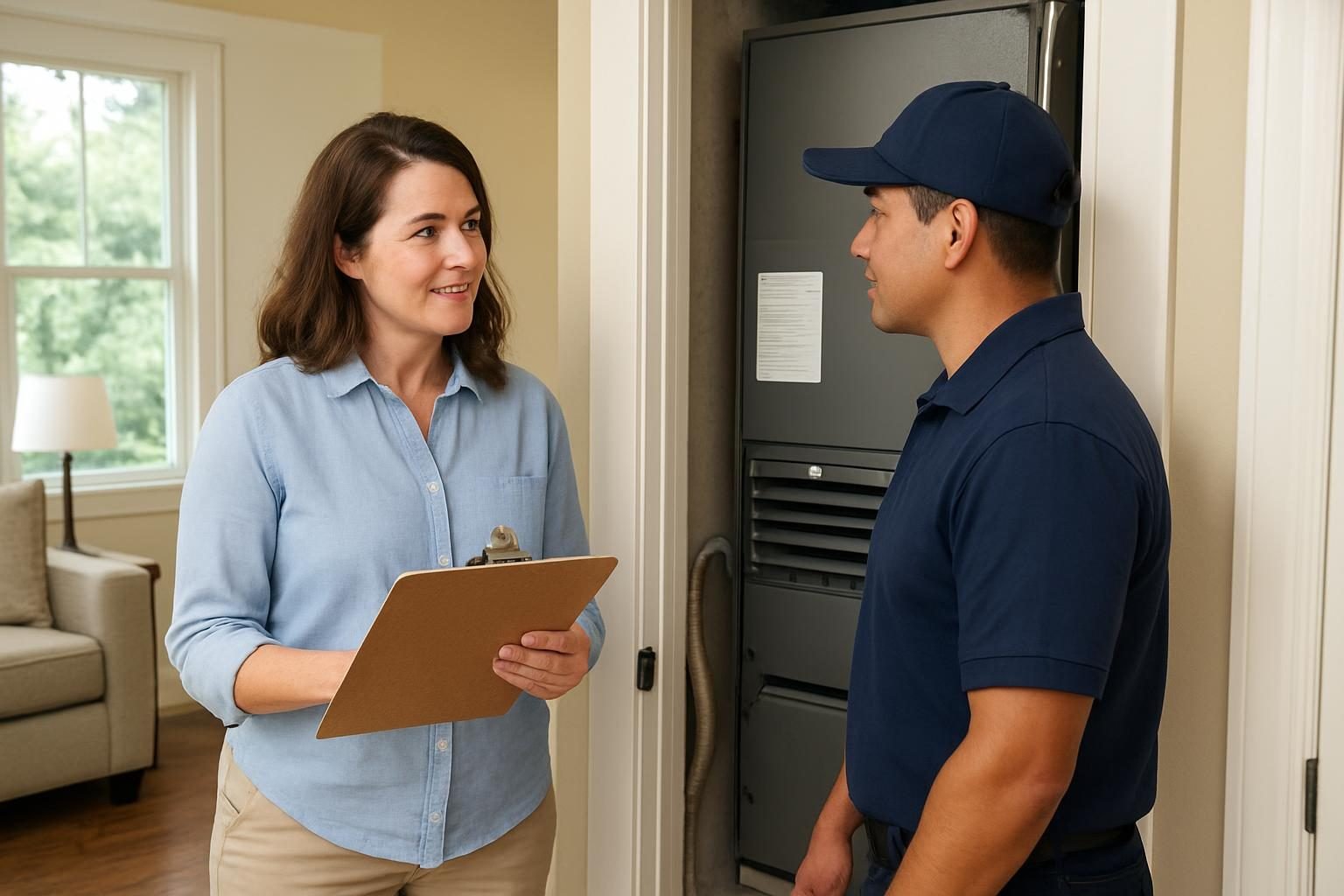
Ask for two numbers every time: what the repair costs, and what a replacement would cost.
How to Hire an HVAC Contractor in Jacksonville, NC
Good HVAC help is easy to find in normal weather and hard to find during a heat wave or after a storm. Do your vetting before you are desperate if you can.
Questions to ask before anyone starts work
- Are you licensed in North Carolina? HVAC work generally requires a state license. You can verify through the NC State Board of Examiners of Plumbing, Heating and Fire Sprinkler Contractors.
- Are you insured? Ask for proof of liability and workers’ compensation coverage.
- Do you charge a diagnostic fee, and is it applied to the repair? Policies differ, so ask upfront.
- Will you give me a written, itemized estimate? It should list parts, labor and any refrigerant.
- What warranty covers the parts and the labor? Get the terms in writing.
- Do you service my brand and type of system? Heat pumps, gas furnaces and package units are not all handled the same way.
- How soon can you come, and do you offer after-hours service? Ask what that costs.
Red flags
- Pressure to replace the whole system immediately without a clear diagnosis.
- Refusal to put the estimate or warranty in writing.
- Cash-only demands or large upfront payments for a repair.
- A quote that is dramatically lower than every other, with vague scope.
If you have storm damage on top of a dead system, read our upcoming guide on how to hire a contractor after hurricane damage in North Carolina, since post-storm scams target exactly this situation.
Local tip: Call for a tune-up in April or early May, before the first stretch of 90-degree days. Spring appointments are easier to book, and a technician can catch a weak capacitor or slow leak before it fails in July.
Tips for Military Families and Newcomers
If you just PCS’d to Camp Lejeune or MCAS New River, your first summer can be a shock. Humidity feels different here, and landlords and housing offices handle HVAC differently depending on where you live.
- On base: maintenance requests generally go through your housing office, not a private contractor. See our guide to on-base vs off-base housing at Camp Lejeune and check official base housing resources for current procedures.
- Renting off base: read your lease. Many landlords are responsible for HVAC repairs, but some require you to report issues promptly and use their approved vendors.
- Buying: ask for the age of the system and any service records, and have it inspected before closing.
Our first month in Jacksonville PCS guide and the full Camp Lejeune PCS guide cover the other settling-in tasks worth tackling early.
If you are comparing neighborhoods and want to know what to expect from the housing stock, our neighborhood comparison is a helpful starting point. Older homes often mean older systems.
Related Home Problems Worth Knowing About
HVAC trouble rarely travels alone in this climate. Moisture ties many home issues together.
- A leaking air handler or drain can lead to water damage restoration if it goes unnoticed.
- Damp, poorly sealed crawl spaces can push humidity into the house and overwork your system. See our upcoming guide on crawl space repair in Jacksonville.
- When storms knock out power for days, a whole-house generator can keep cooling running.
- Living out toward the coast? Our future page on HVAC services in Sneads Ferry covers local options for that side of the county.
Ready to get a system looked at? Request a quote from a vetted local HVAC pro using the form on this page.
HVAC Repair FAQ
How much does HVAC repair cost in Jacksonville, NC?
It depends on the problem. Small fixes like a capacitor or drain-line clearing are usually on the lower end, while refrigerant leaks, coils and compressors cost significantly more. Ask for an itemized written estimate and compare it with the cost of replacement.
Why does my AC freeze up in summer?
Common causes are a dirty filter, restricted airflow, a refrigerant leak or a failing blower. Turn the system off to let the ice melt, replace the filter, and call a technician if it happens again.
How long should an HVAC system last here?
Many systems last roughly 12 to 15 years, though long cooling seasons, humidity and salt air can shorten that, especially near the coast. Regular maintenance helps.
Should I repair or replace an older AC?
If the system is over about 12 to 15 years old, uses R-22 refrigerant or needs a major component like a compressor, get a replacement quote before paying for a large repair. For a younger system with a cheap part failure, repair usually makes sense.
How do I check that an HVAC contractor is licensed?
You can look up a contractor’s license status through the NC State Board of Examiners of Plumbing, Heating and Fire Sprinkler Contractors. Also ask for proof of insurance before work starts.
Get free HVAC repair quotes from Jacksonville pros
Tell us what is going on with your system and a vetted local HVAC pro will follow up with next steps and a quote.